brand planning tips

    Mr. Brand Hammer.

    0

    Yesterday I coined the term Mr. Brand Hammer – a reference to the axiom “to a hammer everything looks like a nail.” Mr. Brand Hammer (that’s me) smells a new business name.

    It’s a curse being Mr. Brand Hammer, surfing the ether, watching commercials, reading the paper, with an always-on need to make sense of brands and their strategy. It’s like living in a world of generic, plain yogurt. Colorless. Tasteless. Sluggish. Mr. Brand Hammer constantly evaluates how marketers are differentiating their product and services. Asking what’s the plan? When watching Geico commercials everything is humor and call-to-action. Buy us, get a quote from us. But where’s the why? Mr. Brand Hammer understands it’s not easy creating thousands and thousands of pieces of selling content…you run out of ideas. But you should never run out of strategy.

    What’s The Idea? is a business consultancy built around brand strategy. What’s the brand claim? What are the brand proof planks (evidence of the claim)?  The lack thereof in marketing drives me crazy. And you can tell it also drives marketers crazy. More often than not there is no discernable plan for selling. For building a brand.

    More cowbell. More gecko.

    Peace.


    Brand Planning Tips

    0

    merle haggard

    So I was listening to Merle Haggard yesterday and the old coot was doing a duet with Jewel and, by God, he changed his vocal treatment – his voice — on the song. It was Merle but he was trying to impress her, trying to woo her. Men! There was a gentleness to his voice that you won’t hear in most of his tunes. The tone send a message. So I’m thinking if he can change his tone and impart different meaning, sub rasa meaning, so can the rest of us. Why not use it as a brand planning tool?  So I’m playing around with an interview technique that will prompt interviewees to answer questions in various voice types. You know the voice you use when someone is confiding tragic personal news to you? Or the voice used to encourage a child who needs support? Have you a sexy voice? The key is to get the interviewee to use a topic-appropriate voice in an interview to impart greater meaning.  To do so you have to put them in a zone; coach them like an acting coach. Get them to a place where they are feeling an emotion then get them to answer your question, truthfully, but that particular voice.

    Try it, I certainly will. Peace.


    Biggest critic.

    0

    I’m always on the lookout for new ways to extract important information from executives about their companies. My 24 Questions, designed to follow the money, are not great at generating stories… and stories (aka proof/examples) are what create context and power for brand planners.  A flesh vs. bones thing. So the latest question I’ve been dabbling with is “Who is the industry’s biggest critic?” Or, “Of all the opinion leaders in your business, whose approval do you hold dearest and why?” I’ll probably test it out both questions. The first is the more open of the two and presumes a critical but, honestly, I am more eager to hear about praise. It is an open question and can be easily toggled.

    Most people, be they executives or consumers, can articulate the opinion leader they most admire. That person is a good source of brand planning study. That person may not want to share all his/her secrets, but often provides shortcuts to pearls of wisdom and grist for the narrative mill.  Successful home brewers’ opinions are worth more to the average beer drinking Joe than are sports stars. An IT professional’s opinion is more valuable than a Best Buy salesperson.  Think “expert witnesses” in a jury trial, to the max.

    Find these people, learn why they are great critics, and get their stories. Probe the “doing” part of their role rather than the “critique or praise” itself. Probe for story. Peace.


    Brand Planning Technique.

    0

    Salman Khan, founder of the Khan Academy an online educational video tutoring site, began his business by uploading math instruction videos to YouTube. Part of his secret sauce was making math instruction interesting.  If instruction lacks vocal intonation (drone, drone) it didn’t connect.  Been there.  If it was overly flourished, same thing. His approach, like that of other good teachers, was to be in the middle. Connect. Watch what students tuned in to and package that using good pedagogy.

    As a brand planner, I sometimes go into situations where the topic is less than exciting.  Healthcare and banking come to mind. When interviewing SMEs (subject matter experts) or consumers using Salman’s approach is important. The interviewer needs to show interest; not academic interest but true category interest.  The interviewer needs to find ways to bring the subject to life. To be engaged and earn trust. Personal stories are a good way to prime the pump. Hearing them. Telling them.  Some will say interrupting people when they talk is not polite, however in this case it shows energy and interest. (Do it carefully however.)

    Be a good listener, a careful watcher of body language, and most of all be human. React, respond, find emotional attachments. Joy and happy endings are also nice, though may not in all cases be appropriate.

    Once again, good teaching and learning practices come into play in brand planning. Peace.

    Houzz, Brand Planners and Ample Asses.

    0

    houzz homepage

    Came across a cool new website called Houzz. It’s also an app on the iPhone. Someone showed me the app on the iPhone (my first user experience or FUE) where it displayed a picture of a kitchen with lots of scroll over call-outs. You scrolled over a countertop and lots of little bubbles (way too many) popped up – I assumed they were prices, or comments. For the life of me I couldn’t figure the app out. I later went to the website and subscribed and started receiving emails, which I didn’t open. Until today.

    It’s a real nice website. Lots of bleed pictures, little text on the homepage, the way I like it. But I still couldn’t tell what the site was about other than home stuff so I dug in and visited the About Page. Here’s what they say:

    “We are a platform for home remodeling and design, bringing homeowners and home professionals together in a uniquely visual community.”

    Now that made sense. My FUE with the app did not.

    The Houzz site (not the app) is an awesome resource. Power kitchen and remodeling users (people with leisure time?) spend a nice amount of energy here. This is exactly the kind of place a brand planner wants to do research. It’s the kind of place where thoughtful helpers, info seekers, and smart sellers spend time sharing. All in one location. Brand planners with ample asses (impolitic, I know) can learn a lot – sans fieldwork – on a site like this. I love finding gems like this in every category.  It’s where Posters go. (Google “Posters versus Pasters”.) Peace.


    The Recipe for Behavior Change.

    0

    I’ve had some time to think about my post from yesterday asking whether brand planners should focus on behavior change or attitude change and I have decided upon attitude change. Behavior change unbacked by a set of values is simply a transaction. A default to ease-of-use. A reflex. These can and do drive a lot of commerce, don’t get me wrong. Habit is something to be sought in marketing.  But brand planning is about ingrained habits. Emotional habits. Cognitive habits. And those come from thoughtful cognition.

    I’ve written hundreds and hundreds of brand strategies. My framework uses one claim and three proof planks. Claim without proof is not branding, it’s advertising. I’d venture to say 95% of my proof planks are attitude based. One A Day Vitamins, named after a behavior still needs to support the behavior with a why. Got Milk still has to support the behavior with a why.

    Trust me, changing behavior is a critical goal in marketing. But changing attitudes is the brand planner’s job. It’s the recipe for behavior change.

    Peace.


    Brand Strategy Building Blocks.

    0

    In an article about the promotion of Parag Agrawal following Jack Dorsey’s step down as Twitter CEO, the NYT referred to Parag as “…having stood out for his strong skills in math and theory. If you are good at the theory, you can have the ability to be analytical, to reason, to make decisions.”

    Math and theory or science and theory are also critical competences of a brand planner.  The science part is unquestioned, but often underdeveloped. That is, we are all supposed to create strategies that predict success. Be it in sales or preference. That’s science. Finding replicable “if/then” equations.  But theory — theory is where brand planning gets a little dicey. The abilities to be “analytical” and to “reason” are critical but the ensuing “decisions” or last mile are the planner’s secret sauce.  And that last mile often lacks science. Planners, you see, talk about science and art. While the science may be right the art can derail it.

    Rather than provide science and art in brand strategy, I suggest we provide a science and theory strategy…and leave the art to the creative peeps.

    At Whats The Idea? brand strategy comprises one claim and three proof planks. Claim without proof, goes the logic, is entertainment. Yet a strategy built around one claim and three proof planks is theory — not art.  And when that theory is tied to science, you have building blocks. You have things to measure.

    I love when I hit a creative triple or home run. It’s not my job. Science and theory are my job.

    Peace.


    Teaching and Learning.

    0

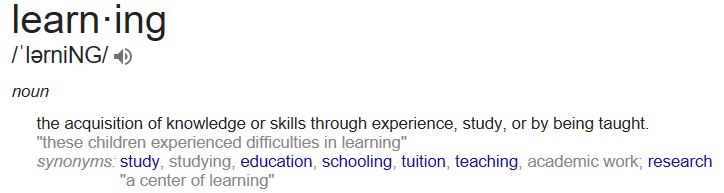
    Those who follow the What’s The idea? blog know how I view education. Having worked at a K12 Ed Tech company I realized there is a big difference between “teaching” and “learning.” One is the means, the other the end. After scores and scores of teacher interviews, I understood there can be poor teaching, but no poor learning. Learning is always positive.

    So, I took that learning to heart and incorporated it into my business model. Consumers are more apt to favor a brand they learn from than a brand that sells them. Great marketing helps consumers learn about brand value in other words. Learning they can articulate themselves and, perhaps, even conclude.

    So just as learning is a touchstone for consumers in terms of product preference, it should be so for marketers. A new question I’ve decided to use in brand discovery with marketing stakeholders is “Tell me something you still need to learn about your business or consumers?” Implied with the question is that this learning will help business.

    There’s another learning question in my brand discovery battery but it’s slightly different. Not to give away too many secrets — but we are in the middle of a pandemic. The question is “Walk me through your education at the company. What was your top “aha” learning moment?”

    Okay enough learning for the day.

    Peace.


    Brand Planning Tips

    0

    Hank O’Brien, was a Group Director of mine at McCann-Erickson NY in the 90s.  He had great chops for a Mad Man and a good intellect.  One thing he once said to me while doing some brand and marketing planning was “Who is going to lose the sale, you are making?”   It was an interesting way to pose the question about the competition.  And it didn’t always target a direct competitor. If you were advertising a new product or service, something that had no direct competitor, you might be talking sales from another category. Or two.

    The fact is and was, the money has to come from somewhere and it’s good to know that somewhere. It lends behavioral context.

    Uber, for instance, takes money away from cab companies.  That’s a clean take-away. Netflix, takes money from movie theaters and cable companies and network television. It can also take money from bars and restaurants. Not so clean.

    Good planners follow the money.  That too, is good advice.

    When you are making your touchy-feely brand value decisions, it’s always important to align them in some way with commercial advantage. We are not mercenaries, but our clients are.

    Peace.  


    White Room (No Black Curtains.)

    0

    A cultural anthropologist, brand planner and journalist walk into a bar. Well maybe not the journalist. The bartender says what would you like. They all three say nothing. That sounds like a bad joke but it’s the topic of this post. When you come to a people, a consumer set or news story, you should aspire to bring nothing to the table.

    One thing I’ve learned about brand planning is to go all tabula rasa or clean slate on an assignment. That is, I don’t bring any preconceived ideas with me about the people, the market or the selling environment. It’s so hard.

    Many years ago, I was selling ads to the CEO of AT&T Microelectronics. In his spacious Berkley Heights, NJ office, standing right by the table was a cardboard cutout of a man. A customer, he explained. To always remind him of their importance.

    If I ever leave the confines of my home office for a real office the first room I build will be a white room. There will be no adornments. No pictures. No stimuli. No nothing. A white table, white chairs and white walls. This will be a collective reminder that we (client too) must come at an assignment without bias.

    (At another AT&T meeting, this one at AT&T Consumer Products, I was given a tour of a room in the R&D facility that had zero echo. The floor was suspended, the walls baffled. Total sound absorption. No echo. This might be my second conference room investment. Hee hee.)

    Coming to an assignment clean is critical. It maxims freshness.

    Peace.