
The next selling app.

0

In Berlin, they are taking the car-rental-on-demand thing to the next level. In Berlin you can use a smart phone app to find a car near you, drive it where you want to go and leave it — for an annual fee and a per minute charge.  The logistics are handled by the app.  (In the future, the renting companies may contribute to the logistics by moving cars around in response to expected demand, but for now it seems to be working fine as is.)

Big picture.  Cities have too many cars. Too much carbon.  Lots of cars with one person in them. Limited parking spaces. This is a solution. Brilliant. (Though walking and bicycling would be better.)  In the article I read about this program someone was quoted saying this couldn’t have happened in the 90s. Smarties, GPS and apps make it happen today. This is beyond the dashboard stuff.

It’s how marketers need to think. How do we take inefficiency out of the marketing process.  Price shopping is easy. Geo-pricing and deals are easy. Inventory is easy-ish. But how about creating preference?  We haven’t really cracked the code on that one. Sure we have friend recos, likes and reviews. We also have videos to see products in action.  But we haven’t killed that visceral selling thing yet –the moving of customers closer to a sale through unexpected. exciting means. I’m guessing this task will fall to artists — enabled by technologists. It will be born of Twitch Point Planning, but with a poetic, artful and multidimensional twist.  I’ll share as I get closer. Hope you do too. Peace.
All dreads no cattle. (That’s dreads as in dreadlocks.)

0

When a group of CMOs on LinkedIn has to ask the question “What is a brand?” (Or was it a bunch of brand planners?)  The fact that the question is asked is damning.  I’m a big Noah Brier fan – he of Percolate – and even he asked me once “How do you define a brand plan?” His question was meant to see if I was all dreads and no cattle. There are so many a practitioners out there who don’t have a clue.

Many rubber-meets-the-road marketing types want to know “How do I measure a brand plan?”  “How do I measure the sales return of a brand plan?”  The answer is easy.  First, have one.

Assuming your brand plans are like mine: one claim and 3 support planks, the measures are easy. If one plank is about being fastidious, you can ask your customers to rank you on fastidiousness.  You can ask general consumers to rate you as well, that will tell you how well the story is getting out. You can rate yourself on fastidiousness – doing spot checks on personnel performance. On a macro level, you then tie sales, margins, or stock performance to the rise and fall of these brand plan metrics.  This is where the rubber meets the road.  This is the part of the dashboard you get to present upstairs at headquarters, while the cost-per-click and coupon redemption people remain waiting in the lobby.  Along with the people polishing that gleaming Cannes Lion.

(The headline for this post is for you to interpret.  It’s part George W. part morning coffee. Hee hee.) Peace!

The Future of Marketing.

0

Brian Clark of GMD Studios in NYC and Winter Park, FL, home of Rollins College, is a diamond-in-the-rough marketing consultant.  He’s kind of like Jonas Salk the inventor of the polio vaccine, before the invention.  Brian gets marketing, he really gets film, his views on transmedia (the flow between media types) are prescient and he keeps his eyes open. Brian enjoys his view beyond the dashboard.

I met him a couple of times, once while we worked as contractors for JWT on Microsoft, and he knows where we are going with this multimedia thing. A statement like that presumes I know where we are going, but follow Brian’s lead first.

He’s a diamond-in-the-rough, I say, because this stuff is hard to fully comprehend. Selling better is hard. Experiential marketing is real but much of it is still theoretical. So when Brian does presos on phenomenology, he’s in the ballpark but it’s a bit rough. And heady. (Check it out on Slideshare.)  Transmedia, as a term, is in the ballpark too but lacks poetry. My view of the experiential and transmedia realm, using language like “fast twitch media” and “twitch point planning” is a bit more intriguing and motivating, but still theoretical.

Thanks to technology and thanks to art forms – with more art forms to be invented – we are on the verge of major media and marketing advance. The inventions are a comin’.  And fun it will be. Do help! And watch Brian and his company.  Peace.    

New $ or old $?

0

I favor the poetry inherent in good brand planning, so in various places on the web you may have seen some of my references to “redistributing marketing wealth.” Redistributing marketing wealth is a great calling if you can do it. It is one goal of great strategy. The only thing that trumps it is “creating new wealth.”  The most exciting work in marketing is not taking a market that currently exists, say a $2.4B market for nutrition drinks, and rejiggering it to get more share – though that is fun.  It’s taking a static market and growing it. Finding new uses, new custies, and new (I can’t think of a third thing)…  

That’s not redistributing marketing wealth, that’s creating new wealth. A smart boss at McCann once asked me, “Where will the money to pay for this product come from?” In other words what will someone not buy to pay for this product? Carbonated soft drink dollars are flowing into waters. So Coke owns both. Now Coke is getting into protein – another reapportionment. But what if Coke took money away from the gyms?  Or created a product that took consumer budget from the gas budget?

Rational consumers only have so much money to spend.  Figuring out how to get them to spend it with you is a planners MO. New money?  Or old money? That is a big planning  question.

Peace be upon you this Friday!     

Archaeology and Brand Planning.

0

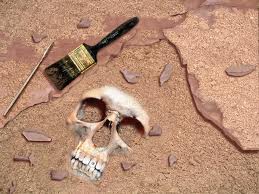
I wrote a brand plan for a friend who owns a commercial maintenance company. He came to me for some help redoing his website, and I told him the project required a brand brief before I could start.  His company does a couple million a year in office cleaning, snow removal, landscaping, painting, etc. He didn’t know what a brand plan or brand strategy was, but shined me on and let me do my thing. Even if it delayed his website dev.

archeology

The brand plan was ridiculous (kid version). The idea active, exciting and a perfect reflection of his company at its best. The planks were pristine, clean and oh so memorable. Back pat, back pat. I often use this plan as an example when talking to clients and prospects. The idea, for this plan came from the CEO. He’s a unique dude.  His approach to business and his company is pretty close to perfect. I followed his lead and packaged it in a way that consumers could remember and repeat.  But what would happen if given the same challenge and a different CEO?  Someone with less business acumen? Someone with a little lazy bone in their make-up? 

Well, it would clearly have changed the idea.  It would have required more digging and sifting. Ultimately if may have made a case for less lazy, more active. If lazy CEO needed to do something differently as a business winning proposition, it would have to be figured into the equation. Mildy. Socratically. (Remember, the person may really have just wanted a website.) The idea must fit the business and all businesses are different. Some are harder than others and require a deep dig. Every brand has an answer and a solution.  Peace. 

Collaborate? Collaborate? Collaborate?

0

(To be read in Alan Iverson’s voice.)

The collaborative economy is bullshit. Sorry Jeremiah.  The craft economy is not bullshit. Social business is bullshit. Social business design is not.  You see talking about talking or talking about doing isn’t doing. Doing is.  WTI readers know I’m all about organizing a brand before putting it into action, but that presumes action.

Imagine living in a hunter and gatherer society and having to listen to a guy is sitting on a stump telling everyone how to hunt, without him ever picking up a spear or arrow.  Or listening to him tell people how to cultivate without getting his ample butt into the fields. There are tons of people today in the social media realm who love to paste other people’s stuff. Collaboration?  Tons more who love to bloviate without really giving away actionable secrets.  Collaboration economy? Is it collaborative to write a vanity press book on collaboration?

Here’s a Benjamin Franklin rule.  Hang out with doers.  People who lead by example. Who get their hands dirty.  You will easily recognize them…they don’t talk about preparing to get their hands dirty. Or hand-dirtying processes. They don’t share charts on hands and more charts on dirty. They are too busy in the muck.  Learning by pushing and selling and talking about it to other doers. 

Please don’t take this screed as being about autonomy and working in a vacuum. I am just suggesting a business person with a plan, a hypothesis, and a doer mentality is a faster learner, better teacher and someone who makes better decisions.  The economy is not driven by collaboration. The economy is driven by people who put the puck in the hoop/net/goal. Peace.

(PS. Jeremiah is really, really smart. I’m leaving his last name off, because I don’t want to pizzle him off. But he knows consultants are paid for tangible recommendations, not collaboration.)

Brand Planning Interview Techniques.

0

Learning is at the center of everything good.  Teaching doesn’t always get the same rap.  Where would we be without teachers?  Not in a good place. There must be teachers.

I worked for a company that enlightened me about learning. My job was to organize the selling of leaning tools, be they technological or pedagogical, and it really warmed me to the difference between teaching and learning – how they are perfectly and imperfectly intertwined

Brand planners are attuned to learning. They take to it like ants to peanut butter and jelly samiches. Interviewing SMEs (subject matter experts), company captains and consumers in true learning mode really lights up the exchange.  Note taking and quiet keyboard clicking makes for a short, dull interview. Smiles, thoughtful questions, stories, and engagement make the time fly. Even when you ask a goofy or counterintuitive question — if done as an eager learner, it can enhance the experience. And try not to teach the teacher. Be Socratic in your method. You can challenge observations or highlight contradictions, but do so with that dog-like “Where’s the ball?” gaze.

Brand planners who are devout learners, who don’t enter a room with answers, are the ones who turn on the lights. The ones who create illumination. It may be steady, sporadic or rocky, but it is illumination. Puh-eace!   


Sub-Standard Mea Cupla?

0

McGraw-Hill and Standard and Poor’s have been around for a long time. The former is best known as a publishing company, the latter a credit rating company. McGraw-Hill owns Standard and Poor’s. For those not in-the-know about the financial world S&P isn’t a company you think about often.

Today I read a fairly benign ad by S&P in which it touted its people, purpose, practices and progress.  Depicting young to middle aged people, so we get the company is not run by 60 and 70 year olds (not that there’s anything wrong with it), the ad is quite unremarkable. The headline reads: “4 things you should know about Standard and Poors ratings.”    Why, why, why would anyone stop and read such an ad? Except me.

I read the whole thing and the last para said “We’ve taken to heart the lessons learned during the financial crisis, improving the methodologies behind our ratings.”  Hard stop. No more copy. It got me thinking —Who was behind the wheel in this ratings company when banks, mortgage companies, car companies and other goobers were turning the country on its ear with bad debt?  Were these poorly run, insolvent companies receiving triple D or E or Z ratings? What kind of watchdog let this happen?

If this ad is a mea culpa, it doesn’t work. Not with one sentence hidden at the end of the ad.  What happened? Do tell. If you want to help your brand strap on a pair of editorials and let us know.

Peace!

Up in the Brand Planning Future.

0

At the end of the day when the Dow Jones Industrial Average (now poorly named) has gone up, journalists and pundits are quick to say why.  Good earnings reports. Better unemployment numbers.  And when the Dow is down, there too, is always an explanation. Concerns about interest rates.  Poor weather in the spring.  This seems revisionist theory. Once the day is over someone decides what historical event made it so.  If the weather was reported like this, we’d skewer that profession less.

Two Approached to Planning
There are two approaches to brand planning: forecasting and reporting.  In my brand planning practice I often talk about rearview mirror planners and side view mirror planners. I’ve even begun to talk about dashboard planners. All three classifications operate in reporting mode. But it is the “beyond the dashboard planner” that I enjoy and choose to learn from. Those who see and look into the future.  Be you one?  It’s scary. You may pizzle yourself if big money is involved.  The best planners are about the future.  They are not bound to repeat the future. They are create it.

A lot of ad agencies like to talk about culture.  Creating culture. Many people in the business scoff that the notion. Not me. I’m all up in it. It’s daring, exciting and fulfilling.  Creating a selling and buying culture is more than infusing new language into the lexicon. Where’s the beef? It goes deeper than that. That’s where anthropology meets brand planning. Where the past informs the future.

Peace.

PS. Is Weiner becoming more of a weiner or is it me?

1%ers.

0

Strategy is foreplay.  It’s the upfront work that prepares the way for the big event. In brand planning, though, it’s about many big events. As they say in the technology business, a strategy is extensible.

Marketers who get branding understand the role of the brand plan. (Noah Brier –name drop– once asked me “How do you define a brand plan?”)  Creating a brand plan is the most important work a marketer can do, yet ironically less than 1% of all money spent in marketing goes to it.  Go to ConAgra, Microsoft or Heineken or, or, or.  They’ll provide project plans and briefs containing lots of paper and digits on sales and targets. And one page on message.  This most important page is often not message-restrictive…it’s about tonality, goals and insights. You can drive trucks through these pages.  A good brand plan has a tight message strategy. You either hit the claim and support planks or you don’t.  If you don’t, go back to work.

Creative people who hate strategy don’t really hate strategy, they hate bad strategy. Mealy mouthed strategy. Strategy is not about making creative people color between the lines, it’s about using a brand language that helps them speak to consumers through a brand-positive, business-building organizing principle.

Tomorrow, marketers will go off and spend the 99% of their budgets on ads, agencies, video and interactive.  (Cannes rewards the beautiful and funny.) But the Jay Chiat Awards is where the 1%ers are headed. Peace.