
Blackburied.

0

I have a Blackberry Bold – not sure which model number.  I bought it two days before my need for reading glasses began.  Double u tee ef. Today without reading glasses I came across an ad in The New York Times in which Blackberry exclaims “Our browser should have a racing stripe.”  Is someone kidding me? I had to read it because it felt joke-ish.

I’ve yet to have a good web experience on my BB since purchasing it.  Were the ad to have said “New Browser” I wouldn’t feel so mislead but it just said browser. I know some of it is Verizon. Some has to do with WIFI Web access vs. digital phone service access, but this claim is absurd.  And maddening.
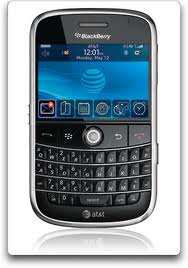
Blackberry users, dwindling though they may be, tend to be older. A 2” X 1.5” screen for that audience is como se silly.

Domino’s Pizza realized their Pizza needed fixing and did so.  I’m not sure what RIM is doing about its technology and customers, but teasing us with untruths, or perceived untruths is not marketing.  It’s pizzling all over us. Peace.

PS.  Can’t wait for the Lumia 900 to come to Verizon with Microsoft Tiles for Mobile.


Walking the planks. The brand planks.

0

Let’s talk about brand planks.  Brand planks, like political planks, are areas of discussion important to the people. In the case of marketing it’s the people who buy products. Across all categories price is important, service is important, so is availability – but these are prices of entry. A brand plank, all afore mentioned being equal, is a care-about that predisposes consumers toward your product. It’s a reason to buy or a reason to prefer.

Wal-Mart over the weekend was dinged for smearing Mexican government officials with cash to improve its move into the country.  Yesterday its stock took a 5% dive. Money traders felt the news would have an adverse effect on company earnings.  Brand planks, well managed, have the opposite effect.  They create value for a brand. 

Research, brand planning and science – the ability to predict outcomes – are what smart marketers concern themselves with.  Find the perfect troika of brand planks, message and demonstrate them daily and sales will happen. The tactics can change, the campaigns can change, but the planks are sacrosanct.  If the brand planks are right, it’s even possible they can survive a change to the brand strategy. Peace it up!

Content Socialist.

0

My current company Teq is looking to hire a person who is part blogger, part videographer, part brand raconteur. At JWT there is a great writer and mind — Kyle Monson, whose title was Brand Journalist. Today, he is titled Editor and Content Strategy Director.  I like his previous cognomen better.  I’ve used the words Media Socialist a few times in my blog but never put a job spec together for it. Media socialist, to me, suggests all media are important and all parts of the target are important.  But my company is in the business of selling educational development, with the emphasis on selling, so I’m going to use the title Content Socialist, putting the focus on the message rather than the media.

The hire will have to manipulate readers and viewers with strong content, but that will only work if the content is good for the community – the tribe.  Too many social media professionals are about their brand and the pass along.  They should be about what’s good of the target community.  One of my guard rails for social is “be interested in what your target is interested in.” That’s social. 

Social media professionals will abound in corporate marketing departments in coming years. Soon, ours will have its first content socialist and I am ecstatic. Peace!

Left Backs.

0

Here’s a new Millennial segment (Millennials being late teens and twenty somethings), I call them Left Backs.  Left backs are kids who leave the home for the first time, mostly to go to college, and don’t know how to do anything because their parents (often moms) did all the heavy lifting for them.  All that was left was the drama. Many have been immersed in sports to keep them busy, they’ve gotten good grades, perhaps had a job at the bagel shop – but mostly for show. Left backs have few street smarts though they may have seen some on MTV.

Left Backs are rarely late because parents are up their iPhones, have no sense of direction (too embarrassed to ask for help at a gas station), mom is #1 on speed dial, and Google is their daddy.  These kids don’t do too well with adversity, though high school sports helped, and when at college seek friends who are also somewhat socially behind. There was a giggle I learned at college that the rich kids didn’t know where toothpaste came from.  Somehow, at home, it was always in the medicine cabinet.

Kids that leave home with some independence tend to hit the ground running at college. They’ve been less protected and have the scars to show for it. Moms and dads need to “cut the leash” as Eddie Vedder sings.  Do so and your kids will start college without a parent-enhanced essay, but with some life chops. Peace!


Education is the best software.

0

As a student of B2B advertising and someone who has made a nice living helping corporations sell technology, services, even processes, I am amazed by how few marketing promises are served up in the tech space.  SAP will be the latest such company with a new campaign built around the word “Run.”  Ogilvy does the work, and I suspect it will look much the same as its IBM “Smarter Planet” work.  One headline from the new SAP campaign is “Run 10 years of numbers in seconds.”  A smart brand planner at BBDO once said to me good planning is about poetry, and there is very little poetry in this type of tech advertising – but there are lots of bucks in it.

I’ll tell you what makes companies and countries and planets smarter: Education.  Teachers. School administrators who love their jobs.  Technology people in inner cities who mine garbage bins to find PCs for students. Parents who care more about their kids educations than watching “Family Guy.”  Education moves societies. It moves cultures.  Software is nice. Hardware is nice…but it won’t stand in front of a bullet to save your life. People will.

Education is a right in America.  Now let’s make great education a right.  If we get great education right, we don’t have to worry about “clean technology” and porous borders and religious zealotry.  Peace.

The Craft (Beer) Economy.

0

This Saturday will mark the third year I’ve volunteered at the Long Island Cask Ale Festival hosted by the Blue Point Brewing Company and put on by Starfish Junction Productions.  I know, I know…dirty job, but someone has to do it.  Each year the weather is great, the brew terrific and the people and vibe — best of all.  This, my friends, is part of the Craft Economy.  It didn’t start with ETSY, but Etsy amplified it  The fun thing about the craft economy is that it’s really only a part of an economy, because its more about doing things yourself than paying others. And the work product is better.

So watching a plumbing video on YouTube to assist in changing your P trap is part of the craft economy. Cooking dinner with natural or at least unprocessed ingredients is craft.  Making beer at home or with a craft beer club, another example.  It’s about doing things for yourself and others (giving a neighbor some homemade spaghetti sauce, for instance) that take time, care and require some learning. Some experimenting.  Smelling the roses along the way.

Now you are not going to see me knitting anytime soon, and I’m still going to buy Levi’s button down jeans, but working with my hands and brain and not sending my hard earned to China or Omaha is where my head is.  Saving the planet along the way by not purchasing packaging and other non-sustainables doesn’t hurt. 

So as I volunteer and savor the occasional quaff at the Cask Ale festival this weekend and talk among fellow beer lovers and makers, I’ll be immersed in the craft economy. I will be among friends. (Oh, and the sour pickle guy will be there too. Yay.) Peace!


Sneaker brands lack diff.

0

Do you have a favorite sneaker brand?  What is it and why. 

I love Converse Chuck Taylor All-Stars, though I have to look to see how you spell Taylor. Black, high tops.  I like the style, the weight, the cost and for me they are a roots product.  As for my basketball sneakers, frankly Scarlett I don’t give a damn.  Probably more often than not I buy Nike, but that is more a function of what’s at the store.  I want to pay $50-100, I want them to last and not smell after a few months (good luck with that) but my allegiances are not strong.

I watch a lot of sports.  You’d think the advertising would have made an impression on me.  I recognize the Michal Jordan logo and like Michael Jordan. That said, I  have no interest in buying his shoes over any other.  That’s like 50 billion dollars of advertising later.  Why am I not a Nike or Jordan fan?  You tell me.  I suppose it is because they have not built anything meaningful in to the design, and patented it, that I care to invest in.  They have a great creative shop in Wieden+Kennedy. The ad craft is wonderful (I still love Mars Blackman) however there is nothing as a consumer I can tell you from a product standpoint that differentiates the sneaker beside the logo. (Not like nfinity with its “designed for women” cheerleading sneaker, for instance.)

Do you have a favorite sneaker?  If so, please tell me why. Peace!

Taglines as Word Grabs.

0

I don’t know why colleges don’t get branding. At its most basic a brand starts with a tagline  — a 2 to 5 lyrical “word grab” of company or product intent or mission.  Tagline’s are often campaign ideas written by ad agencies, that are so well received they find their way under the logo. For years. Mostly misunderstood, taglines lock up with logos and lie like faded wallpaper in poorly lit hallways.

Hofstra University has a new tagline: Pride and Purpose. It’s not 3/4s bad.  I’m pretty sure the word Pride refers to Hofstra’s mascot…a group of lions. Pride is a great motivating word in brand planning – one I chase all the time.  And Purpose is what all great university educations are supposed to engender in students.  The fact is though, when a good tagline does not support the advertising – and I mean every ad – someone is not doing their job.  You can’t tell the world you are all about Pride and Purpose then make a non-supportive, generic claim.  You just can’t do it.  And if you do, the tagline and strategy are either wrong or the leadership is.  Sorry to go all hard butt on Hofstra, but they just came off of 8 years of a campaign called “the edge” which was built around an art director design frame showing an arrow in all the print work.  It’s incredible to me that any academic institution would not know how to create a claim and prove it. And Hofstra is not alone.  The entire college and unversity body of work is abysmal. Peace!

AT&T Drafting Mobile.

0

AT&T, a brand that taught me many things about advertising and marketing, is rudderless from a branding standpoint.  Yeah, they are making ads. Yeah, they have a branding idea “Rethink Possible.”  And now they have a campaign idea “It’s what you do with what we do” intended to make the brand idea work harder.  But frankly it’s a qualifying idea that waters down the already watered down. Ester Lee and David Lubars know better.  This is a billion dollars of nothingness in one man’s opinion.

Back in the 90s both of these ideas would have been corporate advertising efforts for AT&T — a company that didn’t like to do corporate advertising.  AT&T liked products and services.  Bell Labs, now AT&T Labs, was a hotbed of innovation. It was innovation. I’m sure there are hundreds of engineers who will argue this from a patent point of view, but the labs have lost their way.

AT&T has become a mobile phone company with a bad rep for network, thanks to the iPhone’s history of dropped calls. For 20 somethings that has defined the company.  So Rethink Possible is simply a tag-along mobile strategy drafting a category whose imagination is being captured by Apple.  BBDO can do better. AT&T can do better. The labs can go better. Peace! 

AOL Brand. Buh bye?

0

The Huffington Post is gaining momentum.  A lot has been written in the media world about Ms. Huffington and Mr. Armstrong, the politics of bringing these two companies together and the lack of harmony.  Most of the press has been bad.  Sadly, all the falderal has taken the public’s eye off the ball. It appears that AOL and the Huff Post have been moving forward regardless.  Ms. Huffington has recently been given more responsibility at the company for most everything but advertising. That too, may move to her at some point.

The Huff Post started as an online media company. Online created and defined it.  Now it is just a good, improving media company in a digital world.  By June it will offer steaming TV content on the web 12 hours a day.  It is also growing internationally with a number of global news bureaus. The company has also invested in new heavyweight marketing and comms talent. The two companies are integrating, sharing a vision and evolving.  Apparently, while all the backchannel stuff was going on and the funky press bouncing around, there was a plan.

The Huff Post is a great media property and will be quite a success story. AOL’s days as a brand may be numbered. Kudos to Tim Armstrong and Arianna Huffington.  Happy coo-king.  Peace!