Claim and Proof in Brand Planning.

0

I’m reading the book Disruption by Jean-Marie Dru — it’s about time, I know – which was a pretty famous advertising thought piece back in the 90s. Even creative directors referred to it and they’re not ones to readily admit being inspired by other CDs. Live ones that is.

And Mr. Dru talks about two elements of an ad: the idea and the execution. The idea is the demonstration of the product value and the execution is the creative surround. So for Charmin bath tissue, said Mr. Dru, the idea was “squeezably soft” and Mr. Whipple was the execution.  

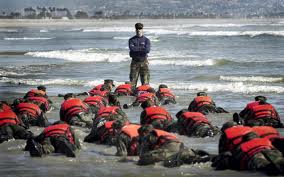
Brand planning for me follows this route for the most part, though I use words “claim” and “proof.”  The claim is the “idea” and the proof is the “execution.”  But in my world the execution is very organized.  Organized by selling schema in the form of three brand planks.  For a commercial maintenance company I wrote a brand brief that likened the company to the Navy Seals of maintenance. The planks were Preemptive, Fast and Fastidious.  When the client presented the company online, in brochure, ad or in person, the presentation was always cloaked in one of these three principles.  The company prevents problems through forethought, is absolutely quick to react, and precise and fastidious about every job.  Like a Navy Seal. This is a coda employees need to live by and one that customers find easy to grasp and hold on to. 
In branding, Claim and proof, well thought out, works every time.  That’s disruption! Peace!
AOL Not Yet Filling the Void.

0

There is strategy and there is execution.  A great strategy poorly executed pays naught. I like AOL’s “content is king” strategy; buying the Huffington Post and TechCrunch were nice blockbuster moves.  There are two ways for these purchases to go: either the properties will be enhanced by AOL and grow or they’ll be hindered and slide.  At the high end, these two purchases are defining moments and should be very interesting to follow.

But let’s look at the lower or middle tier. AOL now needs to find some traffic-building Posters (original content creators) on their way up.  Not those owning killer numbers, but those with killer points of view and motivations with big upside.  Sports teams make a living off of young over-performers who are killing it before their first big contract. Up and comers are what AOL needs. Some of whom may not even be Posters yet.   

Finding potential big time Posters is R&D in the web content world.  AOL needs to research what people like online, then find and/or develop the property.  Content is not writing. It’s not reporting.  It’s not curating or aggregating. These are content tactics.  The best Posters (who attract the all-important Pasters) are people with an idea, a passion, a motivation or a love. They are also sharers.  AOL is buying media properties and traffic and that’s a good start, albeit a bit old school.  It now needs to do some R&D and find ideas that fill voids. In markets and brains.  Peace!

Feets Don’t Fail Under Armour Now.

0

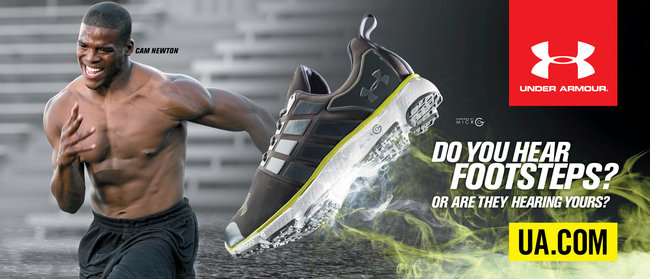
Under Armour is introducing two new sneaker designs (May I call them sneakers?) this week in an attempt to increase its share of the $22B athletic footwear (sneakers) market.  A market, by the way, that was only about $3B in 1993.  The TV campaign handled by Twofifteen McCann and Digiteria for digital offers a lot of smart tactics: the director of Friday Night Lights, a YouTube takeover to reach the younger buyers, limited distribution to build demand, Cam Newton, and an idea that ties sneakers to sports action – FootstepsAs smart as these tactics are, they feel like a pastiche of forced-together marketing tools from an Effie Awards Annual. I suspect they will work, however.

First and foremost though, one must ask if footwear is a business Under Armour wants to be in.  I say no. And I’ve said so before in WTI.  Sunglasses? No as well. UA founder Kevin Plank, in his heart knows this.  He owns a franchise that is now being diluting.  You can’t keep sticking the same tea bag in new water.  The company already owns fast twitch muscle, form fitting wicking shirts but will lose that ownership as it takes its eyes off the ball. Wicking sneaker tops?  Not so sexy.  Lindsey Vonn. Oh yeah.

Mr. Plank’s next move should be into form fitting shorts and shirts for the fashion conscious market.  Leave the kicks to Nike.  Or start a new footwear endemic company  This is one brand extension that might sell some shoes near term, but is going to turn Under Armour into a brand in decline overall.  And it’s sad.  Stop playing with feet! Peace.

(Picture from NY Times.)

Levi’s Has Lost its Rugged Way.

0

I love a good cause.  Clean water, sans parasites , in the developing world (Africa) is one such. Levi’s jeans, as part of its “Go Forth” campaign, is sponsoring a Facebook program that ask people to click their support for Water.org, and once a 100,000 clicks are gathered Levi’s will donate money.   This is “good’s work” (thank you Bailey’s Café) and it will make a difference. I support it and suggesteth everyone go forth and donate. That said, Levi’s still needs a brand idea and “individualism and independence” ain’t it.


If Levi’s cares about the environment, and I know it does, they should jump on the durability wagon.  Buy one pair, don’t get one free, you don’t have to buy another pair for 3 more years.  That’s environmentalism.  And stop with all the stone washing stuff that wears the jeans out a year early.  The worn-in patina of a pair of Levi’s is the badge.  Faded knees, faded pockets, holes in the crotch.  This is life. Not art imitating life.  Don’t pay some schmekel to pre- tear your jeans…get up on the life cycle and wear them out yourself!

Levi’s is one of the great American brands and it has lost its way.  FCB got it.  BBH got it a bit and sexed it up. Wieden and Kennedy, a brilliant shop, has found a core, but it’s the wrong core.  Individualism and independence a brand plank, not “the idea.” 

The Water.org project should be left to the PR dept.  Fight the durability fight (it’s American) and get mad credit for the environment – on so many levels. Peace!


Fear…meet anger.

0

NYC’s Mayor Bloomberg is doing something really noble, it was reported today. He is spending some of his personal foundation money to help black and Latino male youths stay away from jail and become more employable and more employed.  Total dollars spent will be $130 million. If handled well, it will improve the quality of life of this group of young men who index high for lives of crime, becoming baby daddies but not husbands, jail time and recidivism.

I’ve read about a number of the program tactics and many are well thought out. Morning remedial classes and skills training tied to afternoon paid internships. Re-training 500 probation officers. 900 paid mentors. Yoga for anger management. Computer skills classes. Lots of tactics, but no strategy.  I’m not feeling a “see something, say something.”

Before Mr. Bloomberg gets out the checkbook and feeds the tactics mill he needs to get the strategy right.  The young men who are most at risk are angry.  Besides their anger sometimes all they have is pride or false pride.  Not being a good reader or student does not create a prideful environment for a man walking into a classroom.

Fear also surrounds this class of young men.  The fear they create in outsiders. The fear these young men instill in each other which is coin of the realm. The fear of losing control when trying to climb out…or of appearing to sell out.

Before the first million is spend on this important program, behavioral planners need to understand the fear and the anger. Really understand it.  With that understanding, working with brand planners they need to craft a strategy. Don’t hire Jay-Z. Don’t offer up Amare. Find a strategy that works on the street.  Not above it. Peace!

ToyoTags and Twitch Point Planning.

0

There is a marketing axiom that the majority of consumer product marketing takes place before a buyer arrives at the place of sale. Sure packaging and POS advertising are important but in marketers’ minds most of the heavy lifting has been completed. 

A web start-up assignment I am working on has me thinking about the role of smart phones in the decision making process today. As part of my strategy, I’m asking the web team to make sure the website is consulted before, during and after the shopping experience.  The phone is in hand during all three stages, after all. Why not use it and optimize it.

Toyota is in the news today along with a smart mobile company SpyderLynk discussing ToyoTags, a picture snap-able logo that directs smart phones to online content – the goal of which is to move the consumer closer to a transaction.  An example cited in a NYT suggested that when the Prius was having brake issues not long ago, a ToyoTag snapped in a newspaper ad directed readers to a National Highway Traffic Safety Association report for “truths” about the issue. If you’ve been reading my recent posts on Twitch Point Planning you’ll recognize this as an example of a twitch that moves a customer closer to a sale. A positive twitch.

Finding reasons not to buy and removing them is an agenda of Twitch Point Planning.  Tools like the ToyoTag and SnapTags designed by SpyderLynk are wonderful ammo in this arsenal.  This stuff is not just new for the sake of new, this is purposeful.  Good work. Exciting work. Peace.

What comes first, the brand plan or segmentation?

0

My first real exposure to a marketing segmentation study was with AT&T Business Communications Services back in the 90s.  AT&T created 23 different product offerings, or packages, to meet the specific corporate telecommunications needs of various large customer profiles.  The revenue stream was in the billions.  That’s a lot of segments.

Segmentation is a great marketing undertaking.  It forces sellers of product and services to drill into customer usage and see patterns.  Creating packages of products to meet that usage, surrounded with specially focused levels of care, and pricing tailored to that package is what segmentation is all about. Pay only for what you need — because one price and level of service does not fit all.

A brand plan goes the other way.  It does have to fit all.  So while segmentation people need to see patterns among discrete users groups, brand planners need to see commonalities among all user groups.  When Peter Kim, a chief strategy office at McCann-Erickson in the 90s, talked about brand targeting he used the word “remassify.” His targeting rigor started by understanding all of a brand’s targets, one by one.  Get to know them intimately, he suggested. Understand how they use the product. When? Why?  After amassing all the different targets, he put them back together to see what traits and care-abouts they shared.  Remassifying into a segment of one. From this learning emerged stimulus for the brand brief claim. For brand action or what some today might call brand activation.  So you tell me, what comes first the segments or the brand plan?  Peace!

The New Yorker and Twitch Point Planning.

0

Twitch Point Planning is a communications planning technique I discuss with clients to get them to “understand, map and manipulate” media consumption in a way that moves viewers closer to a sale.  Twitch Points are called such because today’s tools make it way too easy to multitask and twitch away from one media form to another.  Un-planned, this can be a bad thing.  Planned, it is a good thing.

I was reading about Conde Naste’s biggest iPad success today, with The New Yorker magazine. 75,000 paid magazine subscribers have downloaded the iPad app and 20,000 people are subscribing via the app alone. As one looks at the behavior of The New Yorker readers (the first part of understand, map and manipulate) it is clear that these readers are there to read. They don’t want to twitch away to Wikipedia to look up authors, or watch YouTube videos of punk bands inspired by the authors.  Readers of The New Yorker want to read and don’t care to be spammed away. So, here’s an iPad app for New Yorker readers:  automatically send incoming calls to voicemail.  Hee hee. Peace!


Not So Happy Meals.

0

McDonald’s is taking a lot of heat for pushing high calorie, high-fat products to children and promoting them with toys in their Happy Meals.  (Full disclosure, the wifus buys happy meals for the value and portion size.)  Michelle Obama is doing good work in this neighborhood, setting the tone and fighting childhood obesity. We all need to jump on that bandwagon.

Here’s my take. If we can put a TV into a phone, we can probably find a tasty, healthy alternative to french fries, soda, cheese burgers and salt.  McDonald’s answer is to reduce the number of fries in the Happy Meal and add some apple slices.  Have you ever had apple slices in a bag? 

So here you go Mickey Ds – get a few chemists in the room, along with some nutritionists, commodity traders and a chef or three and fix this thing.  If anyone can, you can. BTW, I’d love someone to invent a quarter pounder with cheese that doesn’t send my cholesterol all aflutter.  I love that burger but refuse to eat it.   

It’s a big planet.  We grow lots of things on this planet.  In the next millennium we’ll engineer food things that grow that are unlike anything we’ve ever seen or eaten before. Healthy things.  Fast food companies that invent and package good tasting healthy food products will be the new clean tech. (Another area in need of leadership.)  Peace!

Reducing Lost Sales on the Web.

0

There’s a great business and brand planning question I often use during discovery: “Who will win the sale you lose?”  If talking to Coke, the lost sale might be to Pepsi (not likely), a store-brand cola, a couponed cola or maybe a tea or flavored water.  If speaking with Microsoft about Office 2010, the lost sale might be to Google Docs.  Conversely, it’s also nice to know who will lose the sale your brand is going to win.  Nice questions — all with actionable strategies. 

With the growth of the Web and social media and the preponderant ad-supported model where many services are free (see Google Docs), there’s no sale to lose just a lost ad impression.  Readers know I’ve been working on a marketing planning tool called Twitch Point Planning. A twitch point is a point in a media experience, where the visitor disconnects. So, if I’m reading a magazine article there is an Emily Dickenson poem cited, I might twitch over to Wikipedia for a quick side-bar. Or I might Google her and the verse. In this example I’ll likely return to the article, but in many cases I’m gone.

Why is Twitch Point Planning important?  It’s important because as a publisher or marketer you want to minimize the loss of your audience. Or, you want to twitch them deeper into your site or sales process.  Facebook is such a force because people don’t twitch away very much.  And many marketers are even understanding the value of completing the sale on Facebook.  

Marketers need to understand, map and manipulate Twitch Points in ways that provide branded value (not spam) at the most appropriate times.  If they do so, they will be able to reduce the space between the consumer and a transaction.  Peace.