
Life Imitating the Internet.

0

Good marketers and brand planners like to view the world beyond the marketing dashboard. That is, out past the windshield, beyond the dials and digital displays.  They’re good at predicting the future – seeing what’s ahead.  In order to do this, marketers and planners have always used research, concept testing and test marketing.  

What’s so cool about the Internet is that it has given marketers and planners an entire world of real time research from which to mine new product ideas.  People who play virtual games online, especially fast growing games, are a great source of new product intelligence.  If we listen and watch carefully we can figure out the messages they’re sending us.  First message: They like the activity. Second message: They prefer to participate in the activity on their terms (on-demand, low cost or free, low personal impact, if one loses.) 

Farmville’s Message.

For instance, what does the amazing success of Zynga’s Farmville game tell marketers about real world product development?  Well we all know watching real vegetables grow is a lot more fun and rewarding than watching a virtual crop, so the marketer who creates a low-cost system to grow real vegetables (lettuce, tomatoes, cucumbers?) indoors (or out) with little time investment, will have success.  A lot of people love the idea of farming, they just don’t have the 21st century tools. What other online behaviors do you see that predict offline marketing success? Peace!

Poor Sprint.

0

I feel for Sprint, I really do.  They were the first and only top-tier national fiber optic voice and data network yet they never made it past #3. They started when analog telephone calls and digital data packets were coin of the realm.  Today, when speed is needed more than ever, when iPhone users are complaining about dropped calls while sitting in front of computers with sluggish load times, poor Sprint and its lightning fast fiber still aren’t getting any respect. Fiber is an idea consumers understand. Sadly, the story has never been correctly told.  

FIOS, a Verizon product built on Fiber, is gaining mindshare in NY as a faster means of digital transport. (Fiber into the house makes machines scream.)  Sprint, on the other hand, is airing a TV spot promoting the HTC EVO mobile phone running over its 4G network — the world’s first 4G network – using a strategy about “firsts.”  The TV spots borrows a visual idea from Honda and Google (so much for firsts) showing other technology innovations tipping over in dominoes fashion. A Model T, knocks over a bi-plane which knocks over a steam locomotive, etc. It’s so far removed from fiber, a medium that connotes speed and clarity, you might as well be watching a Fruit Loops commercial.  

Verizon, via Droid, is implying “futures” in its TV work. Sprint focuses its images on the past. Quick, close your eyes. Visualize which company gets credit for speed? No contest.

Where the Geezers At?

0

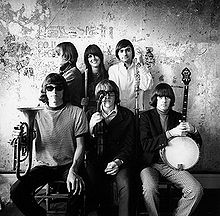
I’m part of a demographic group that indexes very low for blogging.  Only 7% of people over the age of 50 blog.  So where my people at?  What are they doing?  A bunch are finding there way onto Facebook.  And they’re using the web for search and commerce. They are “liking” the Jefferson Airplane and “Grateful Dead,” using the ether to remember the good old days. I suspect a handful are being social commentators on politics and morality, but probably limited to commenting rather than real Posting. 

I’m just not feeling any high octane communications from the older guard.  Where’s the mentoring?  It not like Millennials don’t need it?  Hell, they are listening to our music. (Disclosure, I like rap.) And just because the geezers don’t “check in” or “tweet” or “text” doesn’t mean they are out of it.

I want to hear first-hand from those who landed on the beaches of Normandy. I want to read stories about Woodstock. I want to hear from a real Mad Man.  WordPress or some other blogging platform needs a campaign to gray up the web.  Make it easier to set up sites and post. Plumb the depths of the blogging underserved. We need to hear from the 93% of those who are silent. This is a big commercial opportunity! It will make the web more exciting.  And timeless. Peace.

Brand Plan(ks)

0

I say brand plan you say________? Right.  No one really knows what a brand plan looks like.  That’s not to say Proctor and Gamble and L’Oreal don’t have brand plans. Or that Publicis, Ogilvy or Crispin Porter don’t have them. They do. But what they’re called and how they are organized are all quite different. 

Brand Strategy Statement.

My brand plans are simple to understand.  They contain a brand strategy statement which I tell clients is a suit strategy.  It’s not very catchy, not creative or tagline-worthy, but it tends to hit the CMO and CEO right in the solar plexus.  It may be contextual and/or contain metaphor but it’s certainly a quick, decisive statement of the brand value. 

Brand Planks.

Beneath this simple statement are three planks. Brand planks. Borrowed from Bill Clinton’s first election campaign when the mantra was “It’s the economy stupid,” a brand plank is a product development and messaging directive.  My planning process begins with the gathering of formation. Then I boil it down into its most powerful, tasty flavors and those flavors became the planks.  Of course, I make sure the planks are key consumer care-abouts and key company strengths (or potential, attainable strengths). 

But lately I’ve been analyzing the planks to see if they share any formula for success.  Thinking about what makes good brand planks before I fill the stock pot with data and get sidetracked is (sorry Bud Cadell) what consumes me. 

I haven’t gotten there yet but here’s a quick start: 

One plank should educate (it’s what leaders do). One plank should engage (motivate preference).  And one plank should personalize (create a personally meaningful connection between the brand and consumer — bring the consumer closer to the brand). 

This stuff is mapping the branding genome hard. Or not. But when I finish, it’s going to be exciting.  Peace!

“Honey. Wash With This.”

0

There is an interesting strategic disagreement going on in the men’s body wash category these days.  The commercials and video on TV and YouTube from competitors Axe and Old Spice focus on different targets. Old Spice, acknowledging that 70% of men’s body wash (a more expensive, soap substitute) is purchased by women, is using the much talked about “smell like a man” campaign from Wieden + Kennedy directed toward those women buyers. The campaign is smart because the message in not lost on men.  Conversely, the Axe work shoots straight at men, suggesting “Use Axe body wash and you won’t have to aks (New York for ask) girls out, they’ll flock to you.”  Axe is attempting to change behavior. That is, they’re trying to convince men, young and old, that it’s okay to use cleansing gels rather than the traditional, inexpensive, manly soap.    

Bud Light convinced young men that it’s okay to drink light beer, so growing the body wash category is not a bridge to far.   

It should be interesting to see who wins this strategic battle.  Will the guys without dates who are most motivated to spruce up not respond to the Old Spice work targeting women?  No, I think they will.  They’ll get the message.  But probably not ask strongly as they will receive the “chick magnet” ads from Axe and BBH. Will lady-less men’s mothers buy them body wash?  I hope not, that certainly will be counterproductive.  “Honey, I saw something on TV….” Peace.

What is the opposite of UX?

0

Thanks to the Web, more and more we are hearing the acronym UX (User Experience) in marketing discussions, referring to how one experiences and navigates a website, game or other interactive property. In the print world, UX was tied solely to art direction — things like reading from top to bottom, left to right, or where an eye fixates first on a page.  But with so much to see, read and do on a webpage the science of UX has become legion.

Metrics and Tools

So what’s the opposite of user experience?  When users experience a website and engage with a company via the web, what do we call the resulting intelligence?  What’s the short hand term? Mostly it’s called metrics: hits, clicks, time on site, referring site, bounce, etc. Over and above metrics, thanks to social media monitoring and measurement tools from Radian Six and (freebie company) Social Mention, are more behavioral quantitative views: sentiment, passion and affinity.

Indirect Benefits

In her new book Open Leadership, Charlene Li talks about some harder-to-measure things that engagement and dialogue can accomplish for a brand, referred to as “indirect benefits.” When a non-employee in a brand community answers a help question it reduces customer care cost and gives that helper a sense of brand accomplishment – both direct and indirect benefit.

All of these inbound forms of market intelligence or user intelligence are valuable. Business changing valuable.  So what shall we call the opposite of UX? What a company experiences when mining intelligence.  It needs a name. Involvement tracking? User forensics?  What is your top-of-mind thought? Peace?

Talent is an Idea!

0

MDC Partners is a marketing services holding company with a brand strategy.  That’s right, they have an idea. IPG doesn’t, though back in the day one might have assigned them “entrepreneurship.” WPP, Publicis, and Omnicom don’t have ideas, though perhaps at one point Omnicom might have owned “creative.”  At holding companies the powers that be feel brand strategies are not really needed.

MDC Partners owns talent. “Where great talent lives” is their idea. For some, that might be a platitude or poesy but for Miles Nadal, CEO, it’s a real strategy.  As a practice, MDC does not own a majority stake in its companies, it owns 49%.  This insures that great talent will stick around.  Their hands-off approach also insures that the talent stays great.  Though I only know Mr. Nadal through his actions and deeds his focus is solely on the leaders he hires, not their output.  Any person who has been around this business knows managing people is easier than managing work output.  Talent is what drives great marketing.  The talent to see what sells, the talent to package it, and the talent to promote it has driven the business since soap suds.  Never mind if that talent is traditional, digital, mobile or whatever’s next. (What could possibly be next?)

 MDC Partners stock grew last year while every other holding company’s tanked. Campaigns come and go and talent comes and goes, but in the marketing world “talent” is a powerful idea. Peace!

Google’s Big Decision

0


Google, the most successful, exciting brand in technology and consumerdom is at a crossroads. Its culture of technological obesity (sitting on a lot of tech calories) has it on the verge of creating a social networking property intended to wrest control of that category from Facebook.  Eric Schmidt is a very smart man.  He made many investors lots of money as CTO at Sun Microsystems, leading he team that developed Java software among other things. He saw what happened to Sun after his departure when innovation lagged and he doesn’t want that to happen to Google, the company for which he is now CEO.

Search

Fall forward fast is sound business advice but its best done when following a focused mission. Google’s mission (We deliver the world’s information in one click) is not what social networking is all about. As the Web gets bigger and more tangled — like kudzu in Georgia – it will be harder, not easier, to find the stuff we want. Owning search is still huge and will become more so.  Worldwide pricing. Finding people. Finding the right content. Finding geolocated mobile phones. Finding video. Audio bits. This (and then some) is what Google and its next gen technologists need to be developing. Why are they focusing on Facebook?  Search me. Peace!

I Smell a Twitter Revolution.

0

Twitter’s soon-to-be-launched service @earlybird will transform marketing. @earlybird is a promotional service that posts participating companies’ specials and deals on a wide variety of products and services — a cut of each sale going to Twitter. It will generate billions in incremental sales for sponsoring companies and serious revenue basis points for Twitter. Such a deal!   

No doubt they will find a way to organize these deals by category, e.g., restaurants, technology, consumer packaged goods and, more importantly, geography.  Think of it as  Woot.com but offering thousands of deals a day.  Someone commented about the service in The New York Times, thinking that it would gum up their twitter feed — deals flying across the screen every minute, but the beauty of Twitter is that you don’t have to follow @earlybird (I hope) you just have to visit the tweet stream. 

Twitter will transform commerce well beyond coupons and customer service. And this 140 character promotional vehicle is just the beginning. The idea to have an idea.  I can smell marketers lining up. And small local businesses?  They’ll have an absolute  field day with this thing.  Oh the possibilities. Can’t wait. Peace!