Super Bowl’s Boorish Ads.

0

Was it me or was there an awful lot of violence in the Surer Bowl ads last night? One glaring example was the spot where octogenarian Betty White was tackled in a Snickers spot and  Tim Tebow’s mom was tackled in the next spot. 

Then there was the flying Dorito piercing the neck of the snack thief, a spot where everybody kept hitting or slapping each other (I’m still beside myself with laughter) and an assortment of other “people tackling people” spots. I’m no prude, but this was just boorish.

Is this the result of the violent video game phenomenon — where the lowest common denominator for the American target is slapstick violence?  Granted, there were lots of commercials that did not use violence as a humor device in the Super Bowl last night.  And I know football is a violent game, but how many kids are going to slap one another at school today and giggle as a result of last night’s body of work? Most people will think I’m overreacting but those at the women’s shelter won’t. A pretty embarrassing night for me. PEACE!


Blogging for Serious.

0

Back in the day, most great writers went to work at a newspaper, magazine or ad agencies if they didn’t write books. This is still pretty much the case but today they have a new outlet for their craft the “blog.” 

Blogs can be an entrée to jobs at print properties and ad agencies but they can also be an exit.  The latter route – the exit – is growing and will continue to grow.  Take A.O. Scott, the film reviewer for the New York Times. Mr. Scott is a wonderful writer and movie critic.  Many believe his words and spend their hard-earned based upon his reviews.  But he is one lone voice in the ink and digits that is The New York Times.  A.O. Scott’s content is of value…he is an important brand.  Were he to focus his craft on his own blog he could make some serious (cash). Today, Mr. Scott can choose to become a personal publishing brand and do things he couldn’t think of doing while at the NYT. (Not saying he will, it’s just an example.) 

Today, a percent of great writers with mass appeal are getting out of the journalism business and get into the blogging business.  In the blogosphere there will be lots of dreck… but there will also be a great deal of commercial successes. Blogging is a powerful, powerful medium (my blog aside, hee hee.)  Peace!

Aol, Cisco. Feed the Beast.

0

Cisco and AOL both reported earnings today. Cisco, maker of Internet plumbing, had a very nice turnaround ; AOL posted its first profit since de-coupling from Time Warner – a penny a share. Not bad, all things considered. 

Cisco Systems

If you follow Cisco you know they have invested in getting more people to push more bits over the Internet.  Think Gillette getting people to shave their entire bodies.  (Okay, bad analogy.) Cisco has pushed videoconferencing for years and not too long ago bought Flip the hot video camera company. The more digital info that goes over the net, the more routers and switches and stock Cisco sells.

Aol

This is exactly the approach Aol needs to take.  Aol makes money on advertising so it needs to create content that makes more eyeballs and fingers go to their sites. Right now that means hiring great writers, videographers, creative people and buying and adding to the fold well-trafficked sites.  Better content, better audience numbers.  But Aol is not really thinking out of the box yet. It needs to come up with content types that haven’t been done.  As the Brits might say, they need to be more inno-vit-iv. How about an easy to use, easy to read email device for the AARP crowd?  Or an educational games for infants?  Or a remote home automation portal that lets you turn on lights from the street?  Aol is still thinking in 2 dimensions, a la a publisher.  Like Cisco, Mr. Armstrong needs to feed the beast.  Let’s pick it up!

Smith and Wollensky is Back.

0

Back with a flourish.

Back in the day, so the story goes, Smith and Wollensky’s Steak House was about to close its doors for lack of business.  Poppe Tyson and creative director Fergus O’Daly created an ad for them – a full page in The New York Times – with a life-size picture of a Smith and Wollensky’s matchbook in the lower right corner atop a small headline: “Finally a match for the Palm and Christ Cella.” The rest, as they say, is history.

Steak for Stock

Today in that same New York Times Smith and Wollensky continues its great run of print advertising with “Steak for Stock.”  Not sure if Alan Stillman (CEO) is still behind the advertising but it certainly feels like him. The “Steak for Stock” ad invites you to bring in valid stock certificates in exchange it for a juicy, aged and perfectly charred sirloin.  Can’t you just smell the certificate paper?

Smith and Wollensky has made a living with its wit, its wine, its relevance and its meat and spinach. I’m probably borrowing this from Ben Benson’s, another brilliant NY steak house, but Smith and Wollensky’s is, indeed, the quintessential NY steak house.  Great to see them mixing it up again.  Peace!

Davos for Marketers?

0

The World Economic Summit currently underway in Davos Switzerland should be recreated once a year for all the leaders of the advertising and marketing communities.  We should probably throw in a few economists just to keep the event grounded; after all, the real prize is money. 

The polyglot array of marketing agencies which make up client rosters today is insanely inefficient and needs to be fixed.  Some big global companies have 50 plus ad agencies. Add to that  public relations shops, direct marketing companies, digital, events/promotions, and the newly coined social media shops and you can begin to imagine the waste.  The donut and bagel budget alone must be incalculable.  And all the people needed to effectively manage these many agents is also a big honkin’ number. Plus communications, travel, entertainment, etc.  Smart agencies and holding companies should take the lead on this — but that’s not likely to happen.

Davos for Marketers will, no doubt, be held in Cincinnati and it should be broken into two parts: all agencies then agencies plus marketers.  No golf, no awards, no spousal programs, just hard work intended to optimize the silos, the workflow, outputs, integration, proper spending and measurement.  I suspect the first year will be a mess. — metal detectors will be a good idea — but the reality is, for marketers and their agents it will be an important step toward building a more effective marketing future.  Peace!

Brand Strategy…Say What?

0

Quick, I say “brand strategy,” what’s the first thing that comes to mind?  Okay, let’s try another.  “Brand plan.”  You say ______?  This sort of brand speak is really inside baseball to most businesses. Over the past couple of years I’ve spoken to some really smart people from many different walks of marketing life and they all know the words but, ask them to define or diagram them on paper, they can’t. 

Wikipedia “Brand Plan.”

Wikipedia the words “brand plan” and Wiki asks you “Did you mean Brand Play?”  The first option under the question is business plan.  Wikipedia “Brand Strategy” and it says “You may create the page Brand Strategy.”

Everyone agrees that brands are important…that they have value.  Most understand brands need to be managed.  What they don’t always get is that brands need to be managed to a tight brand strategy.  So they default to managing brands based upon acquisition, sales growth or retention metrics — all of which are measurable.  Thanks to the web, we can now even measure clicks and views and engagement and referrals and, and, and. And tie measures to dollar investments.  Break out the dashboard and play marketing videogames.

So if brands are important, and we all agree they are, how do we measure the efficacy of the brand strategy?  I often use the example that Coke’s brand strategy is refreshment.   Today, Wieden + Kennedy and Coke would have you believe it is happiness. Who is right and how to we find out?   

Now don’t get me wrong, a powerful brand strategy is only so if it increases sales and margins. Period.  But tying sales and revenue increase to a strategy, not a tactic, is what’s what. Peace!

Apple PR. Think Different.

0

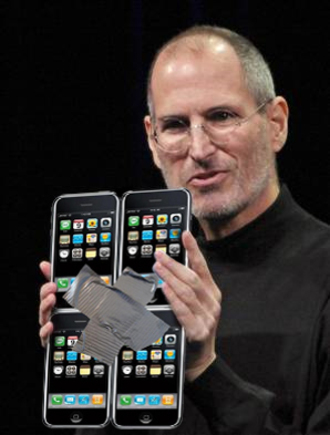
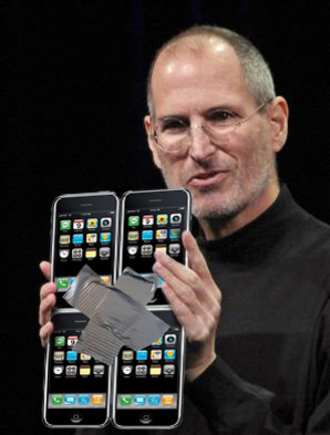
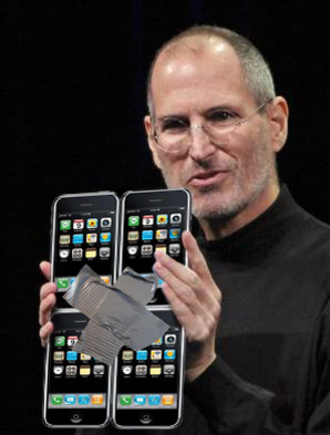
Wanting to tune into the Apple iPad press conference yesterday I spent time toggling between live.twit.tv and one of Robert Scoble’s video feeds. It was certainly better than nothing, but considering this day and age it was pretty prehistoric. Video reboots, freezing, hippopotamus grunts, feedback, poor screen grabs aplenty.

After about 20 minutes I blew it off and brought the car to “Tony, Park Avenue.”

The event was reported to have slowed down Twitter, gobbled up lots of bandwidth and, stirring though it was, was not nearly the event for outliers it could have been.  So, as a PR event it was a fail. 

A couple of weeks ago, Mr. Scoble was allowed into the Google Phone launch event and though there were some hiccups, it went much better. He streamed from his laptop. The audio was good, the video okay and the overall experience rewarding.  But had both these events been on television, the experience would have been perfect.  Were they both streamed over the net with the right software and load balancing, they would have been close to perfect. 

Apple wants to treat the press to first dibs. Also, it wants partners and employees to have a better seat.  But the press gets this stuff for free – they don’t pay for it. I know the press is supposed to influence millions of potential buyers but this is Apple.  The demand for Steve Job’s presentation and the iPad, comes from real buyers.  This event should have been open to the global public. This event should have been for the people. This event should have been handled better. Think different. Peace!

Apple Tablet + RE (Reader Experience)

0

The Apple Table launches today and it makes me think about its transformational nature.  If the tablet is a combination of reader and iTouch as most report, with a few extra wireless bells and whistles, it should be quite so. 

Some articles appeared yesterday that suggested print media companies will be developing reader experiences (RE – just make that up) to make reading digital content more enjoyable.  Think the printed word with sound, video and geo-linking.  But here’s my prediction — rather than embedding links in situ in a story, they will be organized at the end of the story or chapter, like a bibliography.  The written word needs a flow and pacing. A thought stream.  In both magazines and book form.  Clicking out to videos, communities, maps, audio files, etc. while reading is a very ADD and though something we’ve become accustomed to in the digital world, a behavior that good publishers will want to minimize. 

 There will be great attention paid to Reader Experience over the next couple of years.  It should be interested to see who establishes leadership.  I’m thinking the MPA (Magazine Publishers of America) should step up.  Tablet ho. Peace!

Photomontage: Robert Galbraith/Reuters

Twisted Juice.

2

Mitch Joel and Jaffe Juice’s Joseph Jaffe squared off yesterday in a podcast that was a good deal of fun.  Each agreed they were good friends but that was about all they agreed upon — save for the obligatory strokefest at the end.  Mr. Jaffe is a principal at Crayon now owned by Powered and Mr. Joel is president of Twist Image a leading digital shop based in Toronto.  Both are published (books, blogs and pods) and practiced “duelists.”

The discussion with which they played pong was “Is social media a discrete marketing practice?” Mr Jaffe says “yes,” Mr. Joel “no.” 

The crux of the debate is this:  Social media needs to be well integrated into the marketing and digital practices of corporations. Today, it’s not.  Mr. Joel says there are smart companies doing so and he’s right.  Mr. Jaffe says those companies are the “exception not the rule” and he’s right. Powered is betting that specialized shops – best of breed social shops – will be better positioned to make waves and earn low hanging engagements.  Mr. Joel believes that cleanest most likely social successes will come from integrated digital shops, and in the long run that is probably more correct.  But his approach is less promotable and less newsworthy.   Social media is the haps today.  There is demand for it and a social marketing swell surrounding it. 

Da Monies.

So where is the money in social media?  Tweeting buy the pound? Friending by the hundred? In strategy?  Yep.  Where is the money in the integrated approach? The answer is tweeting by the pound and building websites – a more lucrative approach.  

Win by Knockout?

No. Both arguments are very compelling. Mr. Jaffe and Powered CMO Aaron Strout are loudly breaking new ground. (There are supposedly scores of quiet social media agencies in NYC alone.) Mr. Joel gets it for sure, and though his sound bite is not as powerful he will probably have higher margins this year. Were I a marketing director and these two pitching my business, I’m sure the last one to present would win the business.