Marketing

    The Muddled Middle.

    0

    In the tech category, moving to the middle is what the revenue hungry do. Rather than perfect what they are, they see money and desire an expansive make-over.  Google’s culture of technological obesity has driven it to invest $100 million dollars in new content for YouTube.  Being king of search is not enough; now it wants to be the next video TV station.  Google suspects there will be licensing issues for playing other people’s content and so wants to create and enable new video content to drive traffic.  As we all know, public access programming and 9.5 out of 10 consumer generated videos are deathly boring.  $100M should help bring in some creativity and will work for a while, but is a poor investment.

    Case two: Twitter is talking about creating brand fan pages so they can hit some of that advertising revenue.  Misfire.  They, too, are moving toward the muddled middle; a place Facebook with its fan pages and Likes is filling. Twitter needs to let brands Tweet their stories and value, leaving the undifferentiated fan pages to others.

    The thing that made the iPhone take off is application developers.  What will make Twitter accelerate is also application developers – but marketing application developers, and here’s a secret: Twitter is so easy to use and so much of the work is done (read hashtags) that non-coders will be the app developers on Twitter.  Twitter will win many of the marketing wars, it just has to stop moving toward the middle and let the apps evolve.

    Why do all technology companies covert thy neighbor’s partner? Love the one your with.  Peace!

     

    Brand Strategy. Now, with feeling.

    0

    There is this odd phenomenon that occurs when I present a branding brief to a client. 

    My brand brief contains a definition of the living, breathing target (not a demographic), an articulation of the target’s key care-about, the role of the product in delivering on that care-about. It covers the key market sensibility related to the product or category, and any enduring attitudes about the brand that might rise to the top. Not atypical stuff.  Of course it’s what you do with all that stuff that makes a brand strategy great.  When everything has been gathered and funneled down to a simple, no comma, no conjunction idea — when all the effluvium has been boiled away — what remains is a single declarative statement of brand intention.  That is the moment of truth.    

    When I present that statement and I’ve my job right, the client lights up like a Christmas tree. We are brothers and sisters. We are from the same parents.  We are friends. But then…then, the odd phenomenon begins to creeps in. You can feel a loving “but” coming on.  This is when they say: “I absolutely love it, it’s perfect, but do we have you use the word_____.  And it’s the pivotal word.  That’s when I know I’ve got them.

    Just like great creative, a great brand strategy has to take a client out of his/her comfort zone. It has to feel like work. It has to make clients and consumers emote. A brand strategy must aspire.  Campaigns come and go, but a powerful brand strategy is indelible. Peace!

    The biggest wealth exchange in history.

    0

    Sorry for the late post but I was at the monthly meeting of the Social Media Club of Long Island. Great stuff.  It started a little slowly in that the speaker Constance Korol did the typical context-setting commercial but it really picked up and ended being quite thought provoking.   (In this “fast twitch media world” had I not been in a seat, I might have clicked through. Glad I didn’t.)

    The topic was social media in China and its use for commercial purposes.  Sina Weibo is the social network of choice in China.  Sina numbers only 100 million registered users.  Did I just say “only 100 million?”  China is big, in other words.  And as a social media market it is going to get crazy bigger.  In fact, when Nokia and Microsoft figure out how to create a US $49 smartphone, that hundred million number is going to jump…creating the single largest wealth exchange in the history of mankind.

    The thing about China is…it’s China.  You can learn by friending people through cracks in the firewall, but to really learn you need to have feet on street.  The country is so closed off and so monitored only hacks will get you through.  But what a country in terms of marketing opportunity!  What a laboratory.

    Everywhere is not America.  To see the world through American glasses is ethnocentric.  If we open our eyes and learn about other cultures we have a chance transnationally.   As Waylon says “Them that don’t know him won’t like him and them that do sometimes won’t know how to take him. He ain’t wrong, he’s just different…” (Human rights, is a topic for another day.) Peace.

    A Corporate Recruiting Lesson.

    0

    I’m a big college basketball junkie; specifically a St. John’s fan. Otherwise I roll with the Big East. I’m not alone. Men’s college hoops is big business. Big squared. College recruiters start the ”watch and wait process” when kids are in eighth grade. The good news is at that age, the parents are training their future stars-to-be so the kids are fairly easily found. They play school ball but also can be found in AAU, police leagues and even church ball. You can’t teach tall, so that is one of the things recruiters look for. Also dribbling skills, fast twitch movement, hops, balance and let’s not forget shooting.

    Over the weekend I was reading about how the best computer engineers at Stanford are often recruited and signed by corporations during the fall semester of their senior year. The fall semester. Of their senior year. Any college basketball recruiter will tell you anyone left unsigned at that time in high school isn’t worth too much. In the marketing business, some smart companies do a tour of college campuses with a card table, a sleeve of pamphlets and a PPT show. Our business could learn a thing from the college basketball recruiters. Home visits, texts, phone calls, nice letters to momma – a shmear every once in a blue moon.

    If the marketing feeder system were run better, marketers and agencies would be a lot more effective and profitable. Peace.

    Electronic Payment Futures.

    0

    Okay, check it out.  Credit and debit card purchases work like this: you buy a $100 dinner and the restaurant gets $97, the card issuer (Visa, Amex) gets $2 and the restaurant’s bank takes $1.  On a per transaction basis it doesn’t sounds so onerous; credit cards are complicated, bankers have to make a buck, restaurants love the convenience and so long as there isn’t any technological fallout (sorry) everyone is happy.  But this whole electronic payment thing reminds me of the landline telecommunications industry.  To make a long distance phone call you have to pay your local telephone company, the long distance carrier, and the local telephone company on the terminating end.  ‘spensive.

    Rethinking Mobile Electronic Payment

    It doesn’t take an MIT grad to see that there are some inefficiencies in the current tripartite payment system, especially since nothing but data is changing hands.  So who is going to remove the first and last mile of money transactions as we move to smartphone payment technology? Google is thinking about it.  JPMorgan Chase is debating it.  Mr. Zuckerberg wonders. Verizon, too, has dreams. (Phone companies billing systems are very bank-like in their complexity.)  Don’t forget, American Airlines once made more money on its first-to-market reservation system than it did flying planes.

    This electronic wallet, direct from consumer payment system is a comin’.  Question is: Who will be the winner? Thoughts?

    Brand Plan…then Count the Change.

    0

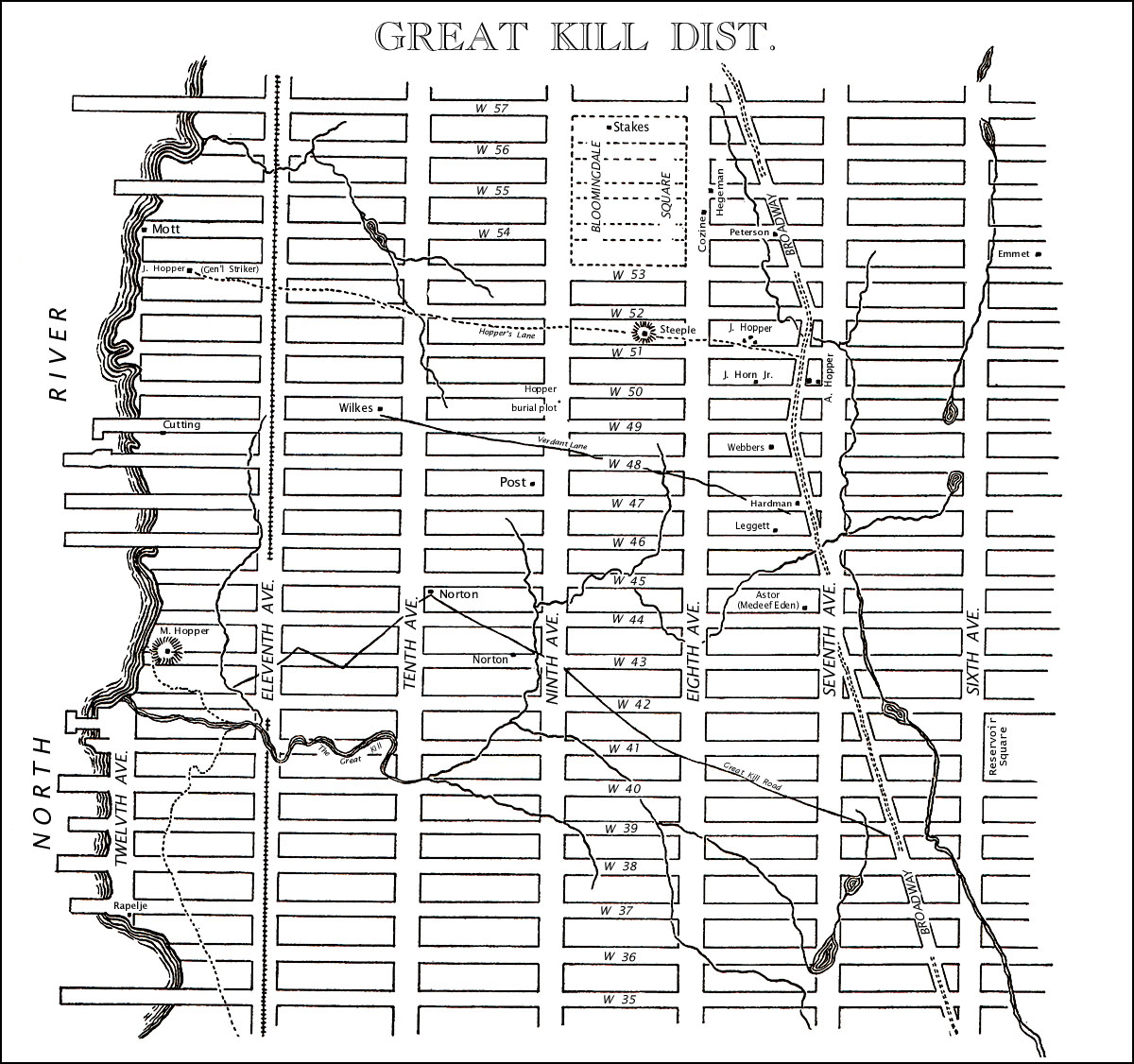
    I was reading a fascinating article today on the grid system of NYC and the original map that laid it out.  Quite the transformative event, that grid system. Did you know city blocks are 200 feet long?   Broadway was a path that meandered the length of the island and was left alone, as were the funky streets of Greenwich Village.  Back in the late 1800s the grid thing was not well received by everyone, especially those whose houses were located on parts of the gird that were to be torn down to create the streets. But it was this planning and forethought that made NYC the great place it is.  Albeit, “great” with an internal design and art tension.

    Brand planning is analogous. Smart people have asked me “How do you define a brand plan?”  And I my answer, though somewhat fluid, is generally “a single brand promise, supported by three planks or proofs of that promise.”  In effect, it’s a grid.  What resides in the grid is open for discussion and debate, but everything must fit. The artistry that is brought to life within the grid is what give the brand it’s life, but whether you like the grid word or not the brand plan is an organizing principle for selling more, to more, for more, more times.  The brand plan is not just about messaging either, it guides the product itself. 

    And the tension referred to in the city planning grid analog applies to brand planning.  Sometimes an amazing idea is created inspired by a brand brief that does not fit perfectly.  It may be just a little off kilter. What to do?  Debate it. Study it. Perhaps even build it — and compare it to the plan.  Humans organize. Humans also like the unexpected. So build a brand plan, see and live its beauty, and count the change (double entendre). Too many markets today start by counting the change. Peace!

    Time to Pay the Paper Boy.

    0

    Don’t shoot me, but I completely agree with The New York Times move to charge for online readership.  To assuage the infrequent online reader, everyone will be allowed 20 free articles per quarter.  At first, this will be a shock to the system. Over time it will slide through with ease. 

    The Times has always been worth paying for.  When Nicholas Kristoff has to drive across a barren desert in Tunisia to get a story on the aftermath of the defense of Benghazi, who do you think pays for the Toyota Land Cruiser rental and gas?

    To Free or Not To Free.

    Good content costs.  There is a price of good goods and the web and venture money haven’t always understood this.  The New York Times reminds us of this capitalistic notion.  Applause-applause. Free has been used in the digital world as a traffic builder. So has community. And social.  And certainly community and society have value.  As do not-for-profit and non-profit ventures.  But the New York Times and, shortly, a good many followers have decided that March 28th is the day to pay the paper boy. And it’s not a moment too soon. The first web domino has fallen. Do I her another?  Peace!

    ADD-ification of America

    0

    Sally Hogshead declaimed yesterday at TEDxAtlanta that we have the attention span of about 9 seconds when it comes to marketing.  I believe she also mentioned a neurological study that suggested our brains are evolving so as to better process multiple pieces of information at once.  Being an evolutionist, I would have to agree but add that the effects of that evolution will probably not be seen unto the year 20,010.

    Personally, I cannot read a whole article in the NY Times paper paper anymore without checking the web or email and I haven’t even bit the bullet and bought a smart phone yet, which is so in my future.   Last night over a beer with GetMurphy@yahoo.com, I mean my friend John Murphy, he offered up sheepishly that there are actually times when he might go off the grid for 3 straight hours to work – he’s a creative director at Millennium Communications.  (Did you know stevepoppe.com is an available URL?)

    I’ve referred to this, as have many, as the ADD-ification of America.  Is it bad? Yes and no.  Is it good? Yes and no.  It just is. I read a Tweet this morning by someone who works for MDC Partners who mentioned that in the course of walking two blocks he saw 3 people walk into immovable objects.

    I’m a roots guy. Awaiting a modest overload backlash.  But while waiting I’m preparing for the ADD-ification of my marketing targets. I know that an email that hits a Blackberry is more likely to get trashed than one that hits the desktop. Preparation. Peace!

    The Web’s Next Big Traffic Driver.

    0

    The evolution of web traffic started with technology. Search begat the first big rush — but of course there had to be something to search so HTML really started it all.  After search came social networks (MySpace and Facebook) which allowed people to create websites or webpages thanks to templates and databases.  Allowing everyone (not just coders) to create a web presence opened this door. Then came music sharing sites and other media upload sites like Flickr and YouTube. All technology enabled.

    During the build out of these tech-enabled web sites, communities began to emerge.  And so came enthusiast sites: Tech enthusiasts, movie enthusiasts. porn devotees, daters, news junkies. Those interested in healthcare. Communities sprung up, big and small, but mostly big.

    Currently, we’re on an entertainment jag, with games and virtual goods, random video chat and anime mash-ups drawing the attention of the masses and venture money. The iPazzle (technology) is creating some new applications for sure, moving everything toward a single device, but it won’t explode web traffic exponentially.

    So what’s next? What human need is not being met?  When we get tired of entertainment what will we seek?  What will generate massive traffic and engagement on the web?  It will be micro-communities. Noah Brief and Piers Fawkes might call them LikeMinds. For me, I’d love to chat with kids who went to Amityville JHS, in school the day Martin Luther King was shot. Or people who saw the Allman Brothers early show at the Fillmore East in 1970 the night they shot the inside album cover. Maybe we are not like minds, but we’re like experiencers… at a certain time and place. There’s an idea for Google or Bing, the search experts. Micro communities. Peace!

    Politcal Punking. A sign of…

    0


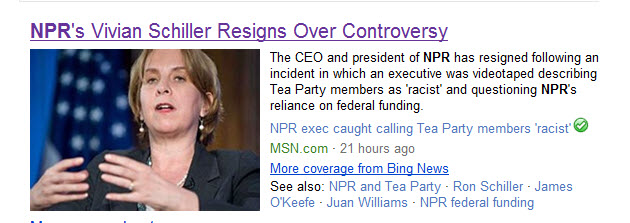
    Are NPR and PBS left-leaning?  I reckon.  As a southpaw I have tended to not notice.  But let’s remember, prior to president Obama’s election, for 8 years the government was in the hands of the republicans and it still funded PBS and NPR. 

    The Schillers Affair is much ado about nothing. Vivian Schiller will be replaced by someone better in a matter of hours.  A few check writers will stop contributing and few more will take up the slack and we will move on.  

    Politics as unusual.

    Is there any good news in all of this?  I would say yes.  I would say that more people are beginning to take politics seriously.  More people are caring…not less.  Millennials, who know a thing about punking, are paying attention. They may not fully understand collective bargaining agreements, but they do understand what a midnight, backdoor procedural move is and understand what just happened in Wisconsin.  Ask a kid what’s going on in the Middle East and for the first time in 50 years you will get a cogent answer.  

    Tip O’Neal said all politics is local. Well, for many, all politics has been quite foreign.  We have not seen the last of political punking; it’s a sign of the cultural times.  In fact, I smell a TV series created by the producers of Undercover Boss.  

    The more people care, the more people debate, they more we get involved — the better our country will be. Does this mean I like what Peter King Rep of NY is doing today? WTF no!  Will I defend his right to dialogue? Yes, the Beavis.  Peace!

    (Happy birthday Derek.)