Marketing

    Smith and Wollensky is Back.

    0

    Back with a flourish.

    Back in the day, so the story goes, Smith and Wollensky’s Steak House was about to close its doors for lack of business.  Poppe Tyson and creative director Fergus O’Daly created an ad for them – a full page in The New York Times – with a life-size picture of a Smith and Wollensky’s matchbook in the lower right corner atop a small headline: “Finally a match for the Palm and Christ Cella.” The rest, as they say, is history.

    Steak for Stock

    Today in that same New York Times Smith and Wollensky continues its great run of print advertising with “Steak for Stock.”  Not sure if Alan Stillman (CEO) is still behind the advertising but it certainly feels like him. The “Steak for Stock” ad invites you to bring in valid stock certificates in exchange it for a juicy, aged and perfectly charred sirloin.  Can’t you just smell the certificate paper?

    Smith and Wollensky has made a living with its wit, its wine, its relevance and its meat and spinach. I’m probably borrowing this from Ben Benson’s, another brilliant NY steak house, but Smith and Wollensky’s is, indeed, the quintessential NY steak house.  Great to see them mixing it up again.  Peace!
    Davos for Marketers?

    0

    The World Economic Summit currently underway in Davos Switzerland should be recreated once a year for all the leaders of the advertising and marketing communities.  We should probably throw in a few economists just to keep the event grounded; after all, the real prize is money. 

    The polyglot array of marketing agencies which make up client rosters today is insanely inefficient and needs to be fixed.  Some big global companies have 50 plus ad agencies. Add to that  public relations shops, direct marketing companies, digital, events/promotions, and the newly coined social media shops and you can begin to imagine the waste.  The donut and bagel budget alone must be incalculable.  And all the people needed to effectively manage these many agents is also a big honkin’ number. Plus communications, travel, entertainment, etc.  Smart agencies and holding companies should take the lead on this — but that’s not likely to happen.

    Davos for Marketers will, no doubt, be held in Cincinnati and it should be broken into two parts: all agencies then agencies plus marketers.  No golf, no awards, no spousal programs, just hard work intended to optimize the silos, the workflow, outputs, integration, proper spending and measurement.  I suspect the first year will be a mess. — metal detectors will be a good idea — but the reality is, for marketers and their agents it will be an important step toward building a more effective marketing future.  Peace!

    Brand Strategy…Say What?

    0

    Quick, I say “brand strategy,” what’s the first thing that comes to mind?  Okay, let’s try another.  “Brand plan.”  You say ______?  This sort of brand speak is really inside baseball to most businesses. Over the past couple of years I’ve spoken to some really smart people from many different walks of marketing life and they all know the words but, ask them to define or diagram them on paper, they can’t. 

    Wikipedia “Brand Plan.”

    Wikipedia the words “brand plan” and Wiki asks you “Did you mean Brand Play?”  The first option under the question is business plan.  Wikipedia “Brand Strategy” and it says “You may create the page Brand Strategy.”

    Everyone agrees that brands are important…that they have value.  Most understand brands need to be managed.  What they don’t always get is that brands need to be managed to a tight brand strategy.  So they default to managing brands based upon acquisition, sales growth or retention metrics — all of which are measurable.  Thanks to the web, we can now even measure clicks and views and engagement and referrals and, and, and. And tie measures to dollar investments.  Break out the dashboard and play marketing videogames.

    So if brands are important, and we all agree they are, how do we measure the efficacy of the brand strategy?  I often use the example that Coke’s brand strategy is refreshment.   Today, Wieden + Kennedy and Coke would have you believe it is happiness. Who is right and how to we find out?   

    Now don’t get me wrong, a powerful brand strategy is only so if it increases sales and margins. Period.  But tying sales and revenue increase to a strategy, not a tactic, is what’s what. Peace!

    Apple PR. Think Different.

    0

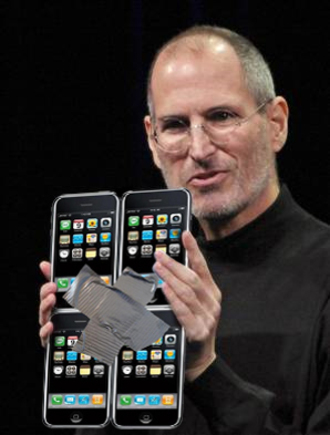
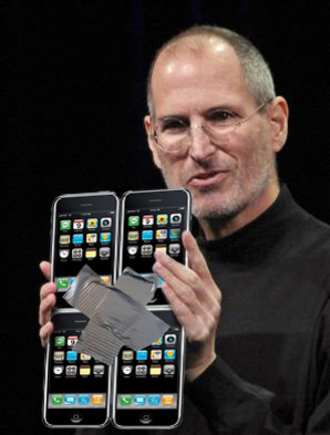
    Wanting to tune into the Apple iPad press conference yesterday I spent time toggling between live.twit.tv and one of Robert Scoble’s video feeds. It was certainly better than nothing, but considering this day and age it was pretty prehistoric. Video reboots, freezing, hippopotamus grunts, feedback, poor screen grabs aplenty.

    After about 20 minutes I blew it off and brought the car to “Tony, Park Avenue.”

    The event was reported to have slowed down Twitter, gobbled up lots of bandwidth and, stirring though it was, was not nearly the event for outliers it could have been.  So, as a PR event it was a fail. 

    A couple of weeks ago, Mr. Scoble was allowed into the Google Phone launch event and though there were some hiccups, it went much better. He streamed from his laptop. The audio was good, the video okay and the overall experience rewarding.  But had both these events been on television, the experience would have been perfect.  Were they both streamed over the net with the right software and load balancing, they would have been close to perfect. 

    Apple wants to treat the press to first dibs. Also, it wants partners and employees to have a better seat.  But the press gets this stuff for free – they don’t pay for it. I know the press is supposed to influence millions of potential buyers but this is Apple.  The demand for Steve Job’s presentation and the iPad, comes from real buyers.  This event should have been open to the global public. This event should have been for the people. This event should have been handled better. Think different. Peace!

    Apple Tablet + RE (Reader Experience)

    0

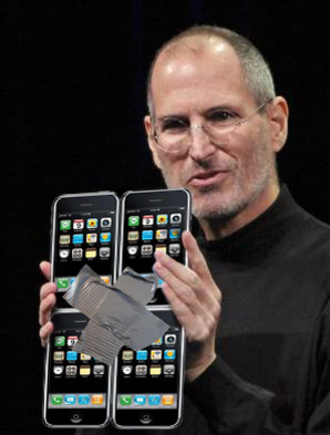
    The Apple Table launches today and it makes me think about its transformational nature.  If the tablet is a combination of reader and iTouch as most report, with a few extra wireless bells and whistles, it should be quite so. 

    Some articles appeared yesterday that suggested print media companies will be developing reader experiences (RE – just make that up) to make reading digital content more enjoyable.  Think the printed word with sound, video and geo-linking.  But here’s my prediction — rather than embedding links in situ in a story, they will be organized at the end of the story or chapter, like a bibliography.  The written word needs a flow and pacing. A thought stream.  In both magazines and book form.  Clicking out to videos, communities, maps, audio files, etc. while reading is a very ADD and though something we’ve become accustomed to in the digital world, a behavior that good publishers will want to minimize. 

     There will be great attention paid to Reader Experience over the next couple of years.  It should be interested to see who establishes leadership.  I’m thinking the MPA (Magazine Publishers of America) should step up.  Tablet ho. Peace!

    Photomontage: Robert Galbraith/Reuters

    Twisted Juice.

    2

    Mitch Joel and Jaffe Juice’s Joseph Jaffe squared off yesterday in a podcast that was a good deal of fun.  Each agreed they were good friends but that was about all they agreed upon — save for the obligatory strokefest at the end.  Mr. Jaffe is a principal at Crayon now owned by Powered and Mr. Joel is president of Twist Image a leading digital shop based in Toronto.  Both are published (books, blogs and pods) and practiced “duelists.”

    The discussion with which they played pong was “Is social media a discrete marketing practice?” Mr Jaffe says “yes,” Mr. Joel “no.” 

    The crux of the debate is this:  Social media needs to be well integrated into the marketing and digital practices of corporations. Today, it’s not.  Mr. Joel says there are smart companies doing so and he’s right.  Mr. Jaffe says those companies are the “exception not the rule” and he’s right. Powered is betting that specialized shops – best of breed social shops – will be better positioned to make waves and earn low hanging engagements.  Mr. Joel believes that cleanest most likely social successes will come from integrated digital shops, and in the long run that is probably more correct.  But his approach is less promotable and less newsworthy.   Social media is the haps today.  There is demand for it and a social marketing swell surrounding it. 

    Da Monies.

    So where is the money in social media?  Tweeting buy the pound? Friending by the hundred? In strategy?  Yep.  Where is the money in the integrated approach? The answer is tweeting by the pound and building websites – a more lucrative approach.  

    Win by Knockout?

    No. Both arguments are very compelling. Mr. Jaffe and Powered CMO Aaron Strout are loudly breaking new ground. (There are supposedly scores of quiet social media agencies in NYC alone.) Mr. Joel gets it for sure, and though his sound bite is not as powerful he will probably have higher margins this year. Were I a marketing director and these two pitching my business, I’m sure the last one to present would win the business.

    Social Media Talent Scouts

    0

    crowd

    In Jaron Lanier’s new book You Are Not a Gadget,” he discusses how the Web has spawned an almost mob-like behavior favoring Pasters (those who copy, paste and mash other people’s content) over Posters (original content creators).  The “wisdom of crowds” (James Surowiecki) mentality, he writes, supersedes individual wisdom…and that’s a shame.  

    Readers of “What’s The Idea?” know I write about the proper care and feeding of Posters and Pasters in social media marketing.  Understanding the theory is easy, making it happen, not so much. The key to successful, extensible social media marketing initiatives is in finding the right Posters to pollinate the Web.  That’s the heavy lifting.  One needs to be a good talent scout. Finding Posters (in your product category) before they become too big is also key. Find them on the way up, in other words.

    How will you know a good Poster when you find him/her? Here are a few hints.  They are doers — they get out of the house or building. They’re creative — experimenting and solving problems in new ways. They are not shy, though their posts and content are not “me, me, me ,me” focused. They blog and have a following. They inspire respectful comments on their blogs or conent channel.

    Find a good Poster in your category and learn from her/him. Don’t seek out wisdom in the crowd or hive.   Peace!

    Staples on Twitter.

    0

     staples logo

    A “social” friend of mine, Julie, turned me on to a Twitter site today that kinda follows one of my best practices for commercial tweeting. It’s Staples.  I preach to clients and friends that corporate users shouldn’t just broadcast promotional info and/or respond to help questions on Twitter. Rather, they should create a persona for their Twitter presence that embodies the brand and inspires positive thought and action. Think of it as a role in a movie with a motivation. The motivation should track to the brand plan and push the brand planks.

    In the case of Staples, the “tweet team” consists of five people, each with their own tag. Michelle is MO, Kevin AB, etc. This allows them to be identified and personalized, plus it shares the workload. At this point, I’m not yet sure if these people are SMEs (subject matter experts) or generalists.  It would be a smart if they had discrete areas of expertise and personalities to fit. 

    Buy and Multiply.

    More and more companies are hiring people to handle social media.  Some are outsourcing (stopgap), others using interns (big gap), the smart ones employ senior management who get the brand strategy.  The big promise of Twitter is not to make customers happy – one at a time – but to inspire customers to buy, share and multiply.  The key word here is inspire. Tweeters have to be engaging individuals…with personalities.  And just like in a retail setting they can’t be shills. They must be sensitive, funny and friend-like.  If you are on the receiving end of a commercial tweet you need to “feel” the company tweeter – and like her/him. The persona is key.

    Staples has made a good start here, let’s see hat they do with it. Peace on Haiti.

    Social Media Strategy.

    0

    paste brush

    On the Web everybody has the opportunity to be a spokesperson.  It’s how you use this fact that determines a marketing program’s efficacy. 

    What’s the Idea? readers know that unlike Charlene Li and Josh Bernoff, who in their excellent book Groundswell suggest 6 different social computing profiles (creators, critics, collectors, etc.), I focus on only two: Posters and Pasters.  Posters are spokespeople.  Pasters amplify them.  Posters write about products, services and trends. Pasters share those links.  Posters have followings, influencing people they don’t know. Pasters have link buddies, most of whom they do know.   

    Taking advice from someone you know or with credentials you trust is and has long been the key to successful commerce. If that advise is well-crafted and convincing, so much the better. That is why targeting Posters with your social media effort is a business-winning strategy.

    Social Media Briefs

    Good social media programs target Posters, but are considerate of Pasters. Writing a brief for a social program, my targeting takes account of both. For the Poster the idea has to be salient selling. For the Paster it just has to make them a trusted, fun and/or thoughtful poker (to steal a word from Facebook.)  If the brief can not accomplish both, then don’t force the Paster side of the equation, let it be.

    On TV, you can pick your spokespeople. On the web you can’t.  Simplify your brand claim, make the proof points powerful and memorable, and manage it. Don’t poop out an off-strategy message in the hope that consumers will turn into creative directors. Peace!