Marketing

    RFPs Tweet Tweet.

    0

    rfp

    Charlene Li of the Altimeter Group posted last night about Salesforce.com’s intent to integrate Chatter into its platform. Salesforce.com is an enterprise application that helps organizations collaborate, schedule, organize and track workflow. The addition of Chatter, allows for social networking behind the firewall which is very smart. I’ve used free competitors of Salesforce.com in this CRM space and they have a ways to go.

    Ms. Li makes a couple of thought-provoking points in her post:

    “This is more than merely integrating Twitter-like functionality into CRM and creating ‘social CRM.’  This is a rethink and elevation of how information flows around an organization, and where it lives. The elevation of deals to be on the same level as people is significant — in every other social platform, people reign supreme and the world pivots around them.”

    “It’s one thing to use Twitter for customer support. It’s quite another to integrate it into the workflow of the organization.”

    Charlene’s talk about deals and Twitter helped me mash-up this idea, related to the heinous business practice called “the RFP.” Imagine issuing an RFP along with a hashtag twitter follow subject (e.g., #widgetRFP1) that allows all RFP participants (and others) to chat in real time about the RFP. Yeahhhhhh. Think about it. Good info. Misinfo. Misdirection. Redirection.  Potential business partners. Quick answers from the RFP issuer. As my kids used to say “I yike it.”

    Left to Our Devices.

    0

    I love to hike. I love nature. I love to see things I’ve never seen before and learn things that stimulate and make me want. I love watching people and kids and all things pretty. To do so — I have to keep my eyes open, look up, stay out of ruts and be interested in my surroundings.

    What scares me about our culture today is how many of us, especially kids, hide in our devices. On a subway platform during rush hour, prime people watching time, there are probably 400 pounds of electronic devices in use. Every other ear has a bud in it. If lips are moving, unless the station is deeply tunneled, they are talking into phones. Others are reading books on Kindles or watching film on smart phones. Very few people are talking to one another. Most heads are down.

    As marketers, the down head is the enemy. We need to engage people in ways they make them look up. In ways that make them think and comment. Marketers and advertisers need to engage (an advertising word my father Fred Poppe rode to prominence back in the 80s) rather than spam. OOH (out of home) ad creators get this. Walk around SOHO in NY and see if you can keep your eyes off the billboards. Or the people, for that matter. Market to be noticed. Peace!

    Digital Copywriting: Managing the Bounce.

    0

    I spoke with Grant Owens the account planning director at Razorfish, NY yesterday and asked him if he thought copywriters who work in the digital medium need different skills. His answer was as resounding “yes” and it stands to reason. I’ll take a great copywriter over a mediocre copywriter any day, regardless of the medium, but all things equal, someone who is not only a digital native, but understands the analytics of writing for digital  — that’s money.

    In print, writers have to deal with readers turning the page before finishing the ad. Bore them and they’re gone. It’s the same with digital writing. But a page-turn on a website might not be to the next page, it might be to a thought-provoked Google search or Wikipedia visit for clarification. Readers of digital copy may go random and leave for a song that the copy inspires…or a map. Digital copywriters know their readers are ADD — with a tool at their fingertips that makes it all too easy to bounce. Reducing the bounce while at the same time convincing, creating predisposition to a sale and action is a gift. Direct Response copywriting is/was an art. Now, it’s digital. Peace!

    PS. While most PDFs are laid out in brochure size, making it hard for online reading, check out the layout of Razorfish’s “Feed: Brand Experience Report 2009.” These guys totally get it. And the report is very smart too.

    Love Stinks for Blackberry.

    0

    Love is not a branding idea. Sorry Blackberry. You may be on to something with the notion that “like is mediocre” or “like is watered down love” as a campaign idea, but you’re never going to build up the brand tying it to the word love. So be smart(phone) and shut it down; get out while you can. Beatles song or not.

    The strongest brand in the world today, Coke, would never have made it this far had Wieden and Kennedy been at the helm early on making ads about “happiness.”  Coke is a mature brand with some unique issues, I understand, and people know it Is a cola and Does refresh (Is-Does), yet as nice as the “happiness” ads are, and they’re good ad-craft, happiness is a second generation benefit. As is “love” for Blackberry. Fah, fah, fah fail.

    The smart phone category is getting to be a real mess. Though I applaud Blackberry for its attempt at brand discipline and some good may, indeed, come of it — love ain’t it.

    The Motorola “Cliq” has an idea. Or, it is the MotoBlur? Either way their idea is tied to the Does benefit of being “social.” The phone was built to social network (verb). The campaign line “smart gets social” works. If the Moto Cliq can continue to open a gap between itself and competitors in offering the ability to integrate all social networking apps with grace and ease, it will win some serious share. It will have an idea I can love.

    Writers, writers everywhere.

    0

    windfarm

    I met with a friend yesterday who is with a very big magazine publishing company. She told me most magazines today are filled with editors but few, if any, staff writers. This approach keeps overhead down, plus the pool of writers out there is so vast, so talented, and so specialized, that the written product is often better. The pay for these writers is a dollar a word. Can you say “game changing business model?”

    There are small countries of subject matter experts (SMEs) out in the ether who are ready, willing and able to write for your company at reasonable prices. These are not copywriters, they are writers. You wouldn’t want them to write an ad but they are great for your website or your brochure.

    Millions of new and updated websites go live every day, and they all need to be professionally written. Who’s doing that? If a small business, it’s the business owner or her husband. If a mid-size company, it may be a newly minted journalism graduate in the marketing or sales department. At a large company? An ad or digital agency copywriter. Fail. Fail. You need a SME. It’s faster, cheaper and, likely, more effective.

    If my company needs 800 words on solar power for my windfarm website, I’d prefer a writer who knows the market. I’ll provide a brand brief (or briefing) and let writer do his or her magic. The piece will be crafted by someone with contextual smarts and assembled by a true wordsmith. Did I mention it will cost a buck a word?   So where is the well filled with all these SMEs? Stay tuned.

    Social Media Marketing. Finesse or Boor?

    0

    circulars

    Neville Hobson offered some good advice yesterday regarding the use of Facebook and Twitter by brands:
    So here’s some good headline advice to marketers:
    1. Don’t act like “marketers”
    2. Align with fans instead of selling to them
    3. Be quick to listen and slow to speak
    4. When it comes to positive comments, let your fans tell the story for you.
    5. Direct consumers to other channels for marketing messages

    Facebook created fan pages because it doesn’t want brands to act like humans and have the same communication capabilities as humans (friends). Some marketers are trying to bypass the algorithm and pretend to be humans so they can issue status updates for broadcast. They’ll be caught.

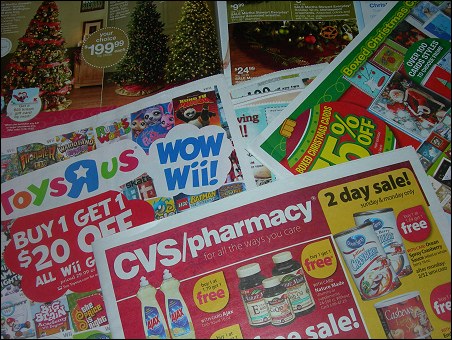
     What Mr. Hobson says is absolutely right — when networking, brands must not be boorish. They need to offer news and value. Customer service is okay, but not too proactive, and it must be light-handed way. If Twitter or Facebook are allowed to become the Sunday or Wednesday circular they’ll both get dinged. That will open the door for the next app to come along sans promo-land and win the hearts of the people. Finesse is the key here.

    Hiring, Post-Recession

    0

    Though I suck at picking sports (every year I think the Jets are going to win the Super Bowl), I do have a knack for seeing the marketing future. Here’s a forward-looking view of hiring as we crawl out of the recession. When we emerge, which I believe will happen by the time the leaves grow back, there will be a pretty amazing sucking sound of employees being yanked back into the workforce. It won’t all be pretty, though.

    You see, those currently with jobs have been working without raises for a couple of years. Many have seen their hours and wages cut. Bonus, what are they? A good deal of these workers – especially the younger ones – are pretty angry and disloyal. The anger has been exacerbated by the fact that they’ve been looking over their shoulders for months, living the nervous life. These employees are looking for someone to say “I love you” and they’re ready to move.

    Those who have been out of work on the other hand, have been networking and reading and studying their asses. They are likely to be among the first to get called back when jobs open up. And if they start schlepping their boxes into offices before current employee salaries get back to par, the workplace will get testy. There will be even more churn.

    Human resources people need to be getting ahead of the curve. They need to communicate with current employees about turnaround plans and efforts to correct salaries. Plus they need to be meeting and cherry-picking the best of the best who are currently on the beach before that big sucking sound begins. Peace!

    American Express and Ogilvy. Charge!

    0

    “Take Charge” is the new campaign from American Express which eveyone by now should have seen. It uses a wonderful visual device of inanimate objects depicting smiley and “oh no!” faces — clothes lines, hand sinks, etc.   Ogilvy, American Express’s agency, has done an excellent job with this campaign replacing the irreplaceable “membership has it privileges.” Smiley faces is the visual idea.

    The non-visual idea is about taking charge; a nice double entendre on controlling your finances and financial lot. The idea also pushes use of the American Express charge card – a card that must be paid off in full, not accruing dreaded interest. It also takes a swipe (sorry) at debit cards.

    Now, American Express can give us all sorts of “take charge” tips and tutorials on not spending money or spending money smartly but the best way to take charge is to use a card that must be paid off in full. And Amex owns the paid in full card space.

    There are still vestiges of “membership has it privileges” in the new campaign, but the muscle memory is about stepping up and “taking charge. The non-visual idea is brilliant, a no-brainer and has crazy long legs. The visual “facial” treatment, though a great creative launch may run out of steam. I hope not. I hope they find a way to keep it fresh, but it’s burning fast. Slow it down and take charge. Peace!

    Brand Spanking and Ruby Tuesday

    0

    RubyTuesdays

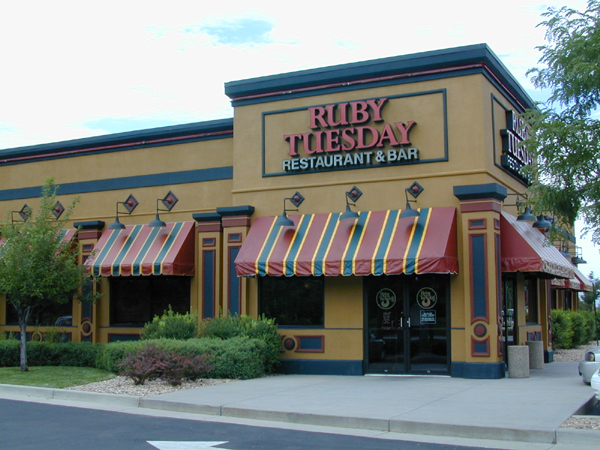
    An article appeared in the New York Times this past weekend on Ruby Tuesday and the efforts of CEO Sandy Beall to remake the chain into a more upmarket restaurant enterprise in the midst of a recession. He appears to be doing all the right things: focusing on ingredients, menu, servers and the restaurant interiors. One statistic that stood out for me was the high rate of employee turnover.  The current rate, way down from 135%, is 100% — meaning, statistically, all Ruby Tuesday employees are replaced within one year. This crazy level of churn is being dealt with through training and other loyalty programs presumably, but it is a common phenomenon of the casual dining category.

    Interestingly, it presents a brand planning opportunity.

    The opportunity is to research people who have worked at a number of competing restaurant chains.  Were I doing the planning work, I’d conduct focus groups on like-titled employees with experience working at a minimum of 3 stores: Applebee’s, Friday’s, Chili’s and/or a regional player. Focus groups offer a degree of panelist pile-on that can only happen in a small group dynamic and would quickly help to identify the underbelly of operational strengths and weaknesses. Employees love to kvetch and when they start spanking brands around (a practice I call brand spanking) good insights happen. Peace!.