Calendars, the new Marketing Grail.

0

I have a bunch of “At-A-Glance” calendars in a bag somewhere chronicling my punk and rock and roll exploits as a 20-30 something; years of attended concerts naming the act, venue and date – most all in NYC.  (Did I lose you at At-A-Glance?) My friend Frenchy took lots of black and white pictures at those shows, e.g., Joan Jett at CB’s, the Raybeats, Contortions, etc. which, someday, we will have to break out of his “bag somewhere” and review. Perhaps we can integrate my calendar with his pics for provenance.

The thing about calendars is that they are behavior-based. Proof-based.  They are not theoretical. No armchair “likes” here.  If I went to see Public Image Limited at The Ritz, that means I was a real fan and customer.  A committed customer. One of the unsung marketing databases available online today (and I suspect it’s a dirty little secret) is the calendar. Mine is private on Outlook, but MSFT is doing everything in its power to get me to synch it in the cloud. And they have been pretty successful. Google probably has a zillion records of consumer behavior in its calendars as does Apple.

The hell with parsing emails, marketers should be checking out activities. Where a woman goes and what a man does (hmm, we could call that the Goes-Does, JKJK) are better determinants of future behavior than what they say.  We’re talking Edward Snowden here. Facebook privacy. This is in-your-grill, research hack stuff.  It will soon be a battleground. Stay very tuned.  Peace.

A Brand Plan Example.

0

I often use an example of my brand planning rigor when explaining to prospects how I work and what I create. Brand plans are many things to many different people. Mine contain one claim and three support planks. The example:

For a commercial maintenance company, one that does office cleaning, building upkeep, snow removal and lawn service among other things, the claim is “the navy seals of commercial maintenance.” This is strategy remember, not a tagline or creative. The support planks are: fast, fastidious and preemptive. These are qualities buyers want. These are also things the company is good at.

navy seal

Clients, big and small, often get the outbound nature of the plan, seeing how this organizing principle can drive communications. Yet sometimes they have a hard time seeing how it can influence the company internally. For a C-level executive or a marketing person who is truly influencial in the product, the internal part of the equation is easily understood. For this level thinker it’s easy to see how one can productize and build experiences around the brand planks — that’s what they are for.

Back to the example — anyone can say they are fast, and in commercial maintenance most do. Anyone can say they are fastidious and many do, using words like “attention to detail.” But preemptive, that’s not so common. Taken together this value prop is unbeatable. And by proving these qualities every day, not just saying or printing them on a website, it is business-winning. Claim and proof…ladies and gentlemen I give you a brand plan.

Peace.

Google Brand.

0

Ya gotta love Google.  These guys get branding.  (That’s why they use BBH for advertising, projects and counsel.) I’ve been blogging about the Google brand strategy — first articulated by Sergei Brin — for years.  Their clam is “The world’s information in one click.”  Today, even Motorola CEO Dennis Woodside (Moto is a Google subsidiary), was singing off the same hymn sheet.  Said Mr. Woodside in the NYT “Google’s mission is to organize all the world’s information and make it universally accessible.”   He continued “For Motorola, one of the things we’re trying to do is create a very high-quality mobile Internet experience over time for hundreds of millions of peoples.”  That’s a tight brand strategy. And scalable. Create a claim and productize the proof.

Granted, self-driving cars, one of Google’s pet projects, are not proof of the world’s information in one click.  But do they facilitate the claim? You can’t search while driving. Hee hee. Google has Labs (hey Ben Malbon) and dabbles in many things, so we can’t say for sure that it will make money the same way 100 years out, but for now they understand strategy, what people want, and what they are good at.

One thought though…right now Google searches for websites. That’s where searches resolve. But some of the cooler things these days shooting over the web are not websites — they are apps, messages, pics and vids. That’s something worth thinking about. Peace.  

Lulu of a faux pas.

0

Lululemon, Liz Lemon’s yoga company (JKJK), has a wonderful almost cult-like following. First of all, it is associated with a pastime many woman adore so it’s in the right contextual neighborhood. Second the clothing very much shows women’s bodies in their best light.  And if you think that’s not a trend, walk around NYC and count the number of ladies wearing black tights/leggings.

About a year ago, Lululemon had a quality issue and the social boards lit up with talk about the sheerness of the fabric…with what the wifus might call “getting your picture took” issues.  It was Lulu’s first quality punch and one it handled just adequately. More recently, an issue with fabric pilling in the thighs has come up and the company’s response has worsened.

The Wall Street Journal reports that CEO Dennis Wilson is suggesting it is not the quality so much as it is consumer misuse.  To wit:

“Quite frankly some women’s bodies just actually don’t work for it,” Dennis “Chip” Wilson said. “It’s really about the rubbing through the thighs, how much pressure is there.”

And someone with no financial skin in the game (he typed wryly), an analyst, concurred:

“Oliver Chen, a Citigroup analyst, recently tested some Lululemon yoga pants and also found customers at fault. The “product we purchased was not defective,” he said in a note sent to clients. Mr. Chen said transparency was only an issue when “wearing a size that is too small, causing the material to stretch more than its intended amount.”

Here’s the thing, and it’s something I learned from market mover Joe Nacchio back in the day, your customer is not wrong and your customer is not a dog (don’t ask).  A customer may not use a product to spec, but s/he is never wrong. Custies may need education about usage but “wrong” they are not. They’re simply exploring and daring your product — looking for new use cases, which is commendable.

So Lululemon, chill. Get over the hump, Women will forgive you after a while. Focus on what made you great. Treat your ladies with respect and start sewing. Peace.

Claim shoveling.

0

This morning while washing the coffee pot the radio was tuned to a bank commercial. Some tier-two bank with “commerce” in the name (maybe) made a service claim — something like “We treat every customer with respect.” It was one of a litany of unsupported claims that typically go into ad copy these days — not unlike spring blackflies in the Connecticut woods.  Who writes this stuff?  More importantly who approves this stuff?   The bank CEO clicked the “like” button, I’m sure.

shoveling

Here’s the first rule of storytelling or copy writing: Don’t make a claim without proving it. Again, for emphasis, don’t make a claim without proving it.  By following this simple rule, you’ll find yourself with less dead air to fill – and believe me, it is dead if you are simply shoveling claims – and you just might find yourself with a strategy.

I’m a fast swimmer. Bad.
I swim a .56 in the 100 meters. Good.

Our cold pressed juices makes you healthier. Bad.
Since I started drinking cold pressed juices I haven’t had my annual cold. Good.

Filling out the application online is easy.  Bad.
Most people fill out the form in 2 minutes. Good.

Great ad writers get this premise and defend it like Davy Crockett. Unfortunately great copywriters live in very small villages and are hard to find.  Claim-shovelers are a dime a dozen. It’s bad tradecraft, it inoculates consumers against proper selling and is a blight on the business. Peace.


When a sale isn’t a sale.

0

I wrote a brief for a top 10 daily newspaper which, at its very core, contained an organizing principle that grew paper subscriptions and newsstand business.  The idea was intended to grow share at the expense of a much larger competitor with a grand national reputation.

The brief was presented and so well received that the paper’s marketing officer decided to use the brand strategy (with one word omitted) as the newspaper’s tagline. The omitted word was important (to me), but overall the integrity or ballast of the idea was maintained even with its absense.

It was a pyrrhic victory however, because rather than becoming the brand strategy (one claim, three support planks) it simply became a tagline. Sure the tagline governed communications and did so for many years to come, but I never had the chance to enculturate the planks into the paper’s marketing operations.  I was with an ad agency at the time – paid to deliver of ads.  The agency made lots of TV and print ads. We won awards for ourselves and for the paper. And we changed the market dynamic for a while — the real goal. But by selling a tagline not a strategy, we missed the opportunity to create a powerful brand that lived beyond paper and ink.   A sale that was not a sale, in other words.

Peace.

The power of girl talk.

0

lulu

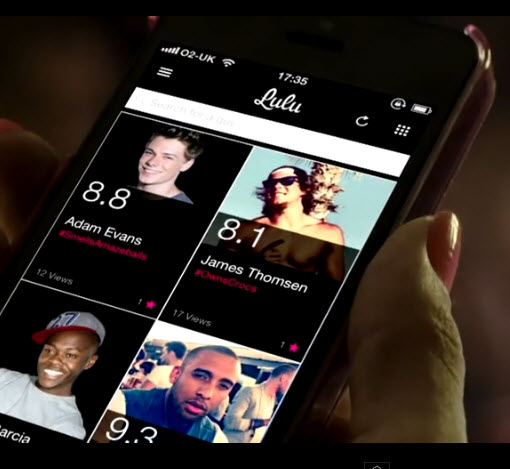
An ex-CFO colleague of mine just joined a web startup called Lulu. It’s a mobile app for girls and, smartly, anyone who wants to be.  Check out the video to see what it’s all about. It’s kind of sexually charged and hook-up focused.  

I often write about the branding Is-Does — what a brand is and what a brand does. The ability for start-ups to articulate the Is-Does is often a deal breaker – especially for VCs. You may be a great technologist but if your packaging and marketing acumen are lacking, it’s hard to get traction.

The reason videos are so prevalent in web marketing today is they’re a good way to stuff 10 lbs. of shizz in a 5 lb. bag. Back in the day, the montage was the art form of choice: We do this, this, this and this.

It’s a rarity that a tagline can capture the Is-Does in one line. “The power of girl talk” is just that line. (If not Lulu’s tag, it should be.) So good job on the app and the Is-Does Lulu!

One of my joke lines as a kid was that I always wanted to experience real girl talk. I said, as a kid. Girl talk is a thing.  And Lulu, it’s developers and biz people get it.

Lulu is going to be big.  Peace!  

Steps to a brand plan.

0

Here’s how I do it.

1. Observe. As a consultant, observation happens before an engagement and during. Before, observations are used in biz/dev. What’s going on in the culture? What’s going on in the selling culture? The buying culture? These nuggets are the grist for the emails that start a dialogue. Emails explaining what I do for living are “me” focused not “you” focused.

Once engaged, observations are the ebb and flow off the business tide – contextually set up by business fundamentals provided by senior client management. Research, both qual. and quant. come in at this stage, budget permitting.

2. Commune. Unlike anthropological fieldwork, in brand planning we need to commune with those we study. Plumbing, probing, storydoing (thanks Ty), making of friends. This is how we add dimension and luster to our hunting and gathering – talking to people. There are no wrong people.

3. Cull. A cull rack in Great South Bay parlance is the rack that catches the clams of legal edible size. With all observations in (one can observe forever), the cull begins. What to save. Knowing what is important is personal, subjective, objective, scientific and artful. Basically it’s a brain thing. Can’t really be explained. No algo for this.

4. Organize. In my work I often talk about brand planning as an organizing principle. Today I’m thinking about the root word organ. Yes, organ. The business winning elements of the strategy are like organs. They give life to the brand plan. I use 3 brand planks and there are three really important organs. (My brand plan contains one claim, three support planks.) With this structure, the puzzle pieces come together.

5. Package. Brand strategy doesn’t package well. It’s like an early Pearl Jam song, when they weren’t good at endings. The big reveal of a strategy (remember it’s not creative) often feels soft. It feels right, everyone is nodding, but it’s often a soft landing. If I may be crass, it’s kind of blue ballsy. Unlike creative which is more artful and has a hook, brand strategy is only a beginning. It needs great packaging to make it feel more creative. A touch of poetry helps.

This is how I do it. This is how brand strategy at What’s the Idea? is made. Have you a different approach? Peace!

Insure Product Meaning

0

Yesterday I Tweeted the question “Does anyone know what the Discount Double Check is?” Everyone has heard of it; it’s all over TV.  Especially on NFL football. Aaron Rodger’s who mimes putting on a championship belt after touchdowns has sold the little dance to Allstate Insurance who has paired it with some double check insurance option and uses that as a differentiator.  I’m so interested in the humor (or lack of it), I’ve yet to figure out what the product feature means. Perhaps you do. What are we double checking and how does it work? 

It only took AFLAC half a decade to move beyond its quacking name-onic brand device until the advertising explained to customers that AFLAC is insurance that pays out if you are hurt on the job.   

In both cases we knew what the company IS but not what the product DOES. They both fail the Is-Does test. The first test of marketers, and I know it sounds fundamental and silly, is to get the Is-Does out of the way. So all you self-described lifestyle brands out there, that’s way too inside baseball. It’s too markobabble. Get your Is-Does right.

Peace.


Revolt Against Receipts.

0

What’s up with paper receipts? Who is lobbying for them? International Paper? Weyerhaeuser? Why do we need them?  In this day and age they’re totally silly. Receipts should be opt-in. If you have a phone, a credit card and you made a purchase, your record should be in the retail computer aka the register.  

Sometimes I buy two items and my receipt is 14 inches long. Coupons, cross promotions for gas, who knows what else. Not me, I put the receipt in the trash.  Or in the front seat of the car until it blows out the window (jkjk). I am the type of consumer who does not leave a store with paper or plastic bags. No need to waste resources or add to the landfill. And I am not alone. Many shoppers feel the same way, especially the young. But retailers feel obligated to push this paper and plastic waste on us.

I went to SXSW Music one year and every attendee was given a big bag of paper and CDs.  The majority of attendees kept the bag but put all the paper and plastic on a spare table by the front window. It became a monument. Their way of saying “Stop the waste.”   What would happen if we simply dropped our receipts on the floors of our retailers…right by the counter. (Make it looks like an accident.)

Revolt against waste. One receipt at a time. Peace.