
The best worst job in America.

0

One of the most exciting yet scariest jobs in the world is probably CMO of the Magazine Publishers of America.  The MPA is an association funded by competing print and online properties that fight one another harder than the GOP and Dems at holiday time.  To say the magazine business is changing would be an understatement.  But to a great extent, it is also staying the same.  All that’s changing is what’s delivered and how.  Brilliant photo journalism is still required but now must include video.  Great writing, analysis and thought leadership still win that day – but there is a lot more competition (bloggers) and algorithmic noise.

Readers twitch more today than ever before, requiring magazine publishers to anchor them to their sites.  And advertises, the lifeblood of the magazine business, are becoming enamored of publishing and content creation. And don’t forget magazines are made from trees, not a particularly forward thinking resource. (Though probably more renewable than circuit boards.)
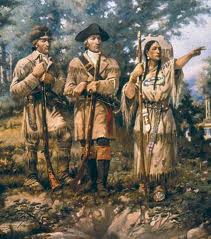
Herding the powerful magazine cats out of the marble hallway is a challenge. It requires someone who has more power than the cats themselves. Someone who commands respect. Probably not an ink-stained patriarch, but someone with mad vision. Someone who can see beyond the dashboard. Who the Lewis and Clark is?   If you thought being CEO of Yahoo was tough, keep your eyes on this search. Peace.

Officious and Dysfunctional Strategies.

0

Officious is a wonderful word and one too infrequently used in strategic planning.  An adjective, it is defined as: objectionably aggressive in offering one’s unrequested and unwanted services, help, or advice; meddlesome: an officious person.  Strategies that lead to this type of brand claim are a blight.  Conversely, strategies so soft and huggable consumers cozy up to a tangent in order to get the brand claim, are also a blight. Some might call that borrowed interest.

What does Coke do better than any other soft drink?  Refresh. People want to be refreshed, so offering up examples of how and when Coke refreshes in not officious. Telling them Coke is more refreshing (world’s most, more people refresh, more refreshing than…) is.  As Coke and Wieden and Kennedy would have you believe today, Coke makes you Happy. That’s borrowed or tangential. It makes for nice advertising and playful Coke machines, but is an indirect sell. When Coke gets back to its core refreshment value and shows us how it refreshes, proves how it refreshes, the advertising will sell more.

The line between officiousness and borrowed, tangential value in not a fine line, ii’s a chasm.  So what do so many brand strategies jump to one or the other? It’s dysfunction, is what it is. Peace!


Brand Planting, I mean Planning.

0

I’m an idea farmer.  A strategic farmer.  I assess the ground, rid it of things that will hinder growth, and then I plant.  I search for the right kind of idea, make sure it’s clean and healthy, and put it into an environment where it can grow strong.  This is what many strategic planners do and where they often stop. 

Too often planners hand off the idea and let the elements take over.  But ideas need attention. And cultivation. Water and sunshine. They can handle some bad weather, it’s natural,  but this is not a “plant and go” business. There are ideas I have planted for corporations a decade ago that are still growing. Their root systems are strong. Long gone is my paper, but those roots are herculean.

There are lots of consultants and freelance planners bouncing around who are in it for the invoice. They plant the seeds and go farm elsewhere. Me, I like to stick around and watch what flowers and bears fruit. I like to use those grown nutrients to sustain additional growth. Strategic planners who seed an idea but don’t get involved with the deliverables – aiding other departments to bring the idea to life — are either poorly managed or cowardly.  Life is not easy for an idea farmer.

If you are in the business of redistributing marketing wealth, growing markets, you need someone who plants and cultivates. Peace!     

Music in Advertsing.

0

It is that time of year when people start talking about the “bests.” In advertising, most agree the two best spots are Deutsch’s Darth Vader spot for Volkswagen and Wieden and Kennedy’s Chrysler ad with Eminen “Imported From Detroit.”  Both are car ads but in my opinion what sets these spectacular efforts apart is the use of music.

Music was once a much bigger part of advertising than it is today. Often, it’s a throw-away now.  Big ad agencies used to have large music departments with recording studios, op boards and lots of seats for musicians to sit in while awaiting auditions.  Today music departments are on someone’s computer. When the spot is 65% complete someone might ask “What kind of music bed do we need?”

Muscle memory is something I always have my clients aspire to in branding and advertising.  Associate your work with clear ideas, images, turns-of-a-phrase or something to hum.  When I hear Eminem these days I’m ready to buy Detroit. To buy Chrysler. I’m thinking Kid Rock and “In it to win it like Yserman.” Imported From Detroit was is a brilliant brand strategy – but the spot was even better.  Poetry and music are still the best ways to deliver a sale. Peace.  And RIP Police Officer Peter Figoski.

Job Interview Question.

0

One of my favorite interview questions when hiring is “Tell me about me.”  It often creates quizzical looks. Perplexed looks. I usually reserve it for half way through the interview and sometimes step out of the interview for a couple of beats so the candidate can look around my office.  If I am shined on, that’s telling.  If the response is “I just met you.” Another ding. 

In the advertising and marketing business, people with good observation and interpretation skills are very valuable.  The ability to process information quickly and tell truths, even more so.

One time I almost got into trouble asking the question.  For some reason a young lady thought the question bordered on harassment. She lost her cool for a second. I didn’t recommend hiring her, but since as they used to say at McCann she was a “special” (friend of a client), hired she was. She turned out to be quirky indeed. 

Try the question out sometime, it’s pretty cool and provides a nice cull of the candidates. Peace.

Brand Diaspora

0

Pronounced “dayh –AS –por-ah,” the word refers to any group migration or flight from a country or region. I first started using “diaspora” in conjunction with the word “brand” when working as a planner for an agency on Microsoft. 

As a planner and seller of technology goods in a market dominated by Microsoft for many years, you couldn’t help but bump up against them. Envy them. Be angered by them. And use them contextually. The Microsoft ethos made it into many a brief and marcom plan.  Grouchos, for instance, was a target I created to refer to Microsoft haters who loved open source and were repelled by all things Microsoft. A planning rigor I developed called “brand spanking” was the result of this people’s willingness to discuss and spank market leaders.

One of Microsoft’s biggest failings over the last 15 years and one which has impacted brand value is something I call brand diaspora.  Microsoft’s brand and sub-brands have been allowed to meander, disperse and diffuse from the homeland. And in many cases they’ve gotten lost.

As I look at all the product and service names, naming extensions, release numbers, calendar years and portfolio reorganizations my head spins.  From a company that invented the first software suite, Microsoft Office, a brilliant naming convention, we’ve seen quite a perplexing mishmash: Windows Live, SkyDrive, Office 2007, Office 2010, Office Live, Office Web Apps, Live@Edu, Office Live Small Business, Live Meeting, OneNote, Office 360, Windows Azure, Windows 7, Windows 7 for Mobile, Outlook, Exchange, Access, Publisher, Office Professional Plus, Sharepoint, Communications Servers, Windows Server Hyper-V, Windows Live Mesh, Hotmail, Outlook Express. And that doesn’t scratch the surface.

I actually love the good things Microsoft has done for the world. And it’s natural to pick on the overdog, but technologists, with all their 1 and 0s, have never been great at branding and brand planning. Brand Diaspora is one sad result. Peace.

Best Buy Default.

0

I love making predictions.  When I started disagreeing with Barry Judge, CMO of Best Buy, a few years ago about marketing and brand management, implicit in that disagreement was that Best Buy would have earnings troubles. You see, Mr. Judge jumped on the pop marketing band wagon proclaiming “companies don’t own brands, consumers do.”  My response was this view was lazy and opened the door for disorganized brand management. Even a number of P&G digitists were agreeing with this fallacious notion.

Best Buy’s net income is down 30% this quarter, all due to price cutting.  If your name is Best Buy and you ask customers what they want they’ll say “coupons and low prices.” If you don’t create another value for your customers they default to price.  And when customers default to price you’re not marketing, you’re simply selling.

Mr. Judge and his army of Twelpforcers and sales assistants needed a plan. They were in the right neighborhood (providing assistance), but bounding about without a motivation.  Had they a plan, had someone at the top managed the brand rather than turned it over to the masses, Best Buy would be killing it now as we slide step out of recession. 

The good news for Mr. Judge is it’s not too late to fix this thing. He has more data, more inputs and more mindshare than he knows what to do with.  If he organizes his house with some serious brand management chops, next year Best Buy won’t be covering up price tags to fend off the smartphone price scanner apps, they’ll be smiling with gold teeth. Peace.

Managing the Mets…Brand.

0

The NY Mets are my team.  When a young ‘un in NYC with no money and nothing to do, I’d sit in my studio apartment listening to the Mets and keep the box score on yellow lined paper purloined from work.  I attended the first ever Word Series Game at Shea stadium (Thanks, dad.) and got my first business lesson when Tom Seaver was traded – he looked awful in red, by the way.

Marketers these days are all “We don’t own the brand, consumers own the brand” and I couldn’t disagree more.  It is the mission of marketers to organize and direct the conversation around their products.  Sadly, New York Mets fans want to talk about one thing: team payroll.  Then about Bernie Madoff and Jose Reyes.  And Mets management is letting them. The conversation is dominated by money. When Sandy Alderson took the bait the other day in response to why the Mets had not resigned Jose Reyes huffing “We lost $70 million last year,” he was not managing the Mets message.

Every minute, every hour there is something baseball-like to talk about for the Mets. There are roster and farm team heroes to bring to life. The Mets fans who love the brand – not those people who stand on the Shake Shack line for 55 minutes – need organized reasons to continue to love the Mets and they aren’t getting them. There is no organizing principle for the Mets brand that lays the groundwork for the marketing, hence the conversation defaults to money. Here’s my suggestion for Fred, Saul and Jeff: Embargo any talk about money by marketing, management and players. And talk only about the game.  That would be a start. Peace.  

Fishing With Hooks and No Line.

0

After reading a Sony Vaio laptop ad this morning I clicked on the QR code.  These little goodies are the rage, and rightly so, but many marketers haven’t quite figured them out yet.  The worst attempts send people to the company homepage or a Facebook page.  The best provide a trail of proof for the ad claim that moves the consumer closer to purchase – taking the ad logic and selling premise and extending it.  Somewhere in the middle are marketers who provide lists of additional information, either in text or clickables.  Sony’s effort fell in the middle. Their QR code mobile landing site offers a video that is still loading, some nice product specs, price variations, special offers, way under the fold a smart showcase of the illuminated key board feature, a claim about flying from NY to Rome on one charge, powered by Microsoft Windows 7, and something about a kitchen sink.

Ad agencies all complain that their business models and profitability have changed.  The fact is, the things they sell have changed and they’ve been slow to adapt.  This QR code exercise points out how many new things agencies get to make – beyond ads – to enhance the client selling experience and make more money. Happy, happy.

Using a fishing metaphor, ad agencies are focused on the hook — lo, they celebrate the hook — but they forget the line, pole, boat, and fish keeper. (The Vaio video is still loading.)

In my posts about Twitch Point Planning I write of the need to use transmedia or cross media twitches to move customers closer to purchase. That is the absolute best purpose of a QR code. Yet many are lazily using the code simply to move consumers closer to information. Disorganized information at that.  Still loading.  Peace!