Ford Huevos.

0

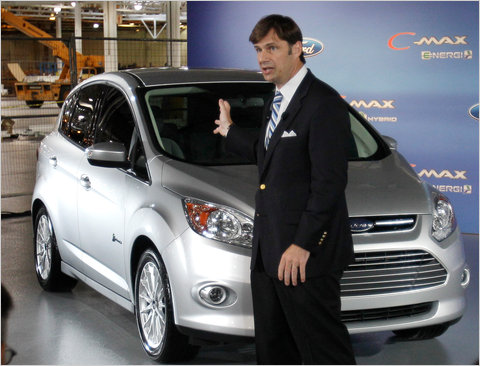
Huevos. Pronounced way-bose.  For my non-Spanish friends that means eggs. It was reported today that Ford Motor Company has decided to drop plans to re-enter the minivan market in the U.S.  Instead, it’s turning a Detroit plant loose building small hybrid cars with the silly name C-Max. Small cars.  Hybrid only.  Let the other knuckleheads build the minivans. Huevos!

My daughter drove from Long Island to Baltimore to see her boyfriend and the EasyPass bill just came in.  It showed about $50 in tolls round trip. Sans gas.  During rush hour, the Long Island Rail Road from Babylon to NYC (about 40 miles) costs $27 round trip.  The gub-ment is charging us healthily for transport.  Why?  Because it’s hemorrhaging money, thanks to bail outs. Who did we not bail out?  Ford. Why? Huevos.

If you follow this blog (Google whatstheidea+Ford or GM), you’ll know that I’ve been ranting about gas guzzlers and large cars for years.  Adapting and adopting are American traits. Pioneering traits.  I Tweeted this morning that as a nation if we put as much collective energy into clean tech and green tech as we put into Anthony’s Wiener, we might actually become the nation of pioneers we once were. Peace!

Bing’s Decision Engine. Part 2.

0

Bing may be a better search engine; it may not be.  If you listen to Microsoft insiders it certainly is. If you listen to SEO nerds it’s a toss-up or a no.  If you try Bing, it appears to be a new skin with better pictures on the same algo.

Bing’s initial advertising straddled the fence on 2 ideas: the decision engine and information overload. The latter was fun and made for great advertising and a great launch. It set the stage for an implicit benefit: make better decisions. The benefit was not explicit, though the tagline was. Microsoft recently moved the Bing business to Crispin Porter Bogusky from JWT and is running a new TV ad talking about Facebook integration. (Integration is a word techies use when at a loss for other words.) The new work is cute and will appeal to fast-twitch media consumers (millennials) but it feels idea-less.  I’m not getting information overload or decision engine.

Though not everyone who searches is looking to make a decision, decision engine is a good strategy. Tying the wagon (Could I be more of a geezer?) to Facebook or Project Glee is a borrowed interest approach to marketing. It’s a tactic. The nerdiest softies in Redmond know their search algo is better than Google’s. Someone just needs to find out why. And how.  Then take that how and wrap it English — with song, pictures and video and sell some clicks. And the real softy nerds know this. “Why are we singing, when we should be saying?” Decision engine is the idea.  Organize the proof. Peace!

Apple and the Untouchables.

0

The cloud is the cloud.  Apps are the software we all use. Many apps are free, others are pay-for. What the cloud and apps have in common is the internet.  Apple was always a wonderful design company. First and foremost the designs were physical – about the device.  Also the designs were logical – about the software and usability. But physical design is the tangible evidence of what makes Apple graet..

As Apple moves its center, its core, away from the wonderful designs it has created over the last 8 years towards more cloud-based designs (read iCloud) will the luster come off?  Clouds are pretty to watch, but don’t offer the luster of slim, shiny touchables.  I would almost prefer to see Apple go into the car or refrigerator business than the cloud business. But that’s moi. Peace!

Claim and Proof…The brand plan.

0

As the role of marketing director gets more complicated, owing to all the new tools and arithmetic available to sellers and selling agents, the brand plan grows in importance.  I met with smart strategist Noah Brier a while ago and he asked me “How do you define a brand plan?”  Everyone has a different definition, he added.  Truism that.

My brand plan is quite simple: One claim, three proof planks. The claim embodies or pays off the Is-Does (what a brand is and what a brand does) and the proof planks (or supports) organize the story – into 3 telling and impactful reasons to believe.  A brand plan is an organizing principle for selling more.

I wrote a consultant this morning telling her how most companies can save mad money by investing in a tight brand plan. Rather than pay a marketing person $150,000 a year, a company can pay $90,000 per year if the brand plan is definitive.  And if the KPIs (key performance indicators) are correct.  And beyond the annualized salary savings, don’t forget the money spent on wasted tactics each year by marketing organizations — money that could be saved with a brand plan. John Wanamaker’s famous suggestion that only ‘half his advertising was working, he just didn’t know which half,’ can also be applied to marketing tactics today.  We are living tactics-palooza. More cowbell, I mean, more social media!

My business is called What’s the Idea? for a reason. Most businesses don’t have an idea (a brand strategy) they can articulate without going all mark-babble and tripping over their tongues. One idea, three selling planks.  Pieces!

Virus Marketing

0

Everybody in the world of marketing wants to go viral. Ea-sy money.  “More video upload contests.  More Fothcbook  programs. More Twitter followers.”  Well, as web marketing gets more social, people are finding out big hits are not so easy. My first big viral memory was of the guys in white coats putting aspirin into hundreds of Diet Coke bottles and watching them spew in syncopation.  That type of magnetic content, though, is few and far between.  That’s viral marketing. Virus marketing is different and it can be found today in many SEO programs.

It started with black hat cheating and has migrated to white hat bleating. Either way the SEO practitioners doing the dirty deed promise they can get you in the top 5 search results on Google for as little as $5-10,000 a month.

And they can do it.

How?  By ghost writing content and using off site partners to link to that content.  Scores and scores of them. Some call it link baiting.  I call it a virus. Welcome to the machine. It doesn’t sound that onerous to some…everybody’s doing it.  But to a brand nerd, it’s disastrous.  Rampant content writing and serving — on behalf of your brand — handled by onshore, off-shore, unsure? People who don’t know the brand culture, the brand idiom, the brand plan? If this isn’t a brand virus, what is?  It will take years to clean up this mess. Plus, as Google gets wiser to the practice and makes algo changes (as they did recently), baiters will lose key word rankings and ecomm revenue can tank in an instant.  This practice will spawn a new industry of SEO companies called “no hat search.” Peace.

Nike Water Down.

0

I don’t see action sports being a good fit for Nike, even though its a nice revenue stream today. According to a New York Times article today, the segment is underserved and Nike wants a piece.  When Nike bought Hurley, I thought it a great idea, but one to roll as a separate brand. Using Nike to go head-to-head with O’Neill, Billabong and Quicksilver, not so much.

They are spending big — hiring 72 and Sunny, big name athletes on the action sports circuit, hot videographers and commercial directors, but it all feels a little “all hat no cattle.”  The tactics are right, but the business idea wrong.  I may have said the same back when Nike moved into golf, but then they tied their swoosh to Tiger and it worked.  Now they want to extend to skateboarding, surfing and snowboarding. Sure, it will spike, but long-term it will diminish the brand. Nike should have put wood behind Hurley.  Water culture people (frozen or warm) are fickle. They create style, they don’t get it out of a box or pad/pod.

Google’s culture of technological obesity (gobbling in every direction) is not dissimilar to this overstep by Nike. Chill with the kicks, the golf, and the apparel. Enjoy global growth. And back away from the table. Water sports will water down the brand. Peace.

Observe, Intuit, Package.

0

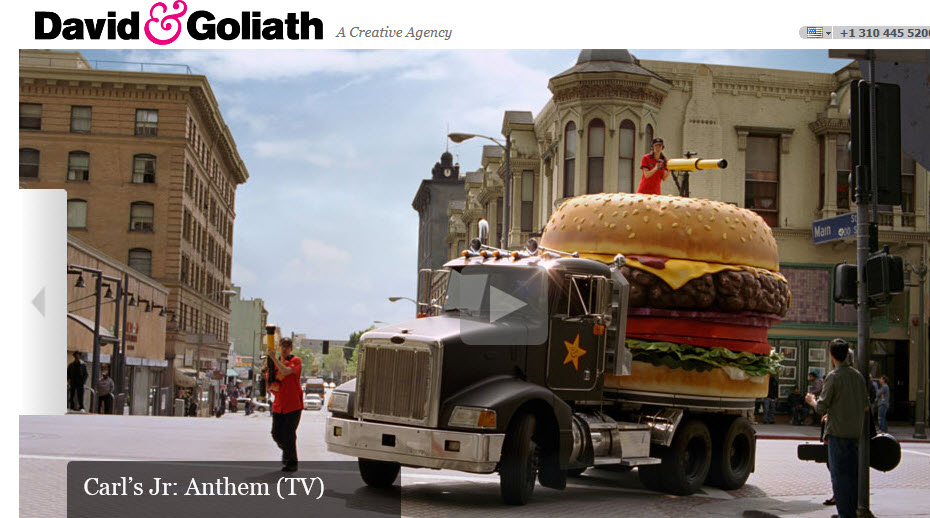
The work of ad agency David and Goliath speaks to me.  I may not always be in the market for what they’re selling and may not always be the target, but I do know people and these guys and girls can package a message.  David Measer is a head planner at DnG and not long ago I offered him a “free day of planning,” something reserved for friends and family. He said “we are so immersive in our planning work, we don’t believe one day can really generate anything of value.”  And he’s right.  As it relates to the end idea. (But a day can generate some crazy good crumbs.)

I was reading today about a volunteer park clean up in Brooklyn which brought to mind my archaeology days and how it helped me become a better planner. Archaeologists uncover stuff from the dirt. They plot it, ponder it, and may actually have to wait until winter in the lab to understand it – if they ever do. It’s a slow and thoughtful process, though it does offer some exciting immediate rewards.  Brand planners operate in the same exploratory sphere but with truncated timeframes. We observe and intuit purchase behavior — then package it for creative teams. We don’t have the benefit of waiting for winter or have a long mental gestation period.

Brand planners need to be able to observe brilliantly. To see and hear only the important. Then they need to intuit the meaning, which requires context and experience. Lastly, it all has to be packaged for an art, copy and design team. In a way that inspires them to “focused” stimulating greatness. Observe. Intuit. Package. David and Goliath subscribes. Watch them grow. Peace.

Showing Up Isn’t Enough!

0

Bob Gilbreath, chief strategy officer at Possible Worldwide, wrote a book a year ago called Marketing With Meaning. It’s a counterpoint to Woody Allen’s quote about “90% of life is just showing up.”  Bob suggests embedding your message (and offer) with something of value.  Not mere boast and claim — something meaningful and fulfilling. The book is a must read.

I created a brand plan for a health system a number of years ago designed to move the dial on about 9 attributes that make for a successful hospital experience; things like: “best doctors,” “leading edge treatments,” “improved patient outcomes.”  If you can answer yes to these hospital qualities, it is likely you will want your procedure done there.

When I see work in this category today, sometimes I wonder if marketers are trying to be meaningful at all.  One NYC hospital spending a lot of money is doing it the Woody Allen way, just showing up. Doing “we’re here” ads. One word headlines and pretty pictures.  And the system that once had the nine meaningful measures?  It must have listened to its ad agency and now only measures “first mentions.”  That’s a research term for a telephone poll indicating what consumers answer when asked, “Name a hospital or hospital system in your region.” That’s measuring the media plan and the budget, not the communication of the work.

The best politicians are those who have a vision, are true to it, and allow the populace to experience that vision.  Process that vision. The worst are those who read opinion polls and change direction at will.  Similarly, the best brands have a plan that creates meaningful differentiation and organized claim and proof to consumers.  And they stick to it. Peace!

Journalism anew.

0

Yesterday at the Long Island 140 Conference I had lunch with Jason Molinet. Those from Long Island know Mr. Molinet from his insightful bylined stories in Newsday over the years. He now works for Patch.

I like AOL’s content strategy and often urge the company to invest in big name online properties a la Huff Post and TechCrunch. As for Patch, I haven’t been as warmly disposed.  My first impression was that Patch (AOL’s local news play) was going to be a flop. A big time supporter of the need for more localized news and the internet’s ability to deliver it, in my experience so far Patch has been lacking.  Fact checking, reporting ballast, edge still seem lacking. I wonder if Patch reporters are tired and on second careers. Jaded me?

Well perhaps I’m wrong.  Tim Armstrong (AOL CEO) is heavily invested in Patch and he wants it to work, so maybe Mr. Molinet is a step in the right direction.

Earlier in the week I sat in on a talk at the Social Media Club of Long Island with a New York Times stringer reporter who lives locally.  She’s a heavy social media user and when combining her investigative reporting skills with fast twitch social media she has been doing some amazing things. Her sources are a fingertip away. Story backgrounders clicks away. Quotes immediate.  This woman gets the new journalism. And it is very, very exciting.

Once newspapers break the tether of the paper/paper and traditional reporters will combine their instincts and skills with social and web tools, it will truly reinvent the business. It’s the promise of Patch. Let’s see if they deliver. Peace!