Trust. Search. And Ashton Kutcher.

0

Ashton Kutcher is quoted in the paper today about one of his venture capital investments. “Turning social trust into commerce” was the word string that caught my eye.  To me this is the essence of social computing for marketers. And, so you know,  the social web is not just about commerce and marketing.  Sometimes social is just social.  But we all have to eat and we all have to buy, so finding trusted sources of influence is a key.

I met with an SEO marketing person yesterday about my blog.  It’s not really high on any organic search list.  Before the meeting I Googled “brand planning” and was at the top of page 5.  He wanted me to pay him a thousand a month but could do something for $500.  I needed to have more calls to action, more free offer boxes, more this, more that, meta flah flah flah.  He was right, but also wrong. Too much flah, flah, flah and I begin got lose that trust mantle Ashton talks about.  “But how many inquiries are you getting a day?” said he.  Not many. But that’s okay for now.  My approach trust building is not through the algorithm.  Not though black hat search or white hat search (Call too action: If you want to know what white hat search is, leave a comment or email me). I tend the garden every day.

For me — and I’m in a funny business — I sell by not over-selling and then making it easy to contact me.  I think this is good advice for everyone on the web…with or without a commercial enterprise.  That’s why Ashton has over 6M followers. He’s easy to contact. Ish. Peace!

Payback is a serious hurtin’.

0

Chrysler paid back over $7B in loans to the U.S. government yesterday.  Did they just have than money laying around?  That s lot of Benjamins.  Did they just borrow if from a sheik?  No they earned it. Blocking and tackling my friends.  Rekindling old loyalties me droogies.  Fixing the product, getting the right new people in place and fixing the message. When Daimler moved into the Chrysler brand, they tried to do all these things but couldn’t.  Fiat and the U.S. marketing stewards did.  And now they have da monies.

Good blocking and tackling.  Just like Ford did.  I knew the Fiat move would be a good one…meep meep.  The company is known for stylish small cars, just what the economy ordered. But Chrysler is also making a move with Dodge, which is a bit more of a surprise. Hemis and un-mommy mini vans and a return of the muscle car for real motor heads (Can you say Challenger?).  This is Dodge’s sweet spot.

Marketers are not talking about Chrysler in terms of cools social programs a la Ford, they are watching the rebirth of a company through focus on the 4Ps. Roots baby.  Eminem baby.  Where’s Kid Rock? GM is blocking, but I’m not so sure they’re tackling.  The foreign value brands are pretty much growing a bit over the pace of the market. Ford may want to look over its shoulder — is it losing its hunger? Is it placating the dealers once again?  Come on Chrysler. It’s pay back time! Peddle down. Peace.

Money to be learned @ TechCrunch Disrupt.

0

I had a great day yesterday thanks to the Internet.  TechCrunch Disrupt was held in NYC again and streamed live. For freezle. Fred Wilson (AVC.com) of Union Square Ventures started things off interviewed by TechCrunch veteran Erick Schonfeld and Fred offered some gems on venture investing.  Union Square has invested in Twitter, Etsy, Disqus, Foursquare, Tumblr and Zynga, lately making Kleiner Perkins appear standing still.

Some Fred thoughts:

  • It’s better to be an anthropologist than technologist in venture capital.
  • Social, global, mobile and cloud are the key trends.
  • We invest in the cultural revolution.
  • We like people who have a deep obsession over a long period of time.

Dennis Crowley of Foursquare was there and smart. Chris Dixon an investor and edge burnisher was a panelist. Michael Arrington, three quarters funny, interviewed his boss Tim Armstrong, CEO of AOL. Between speakers and panelists, there were green room interviews – a very nice touch.  Back in the day (a year or two ago) if you tried to stream something like this, it would have been a herky jerky mess.  Not now.  Not with Ustream. The afternoon was a start-up jump ball in front of other entrepreneurs and VCs, some of which I watched but found to be a bit below the morning program.

The event rocked.  And speaking of rock, in the 70s and 80s in NYC, it was the rock star start-ups who were rock stars.  Now they are tech dudes. The art is different, the drug is Red Bull and the output is hard to dance and hum to — but tech is really bringing NYC back. Plus there was a big East Coast/West Coast thing going at the event, too.

If you can attend next year…or if you can’t but can clear the decks to watch the stream, do it. There’s money to be learned. Peace.

Hashtag. A Universal Symbol of Change.

0

Those who love social media surely are getting tired of ignorant commentators who publish that social is only used for sharing what one is doing.  Comedians, editorialists, and barflies love to hate on social media, especially Twitter, declaring it a means for sharing self-centered, self-aggrandizing bits of information — “I’m buying shoes on Spring Street.”

Perhaps Twitter was this way the first month and no doubt people still drivel on a bit about their whereabouts and transactions, but Twitter and the hashtag are a very different animal than the one naysayers see. There was a gentleman in Pakistan, Sohaib Athar (@reallyvirtual), who was tweeting about Osama’s death well before the rumors hit the U.S.  This I learned from a Fashion Institute of Technology student, who wasn’t buying shoes at the time. Mr. Athar, though not thinking about it at the time was a citizen journalist. A global citizen journalist.

When Syrian president Bashar al-Assad decides to hack the Syrian Revolution 2011 Facebook page and change its content, it was intended to chance the course of history. When videos on YouTube show global atrocities in near real-time, that’s important.

Marketers and investors are spending a lot to time trying to monetize social media, and that is taking our eyes off the ball.   Commentators are trying to gain contrarian props by telling us how frivolous social media is. But know this, the hashtag will change history. For good and in some cases bad.  It is a cross media, cross language symbol. Perhaps, the first such symbol or character of its time. Peace.

Earning it Old Skool.

0

As much as things change, they also stay the same. Two cases in point:  I worked with a SEO executive who makes a nice living promising companies he can get them into the top 10 in organic search no matter what the company size or standing.  All it takes, says he, is time, smarts and money.  When I asked how he builds his business, his said through referrals.  “I do good job for one customer and s/he refers me to a friend.”  The response I expected was “through search.”

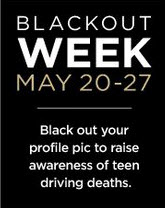
Case two.  Allstate Insurance (pronounced  IN-surance by my southern in-laws) is undertaking a brilliant cause campaign called Save11. The program is meant to reduce the number of daily teen automobile accident deaths – currently numbering 11.  The program has started on Facebook, though you won’t find Allstate’s name anywhere on the profile page. I learned about the program on the radio.  The program kick off with Blackout week, May 20-27, and Save11 is asking everyone to black out their profile picture to bring awareness to the cause. They are in the awareness building part of the program and to build traction need mass media to spread the word. Old skool.

(Aside:  Is anyone beside themselves that Haley was voted off last night?)

TV viewership s building again, more web IPOs are a comin’, and maybe even the Mets will make a run.  I make a living on what’s new and what’s next, but there are some age old axioms that continue to prove themselves and marketing blocking and tackling are still things in which we must invest. Peace Bibi.

Creeping the product

0

The two most exciting yet frustrating years of my work life were at a web start-up. I was director of marketing at a social media site called Zude.com. The CTO was 7/8ths genius.  A wonderful coder, an infectious and eloquent geekus, he built the world’s first drag and drop web publishing tool.  His object wrappers allowed me to tell consumers “If you can drag and drop, you can build a website.” In a world where we knew people would get tired of templated, database-driven web and social sites like Facebook and MySpace, this free-hand design tool was going to be the haps.

I remember standing on the back steps of my home telling the CTO that the decisions we made regarding usability and positioning were billion dollar decisions. Well, we burned through $10M and I’m still on those steps. I do love those steps, by the way.

What came out of this 2 year education was the realization that I’m an engineer whisperer. The CTO heard me, understood me, but he opted to go another route. He continued to build and add features and creep the product. He loved the rush of presenting to Robert Scoble and  Erick Schnofeld and hearing “coooool.”  Though I failed him, our CEO and investors, I learned that not all engineers can be whispered.  And probably shouldn’t be. VCs know what I’m talking about. Peace!

Brand Planning Process and Targets.

0

I was talking with some entrepreneurs yesterday who have a great product.  It shows well when demoed, people who buy it love it and the product has great sales opportunity through both push (channel) and pull (consumer demand) marketing.

We’re discussing targeting and I am using the bull’s eye metaphor with the whole radiating concentric circle schpeel. The inner ring is the most important target, the second target more populous and very influential, the third circle important, but more expensive to reach, etc. Nod, nod. I’m riffing on each target and getting pumped knowing there are lots of ways to covey and convince, landing big arrows in each target ring. The guys are feeling me.

I know I can fix the product Is-Does because the name is so descriptive. It’s a touch misleading but still kills the competition. The product fills a need in every home though only purchased every few years.  No brand has top-of-mind awareness. And with the economy what it is, the do-it-yourselfer (DIY) crowd is looking for the solution in what Google Insights for Search calls breakout fashion. “We know, we know.”

With a good “Is-Does” and descriptive name all that is needed is a strong brand idea that speaks to each ring of the target. To get to that idea I need to spend enough time with each ring understanding their care-abouts, concerns, how they derive pride and a few other things. All that goes into the “What’s the Idea” stock pot ready for the boil down.  This is brand planning product development.  Will it happen with my entrepreneurs? Will they invest in an idea? Stay tuned.

Count My Words. And Start With Engagement.

0

My father, Fred C. Poppe, built a business on engagement.  It was a word he used back in the 70s and it meant the same thing it does today — but back then he was talking about ads that were engaging. He parlayed this word (his word) into articles in Ad Age, then a few books and finally into a well-respected agency brand Poppe Tyson.  Engagement was my pops’ thing.


Engagement today, thanks to the web and digital marketing, goes way beyond ads and includes brands, communities of buyers and brand experiences. I’m a fan of engagement — so long as there is some selling taking place.

Readers know I write a lot about Yahoo!.  Yahoo! was like my first pretty babysitter…she taught me new things and opened my eyes to the possibilities.  These days I engage with Yahoo only during fantasy football season where, BTW, they’re doing a fine job of pursuing a content strategy. Elsewhere? I’m not finding Yahoo particularly relevant.


Here’s an engagement measure. Let’s call it word usage. If you could Google all the words you use over the course of a day, week, or month and quantify them, how many times would you say the word Yahoo? Engagement starts with awareness, moves to meaning, relevance, utility, usage and purchase. People aren’t talking about Yahoo any more. And if they are, it’s about money making or money losing. Yahoo has a content strategy but it’s not serious. Someone at Yahoo will write me and tell me it’s the #4 most trafficked website and makes hundreds of millions in ad revenue per quarter and they would be correct. But Yahoo is no longer the pretty or handsome babysitter – it’s more like the friend of your grandmother who babysits for a week and cooks cabbage for dinner. Yahoo is no longer engaging. And it needs to be. Peace!

Growing Markets.

0

The best thing that can be said about a marketer or a marketing agent is that s/he has grown a market.  The marketing and advertising mantra “sell more, to more, more often, at higher margins” is a terrific end-game, but one can do that and simply be redistributing market share. Growing markets is what’s up. So here’s a way to grow the men’s apparel market.  (I was at Fashion Institute of Technology yesterday, and tons of kids were walking around classrooms with bolts of fabric a la Project Runway – ergo the fashion interest.)  Replace the tee-shirt.

I was thinking of all the shopping I do each year and no one’s really making a living off me.  Maybe the grocery and the beer stores.  I buy a two pair of jeans once a year(ish); maybe some mulch for the wifus.  As for dress shirts, I don’t buy them unless I spill coffee on myself before a meeting. And somehow they just appear in the closet or in Christmas boxes.  Tee-shirts, on the other hand, are flowing out of my bottom drawer.  And the drawers of most men.

The Gap or Amazon or a smart designer with online chops should design a shirt for men that is flattering, comfortable, fashionable and functional.  And I’m not talking about that $70 tee-shirt in expensive fabric.  A new look shirt. Men love their tee-shirts but we’ll give them up if there’s something better, even if it costs more.  Then how will people know I love the Ramones??? Hmm.

Come on marketers, think about growing your markets. Peace.

Social Media is Growing Up.

0

Ladies and gentlemen, we are growing up. In social media, that is.  I sat through a panel yesterday at the Social Upfront in NYC, listening to some really smart skinny jeans from the Barbarian Group, Tribal DDB, Kirshenbaum, Bond, Senecal and Partners, Mekanism, and Co: and did not once hear the words “authenticity” or “transparency.”  Thank you Jeee-sus!

The event was excellent, save for the elevator (singular). And when I texted my son Nits (nickname) that Q-Tip from a Tribe called Quest was spinning at the after party he was all “that’s cool.” But not as much as I was when James “the Godfather” Brown tunes started bouncing off the West side rooftops.

Sponsored by Efficient Frontier and Kontera, the event really did show how far we’ve come.  People were comparing where they were when Facebook was 20 million users, the geezers in the audience didn’t stick out, and there were two TV news anchors on stage. Some people actually put away their iPads and started writing in paper notebooks because they preferred the user interface. Grown up.

Good Stuff.

  • Someone made the point that a viral effort without an activation budget (read promo/media budget) is a bad idea.
  • Jonah Peretti, CEO of Buzzfeed suggested viral efforts are best concocted and propagated when supporting “an idea.”  Find your idea, stay true to it and you’ll have a much better chance of social pass along.
  • Colin Nagy of the Barbarian Group made a funny: “Client come to us asking for something that has never been done before. Then they ask for case studies and metrics.” A sense of humor suggests maturation, no?

One step back though, some speakers still found it necessary to refer to the Subservient Chicken. What was that, the 80s? Peace.