Black Eyed Peas for Volkswagen.

0

Pop quiz.  You are thinking of buying a new car.  A Volkswagen Beetle is among your choices. For the sake of this exercise, let’s say you are 25 years old.  Here’s a marketing multiple choice:

A.     You’re invited to a special free concert with the black Eyed Peas performing. There are Volkswagen Beetles positioned at the entry points to the concert.  There is mad signage and car pictures projected on screen throughout the concert but the performers never mention the words Beetle or Volkswagen.

B.     You like the Black Eyed Peas and buy a ticket to their concert. At the show there are no physical cars on display, but there are large display ads tastefully arrayed around the concert space showing car, brand and promise.

C.     Fergie, in workout clothes, is photographed leaving the gym of her personal trainer. She looks particularly aglow and has a hand darting around her bag looking keys — about to get into her new black Volkswagen Beetle.

I can tell you what an event marketing company would pick. And charge. I can suggest what a typical social media company would select (all three, they rarely care.) And I can tell you what a PR company would prefer. Heavy on one, but all three would generate fees.  There is only one true answer here. And that answer is fundamental to marketing. And you all know which one it is. Marketing is hard. Peace!

PS. Answer “A” actually happened… and it’s not correct.
 

Dirty hands. Dirty brain.

0

I love the fact that ad and marketing agencies are getting into the business business.  Anomaly, Kirshenbaum, Bond, Senecal and Partners, Horizon Media,
Rockfish Interactive, GMD Studios and a handful of others, rather than just making ads that either work or don’t, or creating websites that click or don’t, are turning business ideas into commercial enterprises. And experiencing that reality.

The biggest gripe between agencies and clients has always been that agencies care about the communication first and leave the sales to the clients.  Sure, the agencies will go flip some hamburgers when they win a new fast food account or sit in the emergency dept. to see what healthcare is all about, but at the end of the week the paycheck shows up and the pain is someone else’s if “the work don’t work.”

By starting businesses with new P&Ls this new breed of shop gets to “feel” all 4 Ps. Plus they get to feel the customers. Feel their own employees. Noah Brier a smart new school marketer suggests every marketer should learn to write little code just to get a taste of what digital is all about. Get the hands and brain dirty.  Agencies that build outside businesses will first flounder a bit and then excel at their craft. Droga5 became a stronger shop thanks to Honeyshed, mark my words. Peace!


Mobile Shopping Is Hurting

0

A company called Tealeaf recently did a survey on mobile phone shopping and according to an article in The New York Times the study said “mobile shopping was more frustrating than sitting in traffic or visiting the department of motor vehicles.” Does anyone smell an opportunity?

Web usability – the degree to which we make web pages easy to navigate and use – is becoming a fairly important science these days. UI stand for user experience. FUI is first user experience. There are engagement acronyms aplenty bandied about at web shops across our fruited plains but most of this science is web-based, not mobile phone based.

Mobile phone displays are chaotic. Between all the operating systems, web browsers, screen sizes, encryption and security programs and apps, it’s a wonder anyone can buy anything. Amazon has a 5-year head start on everyone and it shows. The promise of mobile phone shopping is to be the exact opposite of the D.M.V.’s “wait forever” experience. The promise is “buy now.”

Union Square and Sand Hill Road need to exert a little pressure on business and software engineers to create a simple, open and secure mobile web interface for two- click purchasing. This is a we’re going to the moon mission and it needs to happen in 2011. Peace.


Mobile Advertising For Everyone?

0

Quick, you want to buy some mobile ads for your soccer team’s fundraiser and you want them to run locally.  Oh, and you need to run before next weekend. To whom do you turn? Nice question, huh?

I once tried to get a quote to run mobile ads in NY State, contacting Google’s AdMob group. There was no phone number so I had to send them an email.  They got back to me with a very underwhelming form letter months later. New school service.

If you want to run mobile ads these days you need experts, like a digital agency. And then you had better have a half millions dollars or they won’t take your call. Let’s not even talk about ad serving technologies, reports, and optimization of the ads.

Google.

The one company equipped to do mobile advertising for the masses is Google, via AdWords. Search is an especially important consumer need while mobile, and search is what Google does best, so why are they not launching a mobile-only version of AdWords? A version with an easy-to-use interface, from a site with DIY instructions, and offers quick turnaround?

As the mobile algorithms get smarter and more ads are served to phones unrequested, people are going to start to get mad.  And that’s a bad future for mobile advertising.  A good revenue future is for Google to own mobile search ads the way they do on laptops and desktops. Google needs to stop diddling around all the other stuff and open up this market. If they make it so that small businesses can buy mobile ads without needing a doctorate degree it will grow the overall market and give them an unfair share. Peace!

3 Ps. The next marketing trends.

0

Try not to spend too much time in the present when doing marketing planning.  It’s okay to look to the past to help understand big trends and how they have changed. After you get the how, you need to overlay the why – that’s da monies, the why.  Then spend your time thinking about the future.

Most marketers, marketing agents and the less important though well-financed consultants spend their time in the near-past. Today, geo-location services and check-ins are the near-past and though not exactly a mine denuded of its ore, they are where many marketers are spending serious time and money. Slates and tablets are the haps today and as a billion dollar business will take up a lot of time, energy and GDP but like Robert Scoble’s kid said couple of month ago, it’s just more stuff to put in a backpack.   Tech companies are now fighting over form, size and inches.

What’s Next?

So what’s out in front? For marketers, what is ahead of the dashboard?  I believe the answer is politics, planet and populace.  It used to be easy to not pay attention to what went on in the Congo when it was buried on page 27.  But how about when it’s in your stream. In living color? And will people pay for that?  Will people pay for the right to tune in via Google Earth any event in the world in real time?  Who needs Al Jazeera?  I wrote yesterday about the web strategy called the 3Cs: Content, Commerce and Community. Tom Friedman who has more power than 95% of us  will tell you the 3 P (Poppe knows from 3 Ps) is what’s next. Let them guide you. Peace, the verb.

Keeping Score in Advertising.

0

I like the Effies.  Effie Awards are given out for, ta-dah, effective advertising and marketing programs.  I also like the Direct Marketing Associations Echo Awards — a show that awards those who quantify sales results. Cannes and the One Show are at the high end of the spectrum, with the Tellys at the other, in a long array of other hardware shows that tend to be more fashion than anything else.  I love art and creativity, please don’t get me wrong, but prefer sales with my marketing.

The Effies are like the sports in a way, in that people are rewarded when score is kept. Did the work generate value, sales, and market share?  And how much?  To the winners go the spoils.

I am often reminded of keeping score when I see “We’re here” advertising,” work that simply tells consumers what one does.  We’re here advertising is lazy and a blight.  A print ad today by the very reputable NYU Langone Medical Center proclaims through a one word headline “Whole.” Beneath this is the delicate, italicized and parenthetic word “hearted.”  The picture is of a physician holding a baby. Two sentences of copy mention the hospital does pediatric and adult cases, the doctors are accomplished and work for one of the nation’s top heart programs.  We’re here!   With nothing to say, they favor the say very little approach to readership.

What in the name of Einstein, is the measure of success here? Off to the Tellys. Peace!

Community. Yesterday and tomorrow.

0

The first web portal or big web project I ever worked on was ZDNet.  It was mid- to late 90s and they were in a dogfight with C|Net for audience. The key care-abouts were what they called the the 3Cs: Content, Commerce and Community.

Content was what ZDNet owned, having come out of the print publishing area. Commerce was all about hooking up buyers and sellers rather than selling on the site and Community was more about aggregating a class of reader than about creating interaction among those readers.

This was all before social networking and social media took off. These ZDNet guys and girls were inventing community and social on the fly. Community is still a big wielder of weight on the web. It’s mobile and location based, and, and, and, but it is still ripe fruit.

Many builders of community look at the offline world for inspiration: book clubs, quilters, home brewers, support groups. People who used to meet in houses or libraries – willing to commune over a topic. But what’s exciting and entrepreneurial today, though, is bringing together communities of like-minds interested in topics not found in the offline world. Quora would be a good place to mine for these. Moreover, it might be a good place to start these communities. Ning attempted to cash in here, but it was cumbersome and had to be orchestrated. Quora already has the settlers. Mick Jagger might say “It’s just a click away.” Peace!

Smarter Planet?

0

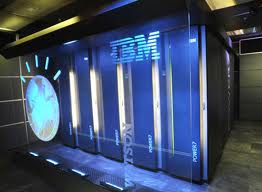
IBM keeps selling solutions for a smarter planet.  Watson, the computer that won Jeopardy, they say, is the way to a smarter planet. I’m not so sure. Is a kid who breaks his front teeth stumbling over a fire hydrant texting “K” a denizen of a smarter planet? Is a gardener who uses the Web to find out Dawn and vinegar gets rid of mites smarter than someone who figures it out on his/her own?

Is the massive computing power in our pockets and backpacks and on our laps and desktops making us smarter?  “Mom, how long do you boil an egg?” Are social networks forming our “likes” for us?  Is this fingertip world making our bones weak and our sinew stingy? Let’s ask Quora.

Dude, I’m not going all Ted on you. Ted K, that is.  I’m just pointing out a trend we will all be seeing a lot more of as we leap forward in Moore’s Law chunks of time. It’s called roots. Etsy.com is a good example of the roots phenomenon; people making stuff with their hands.  Gardening. Cooking. Traditional music and art. DIY home improvements. These are all examples of the roots phenomenon.  Any neurologist or physical anthropologist will tell you that the way to exercise the brain is to use it. The way to a smarter planet is not to rely on computers for everything.  That’s a way to sell more computers. Peace.

Geico burnout vs. new paradigm churn-out.

0

Here’s a fresh idea for bold national TV advertisers.  One and done.  Okay, maybe five and done is better.  Create and run TV spots 5 times then take them off the air and move them to the web.  A question many large agencies asked back in the day of the $385,000 TV commercial and still ask is “What is the burn out rate”?  How many times can a consumer can see a TV spot before his/her eyes start to bleed.

In today’s fast twitch media, where clicking is a sport, the burn out factor has grown even more sensitive. This is why sooner or later Geico is going to need to chill.  I was reading today about The Gap and its desire to become more relevant to the younger set – more relevant is a euphemism for sell more – and I’ve also been reading about Denny’s, similarly strategized.  The former will do nice ads and burn, burn, burn them.  The latter is running ads only a few times, then driving people to the web to watch them on-demand, on-desire, in longer form. Denny’s and Gotham get the target’s media habits and will save money. Gap and Ogilvy will not…unless.

Unless they use the new “five and done” model.  Should Ogilvy decide to turn itself into a crafty, creative TV production studio for the Gap it will have a chance. Buy high profile mass reach media and run their ads only a handful of times.  Then move on. Lots of freshies. Story-tell with lots of chapters, a la James Patterson. And it shouldn’t necessarily be a serial story, just a gestalt-y all around the brand strategy story.

Smart shops can create spots at low costs these days. Fast twitch ads, not burn out campaigns, are what the daring will do. That’s what the youth market wants. Peace.

The Muddled Middle.

0

In the tech category, moving to the middle is what the revenue hungry do. Rather than perfect what they are, they see money and desire an expansive make-over.  Google’s culture of technological obesity has driven it to invest $100 million dollars in new content for YouTube.  Being king of search is not enough; now it wants to be the next video TV station.  Google suspects there will be licensing issues for playing other people’s content and so wants to create and enable new video content to drive traffic.  As we all know, public access programming and 9.5 out of 10 consumer generated videos are deathly boring.  $100M should help bring in some creativity and will work for a while, but is a poor investment.

Case two: Twitter is talking about creating brand fan pages so they can hit some of that advertising revenue.  Misfire.  They, too, are moving toward the muddled middle; a place Facebook with its fan pages and Likes is filling. Twitter needs to let brands Tweet their stories and value, leaving the undifferentiated fan pages to others.

The thing that made the iPhone take off is application developers.  What will make Twitter accelerate is also application developers – but marketing application developers, and here’s a secret: Twitter is so easy to use and so much of the work is done (read hashtags) that non-coders will be the app developers on Twitter.  Twitter will win many of the marketing wars, it just has to stop moving toward the middle and let the apps evolve.

Why do all technology companies covert thy neighbor’s partner? Love the one your with.  Peace!