Ballmer’s Next Laugh.

0

I don’t know what’s more exciting, the democratization of much of the Muslim world or the technology end game about to be played by Microsoft, Skype and Google. Exciting times, these. Telecom minutes have always been a discrete part of the technology business but if Microsoft buys Skype – not so much.  We always knew voice calls were data calls…ones and zeros flying over T1s, Cat 5 and through the stanky air we breathe, but Microsoft is about to make a bold move by merging these different revenue streams and it ‘s going to change the leader board.  Welcome back Larry Page. Dive. Dive. Dive.

I would love to hear what the shmarty pants Gillmor Gang has to say about this one. (Go ahead, pick a side.)

Here’s what it looks like from the sun porch in Babylon.  Google, already suffering from a “culture of technological obesity,” will now want to get more involved in the minutes of use (telephone) game.  They won’t want to cede it to MSFT.  Google has the algorithms, the servers, money and brain power to do it. They will probably want to continue to build rather than buy. And this effort will take their eye off the search ball.  Microsoft, with its SharePoint software, server farms and communications server experience will have a head start after the purchase of Skype. And let’s not forget the Nokia deal. (Ooh, I can’t stand up.) When the Nokia deal kicks in and Windows for Mobile starts spreading (especially at the lower end of the market), we are going to see a mad redistribution of wealth in tech.

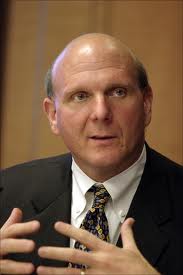
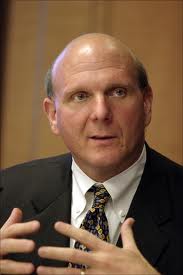
I have occasionally thought that Steve Ballmer’s fits and start with various devices and side businesses – the ones that failed – were just a learning game preparing him for a huge move against Apple and/or Google. He got some stink on him, no doubt, for that bold game but are we beginning to see a little smirk emerge on his knowing face?  Stay atuned. Peace!
Cheesing the Social Web.

0

Dan Zarrella, who has a neat person brand in social media, posted an interview with rap blogger Eskay providing a smart take on social media. Check it out here. In a nutshell it suggests social media is a good music marketing tool but not nearly as important as the music.  The artist who sits around focusing on his/her Twitter or Facebook metrics is not focused on the art. Not really feeling the audience. Certainly not the way they can by performing.

Most musicians do care more about their art than the buzz, that’s why they are more effective in social.  They post things that fans care about.  The word “fans” is the operative word.  Bands, performers, artists have fans. Cooking oils don’t.

Community building and social media is about fulfilling a need. Filtering and organizing a need. It’s not about selling. It’s okay to make your product or service available or one click away in an online community, but stop hawking.  Facebook knows that too much selling on the site will be its downfall. And it hasn’t yet figured out how to deal with that truism as it adds tens of thousands of users each day. Google learned this early, and smartly sequestered the sell from its Adwords program.

Selling is crawling into social media at a higher and higher pace. And it’s coming to a mobile device near you very soon.

So what do smart marketers do? Focus on their art. On their product. Use social media for sure…it’s an amazing tool. Enagage. Learn. Most importantly enable.  But stop cheesing the social web. Peace!

Sports Marketing.

0

Back in the day, I met my pops at a NYC restaurant his ad agency (Poppe Tyson) worked for…Mike Manuche’sMeetcha at Manuche’s was the ad line. My dad introduced me to Red the Bookie.  Red gave me some advice which has saved me lots of money over the years: “Kid, don’t ever bet on anyone but yourself.”

I had a meeting this week with a high-up marketing executive at a professional NY sports team. The exec asked me if I had any experience consulting in the sports and entertainment business.  I did my normal hominah hominah, told him about work for the St. John’s Red Storm, then jumped into a discussion of the NY Knicks silly marketing line “You. We. Us. Now.”

But what strikes me about the marketing guy’s inquiry, and what is perhaps part of the problem for this and other franchises, is the notion that they are partly in the entertainment business. Franchises that market like entertainers become so. It’s a trap one falls into when there is a history of losing. Similarly, marketers who talk about ROI all the time are the marketers who aren’t getting any.

Sport is sport. Ask an excitable parent hollering at a grade school volleyball game. Who else would pay good money to see a circus where the tricks and stunts didn’t work or a Broadway play where the key characters die?  My marketing executive knew his team’s wins and losses define the product, yet he still tried to put fannies in seats using entertainment tactics.

Sports have changed over the years. Player loyalty is a thing of the past. But sports brands are built — even as living breathing things.  They are competitive in nature and their outcomes are driven by coaching, teamwork and players. If you root for the players as you root for your friends and family and you have a brand. Sports are different. Peace.

What vs. Who Marketing

0

Media planning and buying has always been about the “Who.”  Demographics, psychographics and, lately, socialgraphics or the social graph are part of the Who science.  Buying the Who used to be done on a cost per thousand basis and now can be done on a cost per click basis.  Buying the Who is still big business.  But the web has become so pervasive in our lives, so instrumental in all areas of marketing – from product research to ratings and recommendations all the way to the actual purchase – that the Who is not as important as the “What.”  What are consumers doing? What tools are they using to ready themselves for purchase. Where the consumer is along the purchase continuum and where they intersect with choice-influencing content is beginning to trump the old reach and frequency model.

The What vs. Who approach is much more experience focused, looking at the lifecycle of a purchase decision and inserting selling content at key waypoints of the journey. It’s a new way of selling and it is changing the business of the JWTs, BBDOs and Ogilvys of the world.  All aboard!  Peace.

Prefer this!

0

Here’s the thing about “consideration.” It’s a great marketing metric if your audience is not shopping.  If they are shopping, it’s not nearly as important as “preference.” The gap between consideration and preference can be a broad one indeed.  Brand building that accelerates the move from one to the other is what earns marketers and their agents the big bucks.  But not every seller of goods moves the dial up the ladder; some actually move it backwards.  If a consumer once preferred brand X, but now prefers brand Y, that’s a customer relationship management (CRM) problem.

Kia Motors, #8 in car sales in the US, has been brand building with vigor for about 4 or 5 years now.  Though far behind in overall sales, they led the pack with +54% sales jump in April. Kia has done this by building preference. Market factors have contributed certainly: price and car size have earned them a seat at the table. But David & Goliath, a very smart Los Angeles ad shop is building something for Kia.  Kia’s reputation in the market, not dissimilar from that of Hyundai a couple of years ago and Samsung a couple of decades ago, was that or a Korean company with questionable quality. Close to Japan, but not close. Considered but not preferred.

D&G has used advertising to target the younger side of the car buying market – an impressionable target – in a fun tongue-in-cheek, unexpected way. And it’s clearly working.  Their use of music, entertainment and parody allows them to stand out and showcase the nicely designed cars. David & Goliath is making the brand hip. And when a car brand is seen as relevant and hip, it accelerates towards preference.  The Kia story and D&G’s role will be a fun one to watch. Peaceful.

Got Brand Continuity?

0

All the world’s a brand. Recruiters and HR people will tell you you are a brand. The town you live in is a brand, the car you drive is two: master and model. A company is a brand and its products are too.

Probably the most capable brand ministers are B school grads very young in their tenure at packaged goods companies. But then they go to war, fighting market share battles and become soiled by their many agents and agencies.  They move off the brand plan and pursue tactic with the highest return.  If the tactics do well by them, they may specialize; often at the expense of the brand.

Technology advances have done more to simultaneously help and hurt marketing than at any other time in history. The web has collapsed the 4Ps (product, price, promotion and place.) Technology has taken our focus off the brand and put it squarely on a shiny new toolkit. But even as geolocation marries search which will marry worldwide pricing and real-time auctions – brand remain a vital part of the marketing picture. So I ask you, do you know your brand?  Can you articulate your brand in a few seconds? Is it a person place or thing?  Or a service company or solution provider? And what does the brand do for customers?  Can you articulate what it does in a quick, meaningful and distinguishing way? If you can’t do you think your customers can? Your agents?

In the movie and TV production business there is a person responsible for something called continuity. That person makes it so that an actor doesn’t go into the kitchen in a red shirt and come out in an orange shirt. Continuity is what many brands lack today.  A brand plan, a boiled down artictulation of what a brand is and what a brand does, secures continuity. Peace.

Fashion in Reverse.

0

Fashion-forward people are those who hack away at the kudzu of current trends in an attempt to break new ground.  By the time the fashion-forward see an uptick on what they’re wearing, it’s time to move on.   The group who follow the fashion-forward, let’s call them the fashion advanced guard, don’t really have the stomach to lead, but do have the confidence to be early adopters.  Together, these two groups move markets.

Some websites have begun to help clothes buyers find ropa selected specifically for them based upon logged style preferences, no doubt informed by body type and income.  Some of these choices are branded and/or endorsed by celebrities giving them a little extra cachet. If done well, these sites also offer fashion tips for accessorizing..  My reading tells me these algorithmic recommendations require a monthly service fee. (I wouldn’t want to play with that “P”.)

I see this bandwagon as smart and viable, but suggest a new approach. The contrarian in me would take the model  — the gathering of fashion “likes” and spitting out recommendations — and invert it.  When a user presses enter, I would offer up the complete opposite of the fashion indicated. Call it Oppsy.com. If you really want to make a fashion statement and command attention, there is no better way than to repel the expected. It’s a dirty little secret Cathy Horyn and students of fashion use in front of the mirror daily. Peace!

Geolocation Marketing

0

As mobile computing continues its global penetration and cell towers and Wi-fi hotspots collect more and more user data, we’ll start to see a significant redistribution of advertising dollars away from mass media towards targeted buys. Not a huge redistribution, but an accelerated one. Mass media will always play an important role, but targeted marketing (not just advertising) will soar.

Search advertising has allowed us to target people searching for specific products.  Behavioral targeting has allowed us to profile individuals, based upon what they search for scrubbed with other data, and serve up ads accordingly. But geolocation targeting will take that to a whole other level.

The hubbub about Google and Apple stealing our signals and locations from cell towers and hotspots and recording that data should be our first clue.

If you think there is class warfare in the U.S. today, wait until you see the difference in the advertising targeting people who shop at BMW showrooms vs. The Dollar Store. There will be a feeding frenzy for the former while the latter will be left somewhat alone.  It will come to the point where high-income people will visit the Dollar Store just to fudge the data.

At first, the geo-location targeting thing will be cool as marketers use unique incentives to transact business. But then we’ll experience overload and it will become quite cumbersome.  People don’t want ads and offers all over their mobile devices. People don’t want marketers to know more about them than their friends and family do. Should be an interesting ride. Peace.

Brand Planning and the Data Explosion.

0

The data explosion is making brand planning more, not less, important. But you won’t hear that from tactical wonks in the marketing business.  You’ll hear “We need a social media program.”  Or “Our web conversion rates need to be higher.”  How about “The user experience needs improvement.”  Don’t get me wrong, all these marketing care-abouts are vitally important.  Though, if not driven by a focused brand strategy, they’re nothing more than values on a dashboard.

Measure, measure, measure.  More data.  More analysis. More trend reports.  It’s a frenzy. But what’s the idea?  Does the brand have a single value proposition consumers can articulate?  Not just recognition of the category the brand is in, the advantage and predisposing quality of that brand. And is there an organizing principle that delivers the product consistently – informing each and every tactic.  If you can answer the question “What’s the idea?” then it’s okay to explode the data. Peace.

The Social Responsibility Mask.

0

Someone posted a question yesterday on a forum asking if investing in social responsibility programs benefited brands.   The answer is yes. And in some cases no. It’s never a bad idea to do good. But doing good to mask or overshadow the bad a company does is not right.  I sit here typing in a tee shirt with the BP dandelion logo atop the line “We’re bringing oil to American shores.” BP is a joke. And long will be.


Dasani just announced a plastic bottle that is 30% plant based.  That’s 30% responsible and 30% good as it relates to biodegradability, but what we don’t know is if the process chews up more energy or emits more carbon.

Brand Meaning

As a brand advocate, I would answer the social responsibility question this way:  If the program is “brand meaningful” — if it makes a deposit in the brand bank — then it’s worth doing and celebrating. And supporting with paid media. If the program is not brand meaningful, say about child slavery, do it quietly and don’t feed the conversation. Just be proud to do Good’s work.


Brand Mask

The Pepsi Refresh project does good.  It impacts a lot of people who get access to funds.  But Pepsi could do a lot more to clean up itself environmentally and health-wise. Pepsi can do more good with a bigger purpose, footprint and impact than offering cheerleaders new uniforms or putting new bleachers on a little league field.  Is Pepsi Refresh masking? I prefer the Coca-Cola approach to social responsibility. They can do much more, but they don’t wear a mask. And they don’t try to build a sugar water movement around it. Peace!