To Free or Not to Free.

0

Plaxo, an online address book, started out as a free service and was pretty amazing.  As with most SaaS utilities, it had a lot of other features and functions, calling itself a social network, but what made it cool and famous was address book synching. The company recognized  many people had multiple address books on multiple devices (business and consumer) and getting those addresses from one to the other was a pain.  A cut and paste pain.  With a push of a button, Plaxo could capture and store in the cloud your email addresses and contact list just like magic, synching them with Outlook and/or Mac address books. The app hits 20 million users before being bought by Comcast for an undisclosed sum. Can you say exit strategy? It was the shizz back in 2007.

In June 2009 the synching of address books with Outlook became a premium service. The moment of truth. Comcast said it needed the revenue to build out new features. Oy. And alas, as neat as Plaxo was, it stopped using me so I stopped using it.  If it got to the point where I couldn’t manage anymore, I’d have re-upped; but Microsoft had made importing and exporting addresses more usable and I (and the market) was on to newer things.

The New York Times faces a similar dilemma on March 28th when its digital content moves to a subscription model.  The good news for them is they’re not a utility, though some may debate that.  A NYT reader who moves to Charlotte, NC and reads the Observer will not debate it.  The Times content is unique and worth the money.

Plaxo, in my mind, needed to start out as a paid service. Hell, even at $3.00 a year. When you condition a market to think a product is free (Google NeXusOne are you listening) it is hard to come back.  This is the venture capital dilemma. This is the missing P in the market 4Ps. Buh-bye Plaxo. Peace.

When is chat not chat?

0

I am a big fan of chat as a customer care tool and put it into most every marketing communications plan I’ve ever written.  Frankly, it should be a litmus test for me to take an engagement.  It proves a company’s mettle for providing a good level of care. Chat is a big investment (in people) and when you do it, you need to do it right. 

Today, I used chat to get in touch with McAfee. My firewall had blocked Google Chrome. I’m sure I fat-fingered something or clicked yes when I meant no within an alert. Full disclosure, there was a button on the McAfee Firewall application that said “return to default settings” but I was too nervous to push it. (Had I pushed the button, it would have resolved my issue I found out.)

So I uploaded all the Citrix chat stuff, waited for progress bars, spoke to two levels of customer service people – the first one told me I would need to talk to a technical person and passed me on, duh – and found the whole experience to be a bit maddening. What irritated me the most was that I had a feeling the help people were juggling me. Finishing up with another call, while they were telling me “thank you for your patience” and “we are looking up your records.” Chat is great when it’s chat.  But it’s not great when its juggled chat or attenuated chat. 

The user experience in customer care can be viewed as an expense or an investment. It should be viewed as the latter, viewed as a brand touch. Starting every sentence with my name may be a nice trick and may improve survey metrics, but it doesn’t move customer care ball ahead.  If you are going to call it chat, chat. Maybe that’s why they don’t label it instant messaging?  Peace!

Brand Plan…then Count the Change.

0

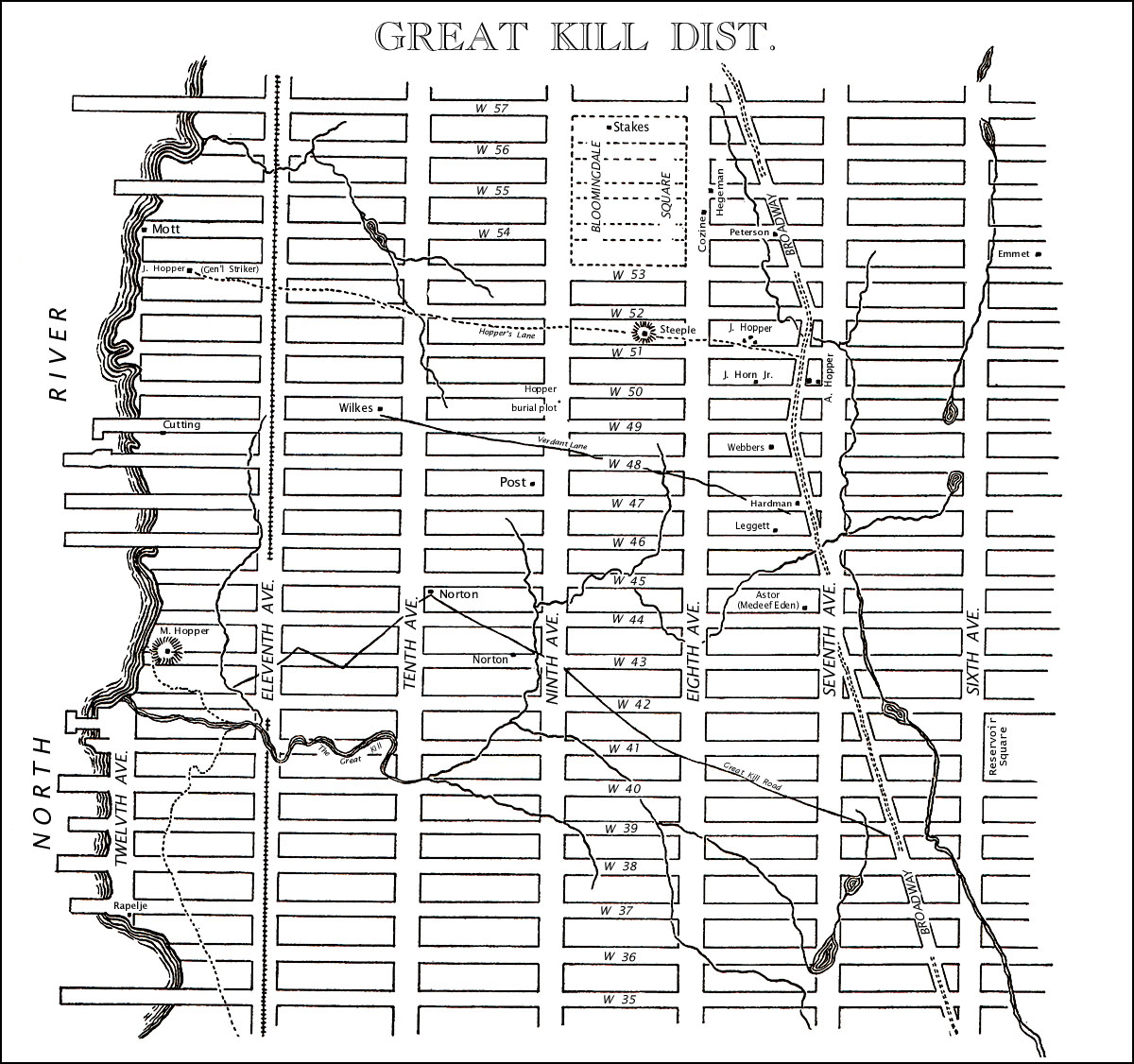
I was reading a fascinating article today on the grid system of NYC and the original map that laid it out.  Quite the transformative event, that grid system. Did you know city blocks are 200 feet long?   Broadway was a path that meandered the length of the island and was left alone, as were the funky streets of Greenwich Village.  Back in the late 1800s the grid thing was not well received by everyone, especially those whose houses were located on parts of the gird that were to be torn down to create the streets. But it was this planning and forethought that made NYC the great place it is.  Albeit, “great” with an internal design and art tension.

Brand planning is analogous. Smart people have asked me “How do you define a brand plan?”  And I my answer, though somewhat fluid, is generally “a single brand promise, supported by three planks or proofs of that promise.”  In effect, it’s a grid.  What resides in the grid is open for discussion and debate, but everything must fit. The artistry that is brought to life within the grid is what give the brand it’s life, but whether you like the grid word or not the brand plan is an organizing principle for selling more, to more, for more, more times.  The brand plan is not just about messaging either, it guides the product itself. 

And the tension referred to in the city planning grid analog applies to brand planning.  Sometimes an amazing idea is created inspired by a brand brief that does not fit perfectly.  It may be just a little off kilter. What to do?  Debate it. Study it. Perhaps even build it — and compare it to the plan.  Humans organize. Humans also like the unexpected. So build a brand plan, see and live its beauty, and count the change (double entendre). Too many markets today start by counting the change. Peace!

Time to Pay the Paper Boy.

0

Don’t shoot me, but I completely agree with The New York Times move to charge for online readership.  To assuage the infrequent online reader, everyone will be allowed 20 free articles per quarter.  At first, this will be a shock to the system. Over time it will slide through with ease. 

The Times has always been worth paying for.  When Nicholas Kristoff has to drive across a barren desert in Tunisia to get a story on the aftermath of the defense of Benghazi, who do you think pays for the Toyota Land Cruiser rental and gas?

To Free or Not To Free.

Good content costs.  There is a price of good goods and the web and venture money haven’t always understood this.  The New York Times reminds us of this capitalistic notion.  Applause-applause. Free has been used in the digital world as a traffic builder. So has community. And social.  And certainly community and society have value.  As do not-for-profit and non-profit ventures.  But the New York Times and, shortly, a good many followers have decided that March 28th is the day to pay the paper boy. And it’s not a moment too soon. The first web domino has fallen. Do I her another?  Peace!

Brand Strategy Trumps Formula.

0

When is faster not faster?  And when does modular, formulaic construction create an inferior product?   The answer is in marketing communications. Here’s how this shizz should work.  After all the money discussions are complete, after the bosses shake hands, and proprietary company information is exchanged, someone with strategic  bone at an agency should write a brief.   Brand brief, creative brief, project brief, call it what you will. If there is not a strategic idea within the brief that feels right (and I do mean feel), that inspires pictures and music in the heads of the creators and developers, then the brief is poor and should be rewritten.

Time to market.

Once a brief is right and approved (and be prepared for some fighting, fear and diplomacy), only then should creative work begin. A tight brief is the fastest way to good work. For those who like metrics, a tight brief gets to approved work faster.  Approved work gets produced faster. Produced work gets seen faster. And organized, singular work – be it banner, website, promotion, direct, promotion or advertising – gets acted upon by consumers faster.

Where the system breaks down is when the strategic idea is unclear. As creators of marketing deliverables become more process focused and less idea focused, as they become more formula driven, the work suffers. Formula replaces the cerebral cortex when creators are uninspired.  I wrote a brief for a friend’s commercial maintenance company that took some real digging.  The brief likened his operation to that of a team of Navy Seals.  That’s who they were.  That’s who they will be. The company is  “fast, preemptive and fastidious.” That’s a plan creators can get behind – without formula or module. That’s brand design. Peace.

ADD-ification of America

0

Sally Hogshead declaimed yesterday at TEDxAtlanta that we have the attention span of about 9 seconds when it comes to marketing.  I believe she also mentioned a neurological study that suggested our brains are evolving so as to better process multiple pieces of information at once.  Being an evolutionist, I would have to agree but add that the effects of that evolution will probably not be seen unto the year 20,010.

Personally, I cannot read a whole article in the NY Times paper paper anymore without checking the web or email and I haven’t even bit the bullet and bought a smart phone yet, which is so in my future.   Last night over a beer with GetMurphy@yahoo.com, I mean my friend John Murphy, he offered up sheepishly that there are actually times when he might go off the grid for 3 straight hours to work – he’s a creative director at Millennium Communications.  (Did you know stevepoppe.com is an available URL?)

I’ve referred to this, as have many, as the ADD-ification of America.  Is it bad? Yes and no.  Is it good? Yes and no.  It just is. I read a Tweet this morning by someone who works for MDC Partners who mentioned that in the course of walking two blocks he saw 3 people walk into immovable objects.

I’m a roots guy. Awaiting a modest overload backlash.  But while waiting I’m preparing for the ADD-ification of my marketing targets. I know that an email that hits a Blackberry is more likely to get trashed than one that hits the desktop. Preparation. Peace!

Ads that Jab Like a Needle.

0

When first working on the North Shore-Long Island Jewish Health System business I thought I was going to dislike the category. Now I’m a fan.  Perhaps I was conditioned to think healthcare was bad and unexciting because the ads were so bad.   My agency,  Welch Nehlen Groome, made recommendations to North Shore to manage the brand as if a consumer packaged good: land on a strategic idea, organized it, stick to it and use the it to manage the client. The approach paid off. In our market “Setting new standards in healthcare”- a promise every healthcare provide would aspire to – was better known than “the best cancer care anywhere” the promise of Memorial Sloan Kettering.

What turned me around on healthcare was the depth and complexity of the sell. It offered very fertile ground for connecting with consumers.  If you did your homework, you could hear great stories about the human condition. Talk about finding the pain?  Stories about relationships, e.g., caregiver, doctor patient, etc. Even stories about heroism.  Then there was the science side of the storytelling.  What the docs did. The role of diagnosis, R&D, the team.  Suffice it to say a lot of info could go into the making of an ad.

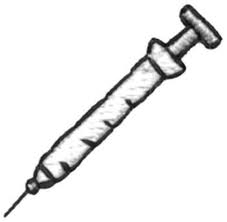
The Hospital For Special Surgery ran an ad in the NY Times today that is half brilliant. The headline is “Our doctors work hard to perfect joint replacement. Our scientists work hard to prevent them.” Buried in the copy are no less than 5 awesome stories waiting to be told —  waiting to convince people to jump in their cars to go to HSS. But the stories won’t be read; the headline was either written by a tyro or a beat down writer too busy to connect. Too busy to change or save a life.  When we get advertising right in the digital age, those five stories will be linked web videos. In print, they will be underlined and printed in blue to let readers know there is multimedia attached. When we get advertising right in the digital age, we will write headlines that jab us like a needle. Peace!

The Web’s Next Big Traffic Driver.

0

The evolution of web traffic started with technology. Search begat the first big rush — but of course there had to be something to search so HTML really started it all.  After search came social networks (MySpace and Facebook) which allowed people to create websites or webpages thanks to templates and databases.  Allowing everyone (not just coders) to create a web presence opened this door. Then came music sharing sites and other media upload sites like Flickr and YouTube. All technology enabled.

During the build out of these tech-enabled web sites, communities began to emerge.  And so came enthusiast sites: Tech enthusiasts, movie enthusiasts. porn devotees, daters, news junkies. Those interested in healthcare. Communities sprung up, big and small, but mostly big.

Currently, we’re on an entertainment jag, with games and virtual goods, random video chat and anime mash-ups drawing the attention of the masses and venture money. The iPazzle (technology) is creating some new applications for sure, moving everything toward a single device, but it won’t explode web traffic exponentially.

So what’s next? What human need is not being met?  When we get tired of entertainment what will we seek?  What will generate massive traffic and engagement on the web?  It will be micro-communities. Noah Brief and Piers Fawkes might call them LikeMinds. For me, I’d love to chat with kids who went to Amityville JHS, in school the day Martin Luther King was shot. Or people who saw the Allman Brothers early show at the Fillmore East in 1970 the night they shot the inside album cover. Maybe we are not like minds, but we’re like experiencers… at a certain time and place. There’s an idea for Google or Bing, the search experts. Micro communities. Peace!

Promotion and the Human Algorithm.

0

The problem with appointment promotions is they don’t really build customer loyalty. When Starbucks tells you to come to the store on Thursday between 12 and 2 P.M. for a free apple fritter and they publicize it in a big newspaper ad, you have to make an appointment to go.  They’re trying to generate traffic. If you must buy a new cup of something in order to get the free fritter, it’s about product trial.  It’s not really a loyalty play because everybody can participate.  Unexpected promotions are much better for loyalty building. 

Unexpected promotions are much better, also, because they’re more social. With an unannounced promotion, especially one of the free variety, there is a wonderful surprise and feeling of serendipity. With mobile phones what they are today and our “always on” culture, free can go viral fast.  And those virused are usually best friends or most appropriate friends. 

Let’s say I go into Starbucks to order coffee and get a blueberry fritter, not my usual apple fritter. As I’m waiting online I might tweet or 4square it.  Or, text my commuting office mate.  Why would I do that?  Because I’ve been hit with a pleasant random act of kindness and I can pass it on. I’ve been recruited to be a good guy.  And Starbucks has enlisted me to curate their promotion.  I mete it out based upon who I think will enjoy it.  The human algorithm.  And, by letting “the people” promote your promotion, you can spend more money on the giveaway itself and less on advertising. Try it you’ll like it. Peace.

Politcal Punking. A sign of…

0


Are NPR and PBS left-leaning?  I reckon.  As a southpaw I have tended to not notice.  But let’s remember, prior to president Obama’s election, for 8 years the government was in the hands of the republicans and it still funded PBS and NPR. 

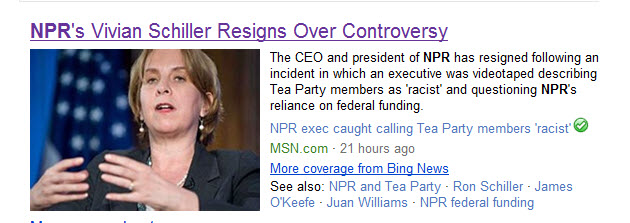
The Schillers Affair is much ado about nothing. Vivian Schiller will be replaced by someone better in a matter of hours.  A few check writers will stop contributing and few more will take up the slack and we will move on.  

Politics as unusual.

Is there any good news in all of this?  I would say yes.  I would say that more people are beginning to take politics seriously.  More people are caring…not less.  Millennials, who know a thing about punking, are paying attention. They may not fully understand collective bargaining agreements, but they do understand what a midnight, backdoor procedural move is and understand what just happened in Wisconsin.  Ask a kid what’s going on in the Middle East and for the first time in 50 years you will get a cogent answer.  

Tip O’Neal said all politics is local. Well, for many, all politics has been quite foreign.  We have not seen the last of political punking; it’s a sign of the cultural times.  In fact, I smell a TV series created by the producers of Undercover Boss.  

The more people care, the more people debate, they more we get involved — the better our country will be. Does this mean I like what Peter King Rep of NY is doing today? WTF no!  Will I defend his right to dialogue? Yes, the Beavis.  Peace!

(Happy birthday Derek.)