T-Mobile Advertising is Working.

0

Right now, T-Mobile’s advertising is the best in the category.  The way it integrates print, TV and web is beautiful, the art direction is constant, and spokesperson Carly Foulkes has been managed brilliantly.  Never tarted up, always positive, always girl next door, Ms, Foulkes and agency Publicis Seattle are building a place in our brains for this price shopper 4G mobile brand.
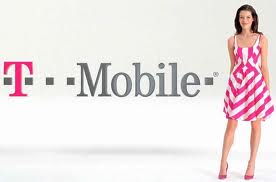
As ubiquitous as this advertising is, it’s not Geico annoying.  Not AT&T message meandering or Verizon techno mappish. It’s a clean, retail brand imprint and it’s beginning to work.

Creative advertising dudes (less so dudettes) will snark at this comment saying the work is as creative as chipped nail polish, but from a brand management point of view, in a muddled market, this work is moving phones.  And T-Mobile doesn’t even have an iPhone.    

Imagine if T-Mobile changed its spokesperson every couple of ads.  Or tried to compete with Verizon by employed a lot of red in its color palette. Or rather than hammer home price it showed all the cool phone innovations (okay, they do a bit of that on TV).

If the AT&T purchase goes through next year, don’t be surprised to see BBDO morph the campaign Ms. Foulkes way.  They won’t cut over using the Magenta color the way they did using Cingular orange, but they know enough to keep the price work clean. Or we might just see Publicis hold the retail business and cede network and inno to BBDO.

T-Mobile has organized its brand and kept to the plan. That’s why its numbers are creeping up! Peace.


More Cut. More Paste.

0

Check out this video of the Cut and Paste digital design competition in NYC in October. It is the best single promotional video I’ve seen for getting high school and college kids to get into commercial web design.  The beats, the fashion, the story all serve up the craft of digital design brilliantly.  If you don’t like rap and you don’t like the city and you don’t like brew, you can still get into this vibe.  It’s real and it’s tomorrow. I’m not sure that this Cut and Paste competition was tasked as a recruitment tool and frankly before the recession there were a lot more these type of digital throw down parties but, hey, R/GA, Razorfish and Rockfish, forget the recruiting tents, beer cozie circuit at campuses and get behind Cut and Paste because this is the haps.

 Look into these kids eyes.  This isn’t staged “Put your hands in the air!” crap.

If you read the comments on Agency Spy, Adweek or Ad Age, you’ll know many agency people are jealous, angry, envious and delusional.  Even before online comment pages, the business was infected by malcontents. (And with many out of work, the business they love to hate is filled with even more vitriol.)  But Cut and Paste gives me hope. The next gen of beanie-wearing, skinny jeaned design acolytes are pretty excited and pumped.

We need more of this.  Give people something they love and the won’t work a day in their lives.  Coding at 2 A.M.by the light of a Red Bull machine may not be glamorous, but this vid points toward the prize. And as my chillens used to say “I yike it.”  Peace. 

Like, like….like

0

I went to a PSFK Conference a number of years ago and posted “Sort of” is the new “um.”  Well, I’m here to update you — “like” is the new “um.”  For 5 years it has been a nervous word kids and Millennials use to fill in their sentences.  But now the word is taking on more meaning, or lack thereof, thanks to Facebook’s use of “like” as a ranking system. 

When a teen or tween tells a friend the gut-wrenching “I like Mary” it’s very different than the like-gating or liking that’s going on when marketers are cheesing consumers into pressing the like button.  Don’t native Inuits have nine different words for snow?

One used to rank online affinity by counting web traffic.  If a site had lots of traffic, it was a well-appreciated site. Web Trends followed that traffic to see what people really landed on and it informed marketers. But then SEO jockeys started cheesing the system and traffic became less relevant. Enter the “like” button. But now even liking isn’t always liking. Google likes liking and calls it +ing (plusing).  

A number of Facebook and Google Plus cottage industries are emerging and helping marketers game the system.  It’s a huge business.  But only about 10% of them really know what they are doing. And that 10% get what corporate CEOs and CFOs get — tie likes to new and recurring sales and you have a touchdown. Otherwise, those likes are flatter than a non-redeemed coupon.  And how would Mary feel about that?  Peace!

Demand Creation. Really?

0

I read last week that a fan may actually be more valuable than a customer. Initially, I nodded my head thoughtfully but now I’m back now.

One of the first predictors of marketing success is the degree to which people need your product.  A second predictor is that people want your product.  Sadly, consumers are being sold things today they don’t need or want. Marketers often spend money creating demand where none exists. Is it any wonder John Wannamaker’s famous line “Only half of my advertising is working” still resounds? Educating consumers as to what they need is not the job of advertising. Frankly, it’s what know-all mothers-in-law do and it is annoying. Providing a product to meet an existing need, on the other hand, is a great place to start.

Everyone has a shower.  All shower tiles and grout need cleaning. Good place to start a business. Invisible germs in the shower that people don’t know exist, is an educational effort. And if those germs aren’t harmful, why do they need to be killed? Not a good business.

Marketers need to spend more time on customer need and product innovation and less time tweaking market share through message innovation. It makes the marketing agents look bad.  And it wouldn’t hurt for a good ad agency or two to turn down a product assignment every once in a while because the product is meaningless. That’s the way to create an agency A list. Peace! 

Best Definition of Branding.

0

Were I to guess, I’d say 90% of people who use the word “branding” misuse it.  Designers use it to define packaging. Art directors to describe “look and feel.”  For P&G brand managers it’s a reference to budget size. Direct marketers think it means synergy with general advertising. Copywriters don’t really know what it means. The digiterati try not to use it. And agency principals think it is whatever makes the bank deposits flow. 

Noah Brier while a head strategist at the Barbarian Group once asked me “There are lots of definitions of brand plan, what is yours?” That’s a question every marketer who hires an agency should ask. There would be a lot of Rick Perry answers, me thinks.

Branding is an organizing principle. Locked onto the right organizing principle one can build a brand with ease and sharp measurement. Brand strategy as an organizing principle can guides all the other strategies you will hear during the course of the marketing day: the product strategy, sales strategy, retail strategy, channel strategy, pricing strategy, media strategy, messaging strategy.  I could go on.  

The organizing principle defines how a product is built, cared for, presented and nurtured. It’s one simple piece of paper that organizes the others. It organizes leadership, employees and the hard to manage consumer. 

I always wanted to create an ad agency named Foster, Bias and Sales. It’s where the rubber meets the road in marketing. But without an organizing principle to guide these steps to a sale, you are simply a tactics jockey.   

Brand(ed) Utility.

0

Branded Utility has a number of definitions in the marketing world. In my world it is more than simply a branded public service; it’s something that moves a customer closer to a sale or position of greater loyalty.

Ingmar de Lange did a neat presentation on Brand Utility, but we are not always on the same page.  Nokia providing a quiet room on city streets for mobile callers is nice, even with a big logo on the door, but it’s not uniquely Nokia.  MasterCard providing an ATM finder phone app is helpful but not uniquely MasterCard. 

A branded utility, to me at least, is one that no one else can offer.  Users need to plug into the product or service grid of the marketer a for a utility to be truly branded — to use an electricity metaphor.  Simply slapping a logo on something useful and making it free is lazy.  It may be less lazy than a poor boast and claim ad but we can certainly do better.

I once suggested that Ben Benson give away golf umbrellas to customers of his expensive steak house caught unprepared on rainy days.  Branded utility. Why was it unique? Because the customers were at Ben’s.  When thinking about branded utility ask yourself “Has the usefulness of the gift or a value made the customer more committed?”  Or just similarly committed? If the answer is more, then the investment was worth it.  Peace!

Negative Brand Ideas.

0

Sometimes powerful brand ideas are not generated by consultancies, CMOs and marketing agencies – they are created by competitors.  When launching the Barnes & Noble Nook Tablet yesterday in Manhattan, CEO William Lynch referred his competitor  — Amazon’s Kindle Fire —  as a “vending machine for Amazon services.” Ouch. Mr. Lynch knows what a lot of B2B sales people know, that positioning a competitor negatively with a nice, believable turn of phrase can be hurtful. And viral. If you have a good sound bite, one that comes with emotional impact, use it.  Remember US Scare, the name for USAir after a number of plane crashes?

These anti-positioning brand ideas are rarely used in advertising, but set free in the market, they can have mad negative impact. You often hear these negative branding ideas bandied about and assume they come from the creative populace, but don’t be so sure.  All’s fair in love and marketing.

In the Kindle Fire example, calling it a vending machine for Amazon services may actually be seen by some as a positive.  There are a lot of Amazon users for whom added convenience is a good thing. Even so, this was a nice negative parry by Mr. Lynch. If you are a second-to-market, me-too product sometimes going negative is all you have. Peace!

Young girl, violins, center of her own attention.

0

 When Eddie Vedder sings “Daughter,” which according to the movie Pearl Jam 20 started out as a song called Brother, he sings the headline of this post about a girl at a breakfast table. To Pearl Jam fans, this song makes the world spin. If a guy, the song has meaning. If a woman, even more meaning. The lyrics speak to us in many, many ways. Personally. On behalf of a friend. On behalf of a neighborhood.  This is Pearl Jam at its best.

Reading The New York Times this morning I encountered 4 “young girl” ads in the first few pages. They were silhouetted in white or surrounded by big retail type and pictured beneath headlines telling other girls and non-girls about products and services. “Experience the finest education on 3 continents.” Stuff like that.  If I had a dollar for every girl ad without a narrative, I’d e a much less busy man. When Pearl Jam plays Daughter in concert 85% of the audience knows 95% of the words. And they sing.

When marketers, tiny ad agencies, and in-house communications departments put a girl in the ad, she is no one’s daughter. There are no violins.  She isn’t alone, listless, sitting at a breakfast table in an otherwise empty room.  She’s not even selling shit.  No wonder every other new TV show is about zombies.  Can we fix this please? Hee hee. Peace!


Yahoo’s Going to Get its Exclamation Back!

0

I would not be surprised to see Yahoo sold to Jerry Yang and the Texas Pacific Group (TPG) fairly quickly. Yahoo, with lots of schmutz on its shoes, is still one of the top 5 tech brands in the world. And what is a brand but a vessel into which we poor meaning. Organized meaning. Yahoo’s fix requires an Is-Does. What a brand Is and what a brand Does.

Is it a portal?
Is it search engine?
Is it an advertising company?
Is it a web content publisher?
Is it a technology company?

Does it provide news?
Does it provide entertainment?
Does it provide organization?
Does it provide results?

Yahoo needs to retrench and make tough decisions — and that will only happen if the property is sold. A public company with lots of shareholders, Yahoo will get its Yahoo! back with new leadership, some old leadership, tough love, and a brand plan. And when I say brand plan I don’t mean a new logo, new color palette and an replacement agency for Goodby, Silverstein and Partners.  I mean an organizing principle for marketing.  A plan that inform every decision made by the company — from hiring to firing to what new mobile services to launch.

When dimensionalized through obs and strats, a brand plan creates marketing clarity. TPG doesn’t speak like this, but they know how to make it happen. It’s about time. Peace.