Marketing

    The Magazine Shakeout.

    0

    In 2009, according to David Carr in The New York Times, magazine ad revenue was down 25%.  Lots of business revenue was down 25% in 2009 so this statistic may not seem that startling.  Not unless you look at the performance of magazines over the last 7 years.  25% down in a business that’s been down by single and double digits for years and years in not good.  Reminds me of the car business. Magazines need to do something. And fast.

    The user interface of a magazine is superior to that of a Blackberry or iPhone — paper recycling aside.  Magazines are not going away. Cars aren’t going away. 

    What’s the difference between a publisher and a curator?  About a hundred grand.  Publishers are overpaid magazine dude(ttes) in a hemorrhaging business while Curators are underpaid Web content presenters in a growth business. If people with these two titles switched jobs for 6 months they might actually improve their respective lots.

    I often simplify marketing down to two factors: Claim and Proof.  For magazines (on and offline) I simplify the business down to Reporting and Presentation. Magazines, to thrive, need to find out what their Claim is, mine the Proof, have that proof Reported by experts and Present it in new and exciting ways. Peace!

    New Agency Leader Ship

    0

    Paul Gumbinner, a friend and one of New York’s more successful advertising recruiters, wrote a post this week about how little diversity there is among agencies today.  The unique agency segments of yore are no longer apparent.  He is quite correct.  Part of Paul’s argument is that the leaders of those agencies created unique cultures.  Bill Bernbach in the 60s.  Jay Chiat in the 70s. Dan Wieden in the 80s. Donnie Deutsch in the 90s.

    Interestingly, the turn of the century brought agency start-ups and technology themed shops.  Leadership became secondary to coolness. Exciting, new brands emerged with selfless senior management: Anomaly, Barbarian Group, Razorfish, Naked, Organic, Strawberry Frog, Taxi, Renegade, Brooklyn Brothers, Mother, Droga5 (cheater) and Poke.  These leaders, smart marketers all, put their brands first. Built teams. Tried to figure out the new order and class of work, kept their heads down and promoted their brands.  It was a good strategy. BBDO, DDB, McCann went a little GM, if you will. (General Motors.)

    As all agencies (big and small) move toward the middle these days, using a complicated quiver of arrows, we’re beginning to see some new leaders emerge from this new group.  These new leaders have been playing quiet offense thus far — and as Mr. Gumbinner points out.  But the decade of 2010 is providing a fresh canvas for new leaders.  Welcome Faris. Welcome Noah. Welcome Lori.  Welcome Gareth. Peace!

    Product. Package. Brand.

    0

    Product, Package and Brand are three fundamental marketing words for the 21st Century. The traditional 4 Ps of marketing: product, price, promotion and place are still workable cornerstones but for my money consumers have evolved so far and product management has devolved so far that success can not be achieved focusing on these three alone.

    Product.

    These days a product has to be good. No longer can you spin a shizzy product or service and be successful. What constitutes a “good” product in this era though is debatable. Especially in the states. We sell a lot of cheese (poor product) here, but because the cheese is affordable and lasts a year, people buy it. The definition of good, at the lower to middle end of the market, has changed markedly. Make it good and they will come.

    Package.

    Before the web, packaging was what your product arrived in.  In 2010, with people spending billions on virtual goods, goods aren’t even goods. Packaging. Point of sale packaging is still important, don’t get me wrong, but the point of sale is different. For those who do product research online the website is the package. A lot of product website homepages are built like old school product packaging: features, bulleted copy, product shots (fail), but that’s a story for another post. These days — and they are amazingly exciting days — advertising, PR and promotion are all part of the package. Access and search have changed everything. The package is now a continuum.

    Brand.

    Whenever I hear an art director talk about branding I head for the hills. Sure, design contributes to brand development, in a very big way, but design manicures the brand it isn’t the brand.  Apple gets this. Branding is a strategy: an organizing principle that consumers and employees share. It’s a vessel in consumers’ minds filled by an idea and proof. Products may be virtual but brands shouldn’t be. Get the strategy and consumers will get you. Peace!

    PS. Anyone digging the new Google logo art on the Google home page today?

    Chase What Brand Strategy.?.

    0

    Question: What is a brand strategy? 

    Answer: A brand strategy comprises a strategic idea or claim and three support planks that vivify the claim.  Three planks, because two don’t always allow for a complete, differentiated story. Getting the idea right is key. Selling it to consumers day after day is the heavy lifting…called brand management.

    Chase What Matters.

    JPMorgan Chase has a very identifiable idea: “Chase what matters.”  It’s a consumer directive from a very big company that knows how to make, save and invest money. Something they already get credit for.  The idea has ballast, but so far it is only an idea. Banks have been making promises without backing them up for decades. I’m not getting a read on the Chase support planks yet – the planks that allow me to believe Chase “knows what matters” to me and that they are the bank best equipped to deliver.   

    One of Chase’s neater tactical ideas lately is the “Chase Loan For Hire” program, through which it decreases small business loans by a quarter point for every new employee hired, up to three. Though I have no idea what Chase’s planks are, forensically, I might assume this tactic supports a plank titled “Meaningful borrowing matters.”  I’m not talking buy a hot tub meaningful, I’m talking something that relates to what popular culture views as meaningful. Today that’s jobs.  Nice touch.

    Banking is a tough category. In my bones I feel Chase has an idea, but the jury is still out on the organization of the proof.  I’ll continue to map its planks as they become evident and share them here at What’s The Idea? Peace!

    Let’s Not Call it Strategy.

    0

    (A self-absorbed poem about brand strategy.)

    My paper is power.

    My paper is freeing.

    My paper creates tension.

    My paper doesn’t need pictures.

    My paper is musical.

    My paper creates language.

    My paper is rose-colored.

    Always rose-colored.

    My paper creates feelings.

    My paper encourages doing.

    My paper is your paper.

    My paper quickens.

    If you fight the paper…you are fighting paper.

    My paper is the idea to have an idea.

    Snitkered by the FTC.

    0

    Reverb Communications, a PR firm based in California that was writing fake product reviews on behalf of clients and publishing them on iTunes, became the first company “snitkered” by the Federal Trade Commission.  Tracie Snitker is an executive at Reverb and was the one person sanctioned for the practice, though no fine was levied. Hence the new verb.

    It’s not every day you get to come up with a new word, but there it is.  Though my work here is never done, I will Peace Out and move on with my Friday. And whatever you do, you social media agents of change, don’t get caught snitkering. It can get kind of sticky.

    The Journalism Conundrum.

    0


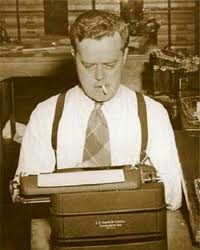
    Here’s the problem with newspapers.  Ready?  Who is your favorite newspaper journalist?  Quick!  Okay, who is your second favorite?  Now, who is your favorite blogger?  Much easier, no? 

    There was a time when journalists and news reporters were heroes…a time when they were huge personalities.  They wrote with panache, shared ideas and commentary that struck a chord with America.  Their ability to turn a phrase captivated us and the masses loved them.  Journalists were the rock stars of the day.  After a while, though, newspapers started to think these writers were getting too big for their britches – bigger than the newspaper brands they wrote for — and decided to turn down the dial.  “If Jimmy Breslin becomes bigger than the Daily News, what happens if he leaves?”

    Journalism became antiseptic. Lifeless. It lost a great deal of its humanity. When was the last time you cried after reading a piece in the paper (online or paper paper.)

    Blogs to the Rescue.

    Enter the blog.  No bosses. No editors. No sponsors.  Just peeps talking to peeps. Readers get the straight shot. Today’s most impressive, unadulterated journalists are bloggers. Ironically, when bloggers get big, big media tries to hire them.  Like punk rockers that have a hard time mixing art and success, this can alter the work product of the blogger.  The Conundrum.  Newspapers are losing money because their writers churn out auto text.  Journalism needs more heroic personalities. That’s what I’m talkin’ about! Peace.

    PS.  My favorite journalists?  Nicholas Kristof, Dexter Filkins, Cathy Horyn, Robert Scoble

    Nordstrom’s role in Worldwide Inventory.

    0

    The concept of worldwide inventory, where the web is searched for products and services across different stores and different countries is coming. So is the concept of worldwide pricing.  Need a knee replacement for under US$11,000.  There’s a doc for that.  Anyway, Norstrom’s is taking a step in this direction by allowing shoppers to access inventory from all of its 115 stores.  “That little blue cocktail dress you wanted to buy for the party Tuesday is out of stock?  It’s available in your size in our Atlanta store and can be sent to your office just in time.  Don’t forget to bring a steamer to the office.”

    One would think that this service already existed, especially with all the talk about store supply chain management software, but it’s not that common. Nordstrom has found that same store sales are way up since implementing this web-based inventory program. Turns — the rate at which inventory moves — are down, higher spending shoppers are using the stores and because the inventory is moving there’s less need for “sale” pricing which keeps margins up.  Nordstrom had to hire a few more people in their shipping dept. but that cost was offset by the incremental sales. Granted, this is s microcosm of worldwide inventory and worldwide pricing, but we have to start somewhere. Peace!

    Wrinkled Facebook.

    0

    The Baby Boomer demographic is amazingly powerful in terms of its spending potential, yet it is an underserved demographic when it comes to lifestyle innovation. Boomers and their elders watch a lot of TV, drink, go out to eat and travel. A percentage of them work out and pay attention to some lifestyle choices so they don’t have to medicate as much – yet the average medicine cabinet for Boomers contains a significant selection of pills. Bad.

    When I graduated from college my psych professor told me to go into “leisure time counseling.”  Not plastics.  Prescient was she.  There is terrific upside in thinking about marketing to Boomers — creating new product and service innovations for that demographic.  No one is doing it.

    So let’s start thinking about it. And please, help me out — I want your ideas. Here are some thought starters:

    A low-impact outward bound camp, much like summer camps of yore.

    A social network where Boomers mentor the young, one on one.

    A national boomer Volunteer Corp.  

    A research and development lab, filled with retired engineers intended to modify products that serve the aging.

    Group homes for those who don’t need assistance but want company.

    Jeeze, this isn’t easy.

    If we continue making advances mapping the Genome, the average life expectancy of adults is going to shoot into the nineties.  Now is the time for us to invent the next Wrinkled Facebook.

    Facebook or Utilitybook?

    0


    Facebook needs to make a decision soon; it has to decide what social utilities it will not pursue.  It has chat. It has a Twitter app and now it has Facebook Places, a Gowalla, Foursquare-like feature.  As cool new mobile apps with ballast emerge over the next few years, Facebook will develop or mirror them too. 

    I’m on record as saying Facebook may become the world’s first trillion dollar company, but it won’t if users get tired of it.  Partners can’t live together 24-hours a day. You can’t read the same author over and over. Or watch only Pirate of the Caribbean movies.  We need different forms of stimulus. Diversity.  Facebook must do what they do well and allow the Web and other entrepreneurs to lead in other utility areas. It’s what makes the Web fun.  The hunt, the exploration, the surprise and the new. If Facebook becomes the premier app for everything on the Web, then the Web will become boring and they certainly don’t want that.  I think Google is beginning to learn this truism.

    Facebook needs to understand its mission. If Google’s mission is “the world’s information in one click,” then Facebook’s is “the world’s people in one click.” It should build out that way.  Continuing on its current path, Facebook will become the world’s utility and humans will become saturated.  After all it’s called Facebook, not Utilitybook. Peace!